
 Skin
Skin Hair & Nails
 Sun Care
 Slimming
 Health

Collagen peptides: benefits and explanations
Key takeaways
Collagen peptides are hydrolyzed collagen: their small size improves collagen bioavailability and the availability of key amino acids.
For skin, clinical trials and meta-analyses report improvements in hydration and elasticity after several weeks, with daily consistency.
For joints and sports, the interest lies primarily in supporting the matrix (cartilage/tendons/ligaments) in addition to appropriate training and sufficient protein intake.
The most common dosage guidelines are between 2.5 g and 10 g/day, often over 8 to 12 weeks depending on the goal and the formula.Quality depends more on hydrolysis, purity, traceability, and testing than on the "marine vs. bovine" debate.
Collagen peptides are becoming a staple of modern nutricosmetics because they address a simple question: how can we support skin quality, joint comfort, and recovery from within when natural collagen synthesis changes due to age, UV exposure, oxidative stress, and mechanical stress?
However, the effectiveness of a routine is not just about "taking collagen." The form, degree of hydrolysis, molecular weight of the collagen, collagen bioavailability, daily dosage, duration, synergies (vitamin C, hyaluronic acid, zinc, silicon, antioxidants), and context (protein intake, sleep, training) all modulate the results. The purpose of this guide is to explain, in a didactic and scientific manner, what collagen peptides are, what benefits can be realistically expected, and how to choose a formula consistent with a skin, joint, or sports goal.
SUMMARY
Collagen peptides: simple definition and role in the body
Collagen is a major structural protein of connective tissue. It contributes to the architecture of the skin (dermis), cartilage, tendons, ligaments, and bone. It is found in the form of organized fibers capable of resisting mechanical stress thanks to a triple helix structure and a mesh of the extracellular matrix.
Collagen peptides correspond to a "pre-cut" form of collagen: these are protein fragments resulting from the controlled degradation of native collagen. In the body, the goal is not for these peptides to "deposit" as-is into the skin or cartilage. The principle is rather to provide:
- amino acids (glycine, proline, hydroxyproline, etc.) useful for the renewal of connective tissue proteins
- and, depending on the profile, specific peptides that can circulate transiently and interact with certain extracellular matrix processes (via biological signals described in the literature)
In other words, collagen peptides are part of a "matrix support" approach: they accompany endogenous synthesis that also depends on enzymatic cofactors, overall protein intake, and lifestyle.
Collagen vs. peptides: why hydrolysis changes everything
Native collagen is a large, structured, and poorly soluble protein. When ingested, it undergoes digestion: gastric acid, proteolytic enzymes, and then intestinal absorption in the form of peptides and amino acids.
Hydrolysis (often enzymatic) applied upstream aims to break down collagen into shorter peptides. This step changes three key parameters:
- solubility (better miscibility in drinks, powder)
- composition consistency (more homogeneous peptide profile depending on the process)
- and, most importantly, bioavailability, which is the ability to pass through the digestive tract and be present in the form of usable fragments
This is precisely why hydrolyzed collagen peptides are the most studied form for oral supplementation, particularly for the skin.
Peptides, hydrolysate, hydrolyzed collagen: vocabulary and differences
These terms are frequently used as synonyms in dietary supplements, but there are useful nuances:
- Hydrolyzed collagen: generic term referring to collagen that has undergone hydrolysis
- Collagen hydrolysate: emphasizes the "mixture" obtained after hydrolysis (different peptide lengths)
- Collagen peptides: highlights the fragments (peptides) as the active/bioavailable form
- Hydrolyzed collagen peptides: explicit formulation that recalls the benefit of hydrolysis
When evaluating quality, the most important thing is not the label, but the information available on peptide size (often via the collagen's molecular weight), purity, and traceability.
Types I, II, III: which ones target skin, joints, bones?
There are many types of collagen, but in practice, three types appear in "skin vs. joints" discussions:
Collagen type |
Main location |
"Usage" focus (functional approach) |
| type I collagen | skin, tendons, bones |
texture, dermal density, tendon/bone structure |
| type II collagen |
cartilage | cartilage matrix, comfort and mobility (joint-focused use) |
| type III collagen |
skin (with type I), vessels | tissue suppleness, dermal matrix support |
In hydrolyzed collagen-based food supplements, animal sources - marine or bovine - are often rich in type I collagen (and sometimes type III). For cartilage-oriented formulas, you will find ingredients containing type II (often in other specific forms). The important thing is to link "type" and "goal," while keeping in mind that hydrolysis and manufacturing quality remain decisive for the user experience.

Benefits of collagen peptides: what are they really used for?
Discussing the benefits of collagen peptides requires a realistic approach: the effects observed in trials are generally moderate, gradual, and dependent on consistency. The most documented results concern the skin (hydration, elasticity, wrinkles) via controlled trials and meta-analyses.
For joints, tendons/ligaments, and athletic recovery, literature exists, but protocols, populations, and criteria differ more, making interpretation more contextual.
Skin: hydration, firmness, elasticity, wrinkles
Skin depends on a balance between the dermal matrix (collagen, elastin, glycosaminoglycans), the skin barrier, hydration, and micro-inflammation linked to external aggressions (UV, pollution). Over time, we observe dermal collagen fragmentation and a less "dense" organization of the network.
Clinical trials on skin collagen peptides often evaluate hydration (corneometry, TEWL), elasticity (cutometer), and the appearance of wrinkles (clinical scores, imaging).
A meta-analysis of RCTs (26 trials, 1721 participants) reports a significant improvement in hydration and elasticity with hydrolyzed collagen over periods typically ranging from 2 to 12 weeks, with high heterogeneity linked to products and protocols.
A randomized, double-blind trial on a low-molecular-weight collagen peptide (1 g/day, 12 weeks) reports an improvement in hydration as early as 6 weeks, and in elasticity and wrinkle parameters at 12 weeks, in women with photo-aged skin.
Biologically, three mechanisms are generally invoked:
- supply of substrates (amino acids) for endogenous collagen synthesis
- circulating peptides (e.g., dipeptides containing hydroxyproline) that can act as transient signals
- indirect effect via the improvement of overall nutritional status (proteins, micronutrients) when the routine is part of a comprehensive protocol
In practice, collagen peptides should be viewed as support for elasticity and hydration, rather than an instant "wrinkle eraser."
Differences according to skin type
- Dry skin: the "comfort/hydration" effect is often the most noticeable, especially if the topical routine (emollients, ceramides) is consistent
- Mature skin: the goal focuses more on elasticity, crepiness, and dermal density
- UV-exposed skin: daily photoprotection remains the foundation, as no supplement can durably compensate for unprotected exposure
The Biocyte Mask
This mask is an innovative cosmetic facial treatment designed to deeply hydrate and regenerate the skin.
Thanks to its bio-cellulose material, the Biocyte Mask adheres perfectly to the skin, allowing for better penetration of the active ingredients.
Key active ingredients in the formula:
- Hyaluronic acid
- Collagen
- Ceramides
Looking for other benefits? Biocyte also offers a wide selection of masks to support your skin goals.
Joints: comfort, mobility, recovery
Joints rely on a balance between cartilage, synovium, tendons/ligaments, and neuromuscular control. Collagen peptides for joints are used with the intent of supporting the cartilage matrix and connective tissues subjected to mechanical stress.
In a study on athletes (24 weeks, randomized, double-blind, placebo-controlled), ingestion of hydrolyzed collagen (10 g/day) was associated with an improvement in activity-related joint pain parameters compared to placebo, with effects varying by subgroup.
These data do not mean "treating" a pathology: they suggest a potential benefit for comfort in the context of physical activity and joint stress.
Things to remember for use
- Effects are generally conditioned by duration (several weeks) and combination with an adapted activity program
- Joint feeling also depends on body weight, training load, recovery (sleep), and muscle strengthening
Tendons/ligaments and bones: structural support
Tendons and ligaments are rich in type I collagen and remodel slowly. Mechanical stimulation (progressive loading) is a major signal for remodeling. In this context, nutrition can play a supporting role, particularly by providing amino acids and cofactors.
A crossover design trial (randomized, double-blind) showed that gelatin supplementation enriched with vitamin C, taken before intermittent exercise, increased markers related to collagen synthesis (type I procollagen) and improved properties of "engineered" ligaments exposed to post-supplementation serum.
Even though gelatin is not identical to collagen peptides, this study supports a practical idea: nutrition + mechanical load form a coherent duo for targeting tendons/ligaments.
As for bones, a randomized, double-blind trial in postmenopausal women (5 g/day of specific peptides over 12 months) reported improvements in bone mineral density at relevant sites, compared to placebo. Again, this is functional support, which makes the most sense when combined with adequate intake of protein, calcium, vitamin D, and weight-bearing activity.
Hair and nails: strength and appearance
Hair and nails are primarily composed of keratin, but their quality depends on nutritional status compatible with growth: proteins, iron, zinc, B-group vitamins, fatty acids, etc. Collagen peptides provide structural amino acids, but the expected effect is generally more indirect and depends heavily on initial deficiencies.
Regarding nails, a clinical study reported an improvement in parameters related to brittleness and growth under bioactive peptide supplementation over several months (long protocol). This type of result is interpreted as support for quality (growth/brittleness), provided there is a consistent overall routine (protein intake, zinc, silicon, management of chemical aggressions).
Sport: recovery, impact, "prevention"
In sports, the question is not just "muscle," but also "connective tissues": tendons, fascia, cartilage, ligaments. Collagen peptides in sports are particularly interesting for profiles subject to repeated impacts (running, team sports), athletes in progressive recovery, or those increasing their training load.
The most coherent model is based on daily intake of collagen peptides (or hydrolyzed collagen) combined with vitamin C (an enzymatic cofactor for collagen synthesis) and, above all, progressive training that stimulates remodeling.
The term "prevention" in the medical sense should be avoided. However, it is relevant to talk about supporting adaptation: better tolerance of a load, improvement in perceived recovery, and accompanying a strengthening and mobility routine.

Collagen peptides: how long until the first results appear?
Collagen peptides follow a logic of gradual results rather than immediate ones. Their effectiveness depends on the turnover time of the tissues, which explains why delays vary according to objectives.
When to see results: 4 to 12 weeks depending on the goal
The timeframe depends on the speed of tissue renewal:
- Skin: studies observe changes as early as 6 weeks for hydration, then elasticity and wrinkle parameters around 12 weeks depending on the product
- Joints: often 8 to 24 weeks in studies, with significant individual variability
- Tendons/ligaments: slow remodeling, more of a "multi-month program" logic (and dependent on training)
- Nails: long time (several months), because the nail plate grows slowly
The critical point: a collagen peptide routine is not an immediate "quick fix"; it is a progressive protocol, which is appreciated through consistency.
Dosage: simple benchmarks
Doses vary according to studies and formulations:
- For the skin, protocols range from around 1 g/day (certain specific peptides) up to 5 g/day, over 8-12 weeks
- For joints and sports, doses of 10 g/day are used over longer periods (e.g., 24 weeks in athletes)
- For other objectives (bones), protocols of 5 g/day over 12 months have been studied
Dosage: practical benchmarks
- 2.5 g/day: a common entry point for skin/nails according to certain formulas
- 5 g/day: a “pivot” dosage often used for skin and connective tissue support
- 10 g/day: more common in sport/joint contexts, depending on tolerance and objectives
The “ideal” dosage is not universal: it depends on weight, overall protein intake, the quality of the collagen hydrolysate, and the level of mechanical stress.
Timing: morning/evening, with or without meals
The literature does not show a single “morning vs. evening” rule for collagen peptides. The most important criteria are consistency and digestive tolerance.
Generally relevant best practices:
- If you have digestive sensitivity: split the dose (e.g., half-dose in the morning + half-dose in the evening) or take with a meal
- If the goal is sport/tendons: taking it in a window close to a strength/progressive loading session can be logical (especially if the formula also contains vitamin C), as mechanical stimulation is a major signal
- If the goal is skin: intake can be integrated into a fixed routine (breakfast, dinner) to maximize compliance
Factors that boost effectiveness: regularity, protein, sleep, training
A collagen peptide routine works best when it is part of a coherent ecosystem. Regularity is essential, as the effects observed in trials are based on daily intake. Furthermore, collagen represents only a portion of protein intake: the body needs an overall supply of protein and a diversity of amino acids to effectively synthesize its tissues.
Sleep also plays a key role by regulating the hormonal and metabolic mechanisms involved in tissue repair. Additionally, appropriate training is essential: without progressive mechanical stimulus, particularly for tendons and ligaments, the benefits remain limited. Finally, certain micronutrients act as cofactors, in particular vitamin C, but also zinc, copper, or silicon, depending on the objectives.
How to choose good collagen peptides?
The market is flooded with powders, sticks, capsules, and drinks. However, two products labeled “collagen” can be very different. To choose high-quality collagen peptides, the logic is to move from marketing to verifiable criteria: peptide size, purity, traceability, checks, and consistency of the formula with the objective.
Molecular weight and bioavailability: the key criterion
The molecular weight of collagen corresponds to the average size of the peptides. In practice, “low molecular weight” products are often highlighted for bioavailability, because smaller peptides are more easily soluble and absorbed.
Clinical trials on the skin use low-molecular-weight peptides and report improvements in hydration/elasticity over 12 weeks. This does not mean that “smaller = always better”: the size distribution, peptide composition, and the quality of the process matter. But as a purchasing criterion, clear information about the average size (or range) is a signal of transparency.
Label reading tip
- Look for a mention of the molecular weight (kDa) or an indication of “peptides”/“hydrolysate” with technical specifications
- Prioritize brands capable of documenting the process (enzymatic hydrolysis), batch consistency, and analyses
Source and type of collagen: how to decide
There is no absolute hierarchy between marine and bovine collagen. Quality depends primarily on the hydrolysis process (peptide quality), purity, traceability, and checks.
Useful benchmarks:
- A marine source is often chosen for dietary preference (pescatarian) and for skin-oriented formulas (often rich in type I)
- A bovine source can provide type I and III profiles depending on the raw materials and is suitable for other preferences
The final choice is often pragmatic: compatibility with allergies (fish), tolerance, budget, dosage form, and level of quality control.
Purity and composition: additives, sugars, flavors, sweeteners
A good collagen hydrolysate can be “spoiled” by a formula that is too loaded with sugars or additives. Conversely, some flavored formulas are useful for compliance (better regularity), provided they remain moderate.
Several points should be verified, such as added sugars (and quantity per dose), sweeteners (variable digestive tolerance), flavors (quality, naturalness), the presence of allergens, and above all, the actual dose of collagen peptides per serving (do not confuse “total stick weight” and “quantity of collagen”).
Forms: powder, capsules, sticks, drink — Pros and cons
Form |
Pros |
Points of caution |
For whom? |
Powder |
Flexible (5–10 g easy), economical, mixable | Taste/odor depending on source, need to measure | Sport/joint objectives, high doses |
Capsules |
Practical, tasteless | Dose per capsule low → many capsules for 5–10 g | Small dosages, simple routine |
Sticks |
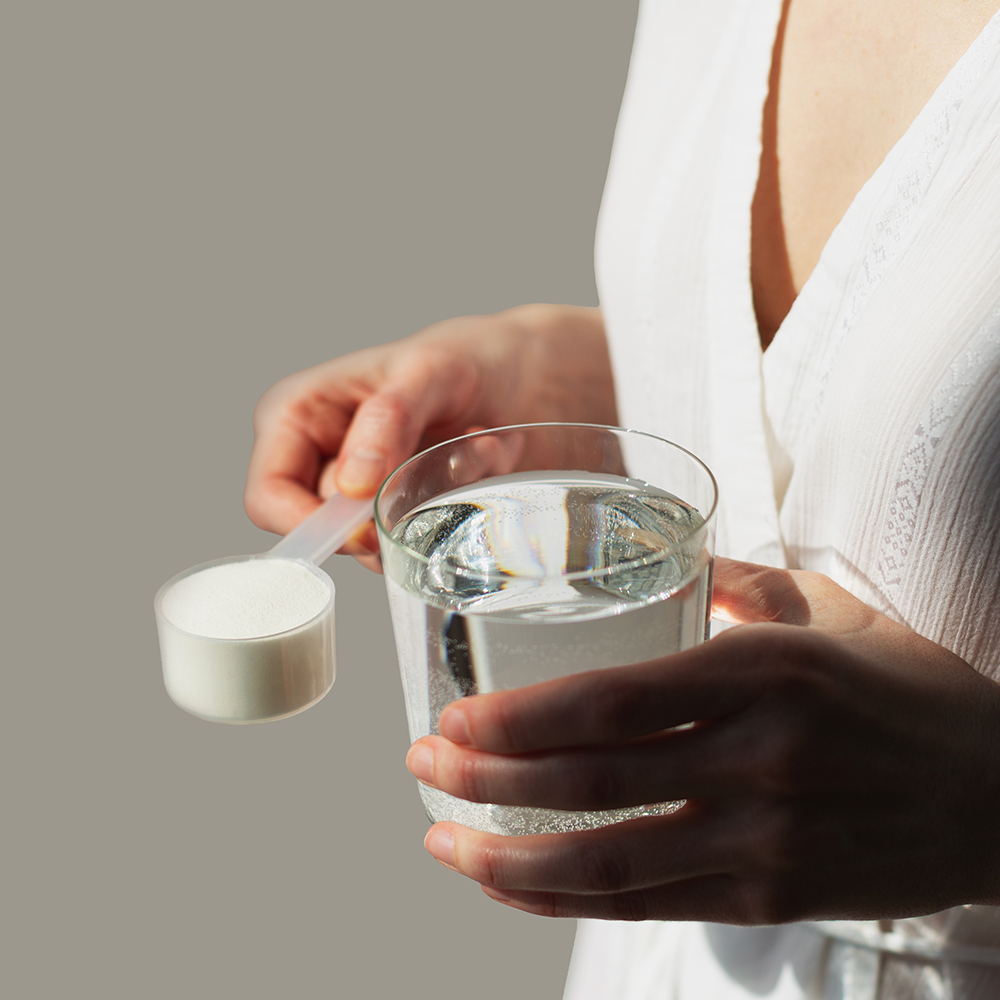
Precise dosage, travel-friendly, compliance | Check sugar/sweeteners, actual amount of collagen | Daily routine, on the go |
Ready-to-drink |
Ultra practical, “ritual” experience | Often more expensive, watch for sugar/additives | Beginners, seeking ease |
The best format is the one that allows you to maintain the target dose effortlessly, because regularity is decisive for the benefits of collagen peptides, as is personal preference for use.
Quality and controls: traceability, allergens, analyses
Quality criteria expected for serious collagen peptides:
- traceability of the raw material (origin, supply chain)
- control of contaminants (including heavy metals, particularly relevant for certain marine sources)
- allergens explicitly mentioned (fish)
- batch consistency (reproducible peptide profile)
In an expert brand approach, the ability to document analyses, raw material selection, and formulation rigor is a key marker.
In this respect, Biocyte has historically been a major player in nutricosmetics in France, with a culture of formulation focused on active ingredients, synergies, and quality requirements.
What to pair collagen peptides with?
Pairing collagen peptides with complementary cofactors and active ingredients is not about “artificially boosting”: the idea is to align the routine with the biology of collagen synthesis and the needs of the skin or connective tissues.
Vitamin C: cofactor for collagen synthesis
Vitamin C (ascorbic acid) is an enzymatic cofactor essential for the hydroxylation reactions (proline/lysine) involved in collagen maturation. Without adequate availability, the structure of newly formed collagen is less stable.
Concretely, pairing collagen peptides and vitamin C is coherent, especially if the diet is low in fruits/vegetables; vitamin C ideally fits into a comprehensive strategy: diet rich in plants + supplement if necessary.
In the sports/tendon context, a study showed that vitamin C-enriched gelatin taken before exercise increased markers of collagen synthesis.
Hyaluronic acid, zinc, silicon, antioxidants: useful synergies
- Collagen peptides and hyaluronic acid: logical “matrix + hydration” synergy, because hyaluronic acid is a glycosaminoglycan involved in water retention and the viscoelastic properties of tissues
- Zinc and copper: cofactors for numerous enzymes, of interest in skin/nail approaches, especially in case of limited intake
- Silicon: frequently used in “skin-nail-hair” programs for tissue support
- Antioxidants (polyphenols, vitamins): indirect interest via oxidative stress management, particularly relevant when UV exposure/pollution is high
The goal is not to pile them up, but to choose 1 to 3 adapted synergies, for a readable and tolerable formula.
Collagen + protein: interest according to objectives
Collagen peptides do not replace a complete protein, because their essential amino acid profile is different.
However, they can be complementary:
- For a skin objective: the benefit lies in the dermal matrix; a moderate dose of peptides + a balanced protein diet is often sufficient
- For a sports objective: peptides are part of a broader strategy: dietary protein (or whey/alternatives), distribution throughout the day, and timing around sessions
Collagen peptides: precautions, side effects, contraindications
Collagen peptides are generally well tolerated in studies, but like any dietary supplement, caution relies on the quality of the product, the dose, and the individual context.
Digestive tolerance: discomfort, tips for better tolerance
Possible discomforts (variable according to individuals) can be mild bloating, a feeling of heaviness, a taste or odor that may be bothersome.
Tips:
- start at a half-dose for 3 to 7 days
- take with a meal if the stomach is sensitive
- split the dose (morning/evening)
- choose a purer formula (fewer sweeteners/flavors) if there is intestinal sensitivity
Allergies and vigilance based on the source
Marine sources can pose a problem in case of a fish allergy. Even with purified processes, vigilance remains necessary: check allergen labeling, prioritize clear traceability, and opt for another source if there is a history of allergies.
Pregnancy/breastfeeding, program: when to seek medical advice
As a precautionary principle, medical advice is relevant during pregnancy or breastfeeding, in the event of chronic pathology or long-term treatments, if there is a history of severe allergies, or if there are persistent digestive symptoms.
A food supplement is part of a supportive approach but must never replace medical follow-up or a balanced diet.

FAQ – Everything you need to know about collagen peptides
What are the main skin benefits of collagen peptides?
Collagen peptides are documented for skin hydration and elasticity, with improvements observed over several weeks in controlled trials and meta-analyses. Collagen peptides are primarily considered for improving the quality of the dermal matrix and hydration.
What daily dose of collagen peptides for visible results?
The most frequent benchmarks are between 2.5 g and 10 g/day depending on the objective, form, and formula.
How long does it take to see the effects of collagen peptides?
Often between 4 and 12 weeks, with variations depending on the goal (skin vs joints) and consistency. Some trials observe improved hydration from 6 weeks, then elasticity/wrinkle parameters at 12 weeks.
Should you take collagen peptides in the morning or evening, with or without a meal?
There is no single rule. Consistency is key. In case of digestive sensitivity, taking them with a meal or in divided doses is preferable. For a tendon/sports goal, taking them near a progressive loading session can be consistent.
Collagen peptides: marine or bovine, which to choose according to your goal?
There is no universal hierarchy: the choice depends particularly on dietary preferences and allergies (fish).
Sources
- Pu S-Y. et al. Effects of Oral Collagen for Skin Anti-Aging: A Systematic Review and Meta-Analysis. Nutrients (2023)
- Kim D-U. et al. Oral Intake of Low-Molecular-Weight Collagen Peptide Improves Hydration, Elasticity, and Wrinkling in Human Skin: A Randomized, Double-Blind, Placebo-Controlled Study. Nutrients (2018)
- König D. et al. Specific Collagen Peptides Improve Bone Mineral Density and Bone Markers in Postmenopausal Women—A Randomized Controlled Study. Nutrients (2018)
- Shaw G. et al. Vitamin C–enriched gelatin supplementation before intermittent activity augments collagen synthesis. The American Journal of Clinical Nutrition (2017)
- Clark K. L. et al. 24-Week study on the use of collagen hydrolysate as a dietary supplement in athletes with activity-related joint pain. Current Medical Research and Opinion (2008)
- (Enzymatic mechanisms) Review on collagen hydroxylases (prolyl/lysyl) and biosynthesis