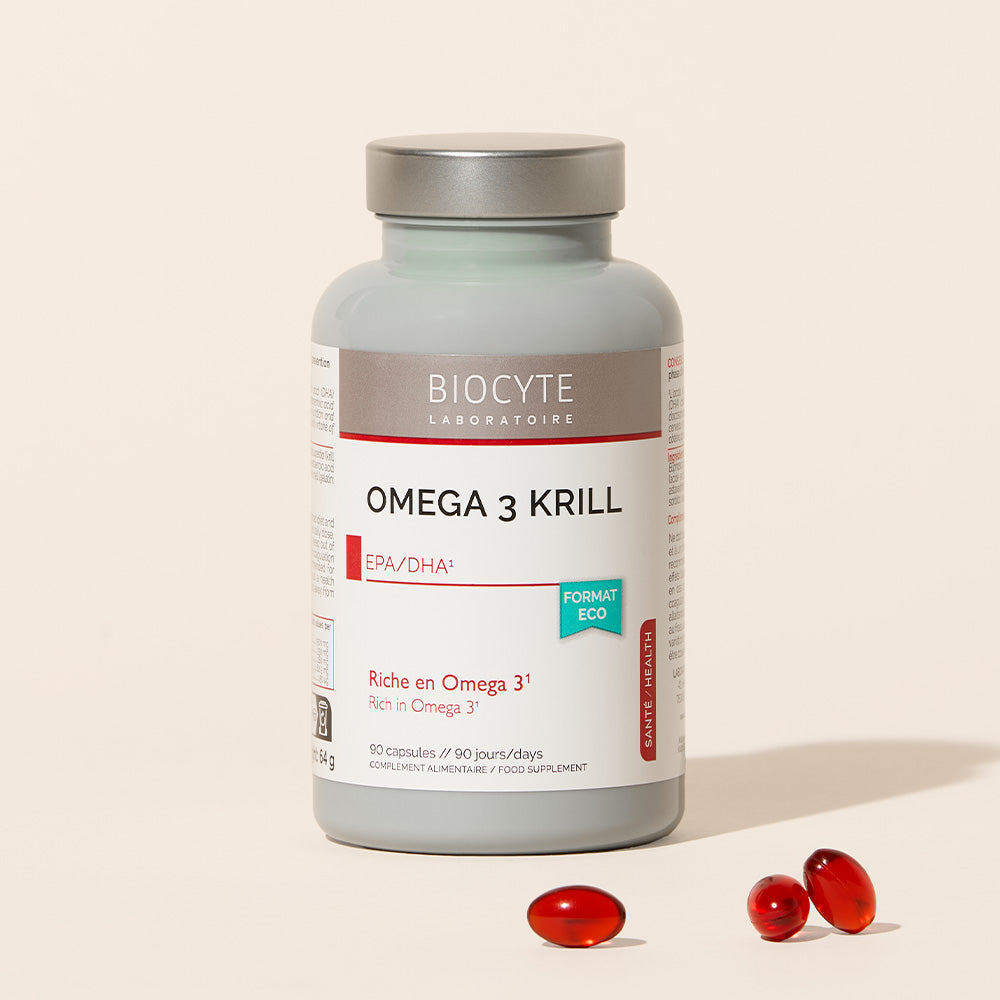
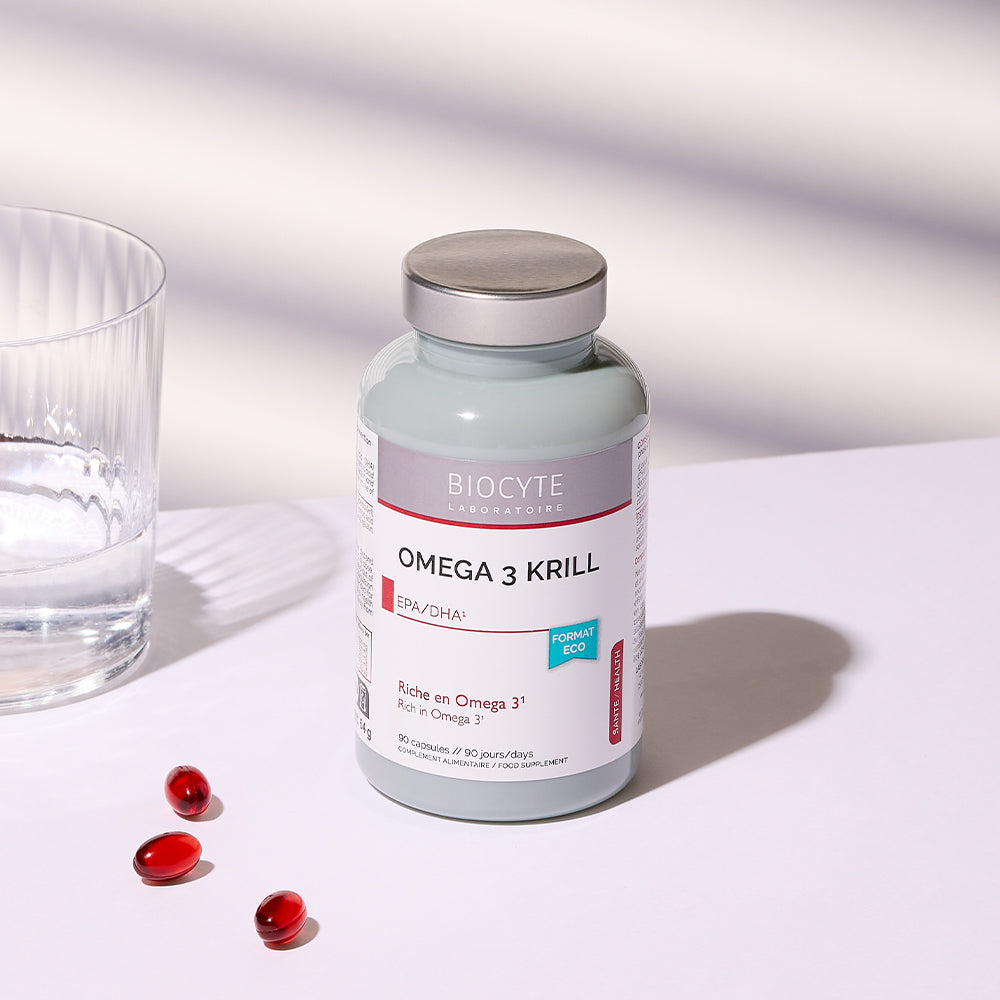
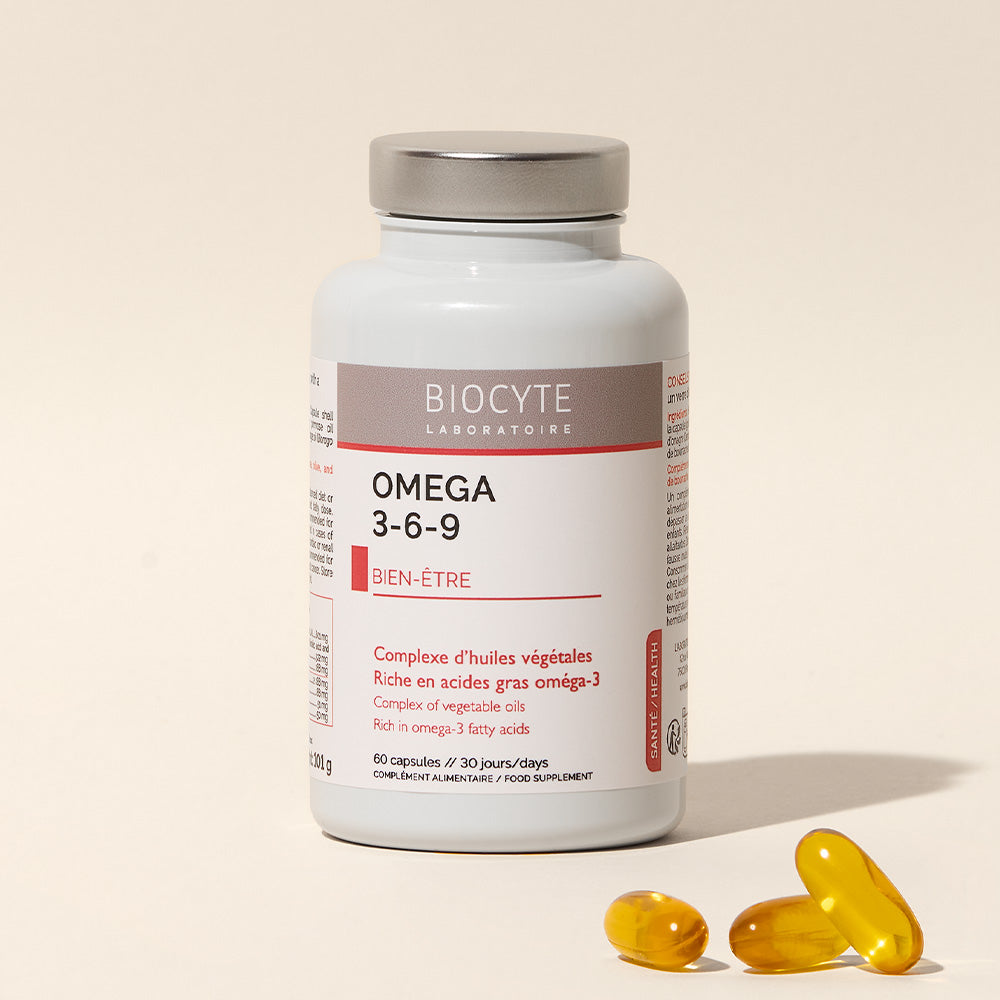
Why choose an Omega 3 food supplement?
Omega 3s are essential nutrients for the proper functioning of the body. However, dietary intake often remains insufficient, particularly due to limited consumption of fatty fish and a frequent imbalance between omega 3 and omega 6 in the modern diet. An omega 3 food supplement thus helps to rebalance these intakes and to support various physiological mechanismson a daily basis.
These fatty acids play a fundamental role in the composition of cell membranes. In particular, they contribute to the normal functioning of the heart, brainand vision. Their presence in the body is also important for maintaining comfortable skinand preserving the quality of the hydrolipidic film. This holistic approach explains why omega 3s now occupy a central place in the world of nutricosmetics.
Needs can vary depending on age, diet or lifestyle. In this context, choosing a quality omega 3 food supplement provides standardized doses of EPAand DHA, the two forms most studied scientifically. This approach is part of a complete nutritional routine associated with a balanced diet and a healthy lifestyle.
What are the health benefits of omega 3s?
Omega 3s are involved in many biological functions thanks to their structural role within cells. EPA and DHA contribute in particular to membrane fluidity, essential for the proper functioning of tissuesand organs. Their action is particularly studied for the cardiovascular system, cognitive functions and visual comfort.
DHA is naturally very present in the brainand in the retina. An adequate intake thus contributes to the maintenance of normal brain functions and normal vision. Several studies have also highlighted the interest of omega 3s in the context of cognitive well-being, particularly in adults with an intense lifestyle or in seniors.
Omega 3s are also sought after in the world of nutricosmetics. They contribute to the quality of the skin barrier and help maintain supple and comfortableskin. This synergy between nutrition and skin beauty fully corresponds to the approach developed by Biocyte, a French laboratory renowned for its scientific expertise in nutricosmetics and its innovative formulations combining targeted biomolecular active ingredients and measured effectiveness.
Omega 3 food supplement: EPA, DHA and ALA, what are the differences?
Omega 3s group together several fatty acids with complementaryfunctions. ALA, or alpha-linolenic acid, is mainly present in certain vegetable oils such as flaxseed or walnut oil. This fatty acid is qualified as essential
because the body cannot produce it itself. However, its conversion to EPA and DHA remains relatively low.EPA is mainly studied for its role in cardiovascular balanceand general well-being. DHA, on the other hand, is more concentrated in the brain and retina. This specificity explains its interest in maintaining cognitiveand visualfunctions. Food supplements generally favor a combination of EPA and DHA in order to offer a
complete
action
.Understanding these differences allows you to better choose your omega 3 food supplement according to your needs. Some formulas place more emphasis on DHA to support brain functions, while others offer a balance between EPA and DHA for a more global approach.How to choose the best omega 3 food supplement?The choice of an omega 3 food supplement is based primarily on the quality
of the ingredients used. The concentrationof EPA and DHA is an essential criterion, as not all formulas offer the same dosages. A quality product must clearly indicate the exact quantities of active fatty acids present per serving.The purity
of the oils is also crucial. The best supplements use advanced purificationprocessesto limit the presence of contaminants and preserve the stability of fatty acids. As oil oxidation is a major issue, serious manufacturers implement rigorous quality controls to guarantee the integrity of the active ingredients.The
format
and sourceof omega 3s can also influence the final choice. Some people prefer wild fish oils, while others prefer plant-based alternatives derived from microalgae. The essential thing is to choose a transparent, traceable formula adapted to one's nutritional needs.Omega 3 in capsules: which form to prefer?Capsules remain today the most used form for omega 3 food supplements. They effectively protect oils sensitive to oxidation while facilitating daily dosage
. Their practical format easily integrates into a
wellness routine and generally limits the characteristic taste of marine oils.What are the best ingredients for a quality omega 3 supplement?
Fatty fishsuch as sardines, mackerel or anchovies are among the best natural sources of omega 3s. Oils extracted from these fish naturally provide EPA and DHA, two forms directly assimilated by the body. The quality of the raw material and the extraction method strongly influence the final quality of the supplement.Krill oilis also attracting increasing interest in the field of supplementation. Omega 3s are present in phospholipid
form
, a naturally well-assimilated structure. Some clinical studies have observed an effective increase in the omega 3 index with this specific marine source.Omega 3 food supplement for the heart, brain and vision Omega 3s are particularly studied for their role in the normal functioning of the cardiovascularsystem. EPA and DHA contribute to lipidbalance
and help maintain normal cardiacfunctionwhen consumed as part of a balanced diet. The brainis also one of the organs richest in DHA. This fatty acid is involved in the structure of neuronalmembranes
and contributes to the maintenance of normal cognitivefunctions. Needs can be particularly important during periods of intense intellectual activity or with advancing age.Finally, DHA plays a major role in the
retina
, where it is naturally highly concentrated . A sufficient intake contributes to the maintenance of normal vision. This versatility explains why omega 3s occupy an essential place in modern nutritional programs and in the global nutricosmetic approaches developed by Biocyte.Omega 3 and diet: why supplement?
Even with a varied diet, omega 3 intake often remains insufficient. Nutritional recommendations, however, encourage the regularconsumptionof fatty fish, a habit still little widespread in many European countries. Restrictive or vegetarian diets can also limit EPA and DHA intake.The imbalance between omega 3 and omega 6 is now an important nutritional issue. Processed foods and certain vegetable oils often provide a high amount of omega 6, which can accentuate this imbalance. Supplementation then makes it possible to restore intake that is more
consistentwith physiological
needs
.Taking an omega 3 food supplement also allows you to benefit from a precise and constant dosage. This regularity is essential to maintain optimal EPA and DHA intake as part of a sustainable nutritional routine adapted to the current lifestyle. How to take an omega 3 food supplement? Since omega 3s are lipids, it is generally advisable to consume them during a meal containing fats. This association promotes their assimilationby the body and optimizes the bioavailability
of EPA and DHA. Regular intake also makes it possible to maintain constant daily intake.
The dosage depends on several factors such as diet, individual needs or desired goals. Some people choose a concentrated formula to reduce the number of capsules to take each day. It remains important to follow the recommendations indicated on the product.
Omega 3 food supplements should always be part of a global approach to well-being. A balanced diet, regular physical activity and a healthy lifestyle remain essential to optimize the nutritional benefits of essential fatty acids.
What criteria to check before buying omega 3s?Before choosing an omega 3 food supplement, it is important to check the actual amountof EPA and DHA present in each dose. Some products display a total amount of oil without specifying the exact concentration of active ingredients, which can make comparisons difficult.
The origin of the oilsand the traceabilityof the ingredients are also essential criteria. Serious brands highlight rigorous purificationprocessesand regular qualitycontrolsto guarantee the stabilityand purity
of the fatty acids.Finally, the choice must take into account each person's profile. A vegetarian person may prefer an algae-based formula, while a user looking for a high concentration may opt for highly dosed marine oils. The goal remains to select a reliable, adaptedand easy
to integrate into daily life formula.
FAQ – All about omega 3 food supplements
What are the benefits of omega 3 food supplements?Omega 3s contribute to the normal functioning of the heart, brainand visionthanks to their richness in EPAand DHA. They also play a role in the qualityof cellmembranesand contribute to skincomfort
. Their interest is particularly recognized in the context of a modern diet often imbalanced in essential fatty acids.
What is the difference between natural omega 3 and concentrated omega 3?Natural omega 3s generally have a concentration close to that found in their originalsource. Concentrated versions undergo a process to increase thelevels
of EPA and DHA in order to obtain higher dosages with fewer capsules to consume daily.
When to take an omega 3 food supplement?It is recommended to take omega 3s with a meal containing lipids in order to promote their assimilation. Regular
intake
helps maintain constant intake of essential fatty acids and optimize their integration into cell membranes.How much omega 3 to take per day?Needs vary according to profiles and dietaryhabits. General recommendations often mention a daily intake of
between 250 mg and 500 mg of EPA and DHA
. Dosages can, however, differ depending on formulations and individual nutritional needs.Do omega 3s have side effects?Omega 3s are generally well toleratedwhen consumed according to the
recommendations
for use. Some people may sometimes experience slight digestive discomfort or a marine taste in the mouth, often limited thanks to quality capsules and purified oils.Can omega 3s be taken all year round?Yes, omega 3s can be consumed
regularly
as part of a balanced diet and a healthy lifestyle. Their continuous intake helps maintain a good nutritional balance, especially when the diet is low in fatty fish.Which omega 3s to choose for the brain?Formulas rich in DHA are particularly suited to cerebral needs. This fatty acid is naturally very present in neuronal membranes and contributes to the maintenance of normalcognitivefunctions
as well as the proper functioning of the
nervoussystem.Are omega 3s good for cholesterol?Omega 3s contribute to overall lipidbalance
as part of an adapted diet. They are particularly studied for their role in
triglyceridemetabolismand their contribution to good cardiovascularfunction . What is the best source of omega 3?Fatty fish
and
krilloilsare among the main sources of omega 3s. The choice depends on dietary preferences, nutritional needs and the desired level of EPA and DHA concentration.


 Skin
Skin Hair & Nails
 Sun Care
 Slimming
 Health
 K-Biocyte
 Clinical