
 Skin
Skin Hair & Nails
 Sun Care
 Slimming
 Health
 K-Biocyte
 Clinical

Skin rebound effect: why does it appear and how to fix it permanently
Key takeaways
The rebound effect on the skin is a biological adaptation reaction, not a sign of a failed routine or an allergy.
Three main triggers: prolonged sun exposure, transitioning to a gentler routine, or stopping a strong active ingredient or dermatological treatment.
It manifests as excess sebum, blemishes, and sometimes redness, and generally lasts from two to six weeks depending on the skin type.
A gradual transition and supporting the skin barrier help limit its intensity and duration.
Rebalancing can also be supported from within, in addition to topical treatments.
The skin's behavior changes after a summer in the sun, a switch to more natural cosmetics, or stopping a dermatological treatment, and this reaction has a name: the skin rebound effect. Far from being a coincidence or a sign of failure, this phenomenon reflects a precise biological adaptation mechanism that skin physiology now allows us to understand and anticipate.
What is the skin rebound effect?
The skin rebound effect returns every year at the same time: after vacations, during seasonal changes, or with a new cosmetic routine. Many interpret it as an unexplained disruption, or even a failure of their skincare, when in fact it is a recognized and well-documented reaction in skin physiology. Understanding what is happening at that moment directly changes how one responds to it.
Definition and biological mechanism
The skin rebound effect corresponds to a transitional readjustment phase during which the sebaceous glands, the skin barrier, and the skin microbiota return to a state of balance after a disturbance. Concretely, when an external factor suddenly alters skin activity—whether it be sun exposure, a change in formula, or stopping an active ingredient—the skin does not instantly return to its initial state. It goes through an intermediate, often uncomfortable phase before stabilizing its sebum production and barrier function.
This phenomenon is largely explained by the activity of the sebaceous glands, which respond to hormonal, inflammatory, and environmental signals. The sebaceous glands secrete sebum to form a protective barrier that preserves skin health, but exposure to ultraviolet A (UVA) rays damages this barrier and causes dryness and inflammation. In reaction to this aggression, the skin then initiates a compensatory overproduction phase, which explains much of the symptoms attributed to the skin rebound effect.
A sign of adaptation, not a skincare failure
Contrary to popular belief, the appearance of a skin rebound effect does not mean that a product is unsuitable or that a routine has failed. On the contrary, it is a coherent biological signal: the skin is reacting to a change in context, and this temporary reaction generally precedes a new, more stable state of equilibrium. Understanding this mechanism helps avoid two common mistakes: prematurely abandoning a relevant routine or, conversely, multiplying corrective treatments that prolong the imbalance rather than resolving it.
The 3 situations that trigger a rebound effect
The skin rebound effect does not appear randomly; it always responds to a specific change in the environment or the skin's routine. Three situations arise most frequently in consultations and field observations, each with a distinct mechanism. Identifying them allows one to anticipate the reaction rather than just enduring it.
After prolonged sun exposure
The rebound effect following continuous sun exposure is one of the most common expressions of the phenomenon, particularly upon returning from vacation. Sun exposure temporarily thickens the epidermis and reduces redness, which creates the illusion of clearer skin, while in reality, the sebaceous glands compensate for the dryness caused by UV rays by increasing their sebum production. This mechanism explains why many people notice an apparent improvement in their skin during the summer, followed by a surge of blemishes upon returning from vacation. UVB rays, in particular, increase the expression of pro-inflammatory cytokines, the proliferation of keratinocytes, and sebum production—a triple mechanism that directly fuels the post-sun rebound effect.
When switching to a gentler or natural cosmetic routine
The skin's natural cosmetic transition is a second classic trigger. When a routine composed of powerful active ingredients (concentrated exfoliating acids, retinoids, aggressive mattifying formulas) is replaced by gentler skincare, the skin goes through an adjustment phase sometimes referred to as a cosmetic purge. Keratinocytes, accustomed to accelerated renewal, slow down their cycle, while sebum production, previously contained by drying agents, returns to a level closer to its natural physiology. This phase can be accompanied by skin that reacts after a change of routine, with increased sensitivity while the skin barrier stabilizes again.
When stopping a strong active ingredient or a dermatological treatment
The third case concerns stopping a strong active ingredient, particularly retinoids or dermatological treatments targeting the sebaceous gland. 13-cis retinoic acid, one of the most powerful inhibitors of sebum production, acts by causing cell cycle arrest and sebocyte apoptosis, which significantly reduces the size and secretion of sebaceous glands. Upon stopping this type of treatment, the sebaceous glands gradually resume normal activity, sometimes accompanied by a transient overcompensation phase, which corresponds to a rebound effect that is particularly well-documented in dermatology.


How to recognize a rebound effect
Not all signs are equal, and a skin rebound effect can take on different forms depending on the trigger and the skin type involved. Excess sebum, imperfections, or, conversely, redness and tightness: the presentation varies, but the underlying logic remains the same. Knowing how to recognize these signals prevents them from being confused with a genuine skin condition.
Oily skin, imperfections, blackheads, enlarged pores
The most characteristic sign of the rebound effect remains the appearance of excess sebum after sun exposure or after a change in routine, associated with blackheads, enlarged pores, and new imperfections. This picture corresponds to a transient hyperactivity of the sebaceous glands, which seek to restore a sufficient hydrolipidic film after a phase of drying or over-stimulation. Oily skin is the most common illustration, with increased shine on the T-zone and a proliferation of micro-comedones in the two to three weeks following exposure.
Redness, tightness, reactive sensitivity
A second category of symptoms relates more to an imbalanced skin barrier: diffuse redness, tightness, and a sensation of discomfort upon contact with water or regular textures. Solar UV radiation alters the intercellular components of the stratum corneum and its mechanical cohesion, which can durably weaken the skin's barrier function. This weakening explains why some skin types, rather than developing imperfections, react primarily with increased sensitivity and a loss of skin comfort.
How long does it last?
The duration of the skin's rebound effect varies according to the trigger and skin type, but it generally lasts between two and six weeks. Post-sun rebound effect tends to subside within three to four weeks as cell renewal normalizes. The purge associated with a cosmetic transition usually lasts four to six weeks, the time needed for the keratinocyte cycle to return to its natural rhythm. The rebound effect resulting from stopping a dermatological treatment can, for its part, extend over several months if the sebaceous gland had been strongly inhibited over a long period.
How to prevent and limit the rebound effect
While the rebound effect cannot always be avoided, its intensity and duration largely depend on how the transition is managed. A few simple adjustments, applied at the right time, are enough to limit the extent of the imbalance rather than passively enduring it. The principle remains constant: support the change rather than imposing it on the skin.
Adapting your routine during the transition phase
The best strategy when facing a rebound effect is never to abruptly interrupt a routine or change several parameters simultaneously. Introducing a new active ingredient or removing a strong treatment gradually, over several weeks, allows the skin to readjust its functioning without sudden shocks. This logic of progressive transition applies as much to after-sun care as it does to the move toward a natural cosmetic transition.
Acting from within: rebalancing sebum and the skin microbiome
Beyond topical treatments, sebum regulation and maintaining a balanced skin microbiome also rely on internal physiological mechanisms. Dysbiosis of the skin microbiome affects barrier integrity and contributes to an increase in transepidermal water loss, sebum levels, pH, and erythema, which directly links microbial balance to the intensity of the rebound effect. Naturally rebalancing sebum therefore involves supporting both the barrier function and cutaneous microbial diversity, two parameters that evolve in a coordinated manner.
Errors that worsen the rebound effect
Certain habits, though intuitive, prolong the skin's rebound effect instead of resolving it. Multiplying cleansing steps or drying treatments to fight excess sebum accentuates the weakening of the skin barrier and maintains a cycle of overcompensation. Reintroducing a strong active ingredient too quickly at the first signs of improvement also triggers the imbalance again. Finally, ignoring skin that reacts after a change in routine by assuming it will "get used to it" without adjustment unnecessarily delays the return to balance.
The skin does not return to its initial state instantly: it goes through an intermediate phase before stabilizing.
Anti-rebound effect routine, step by step
Once the mechanism of the rebound effect is understood, it remains to translate it into concrete steps, morning and evening, with additional support if necessary. This routine does not seek to mask symptoms but to support the skin toward its new balance. It is built in three stages, each with its own objective.
In the morning
The morning routine should favor gentle, non-detergent cleansing, followed by appropriate sun protection, including during periods without high exposure. A light but non-drying texture helps limit the compensatory stimulation of the sebaceous glands, one of the main drivers of the sun-related rebound effect.
In the evening
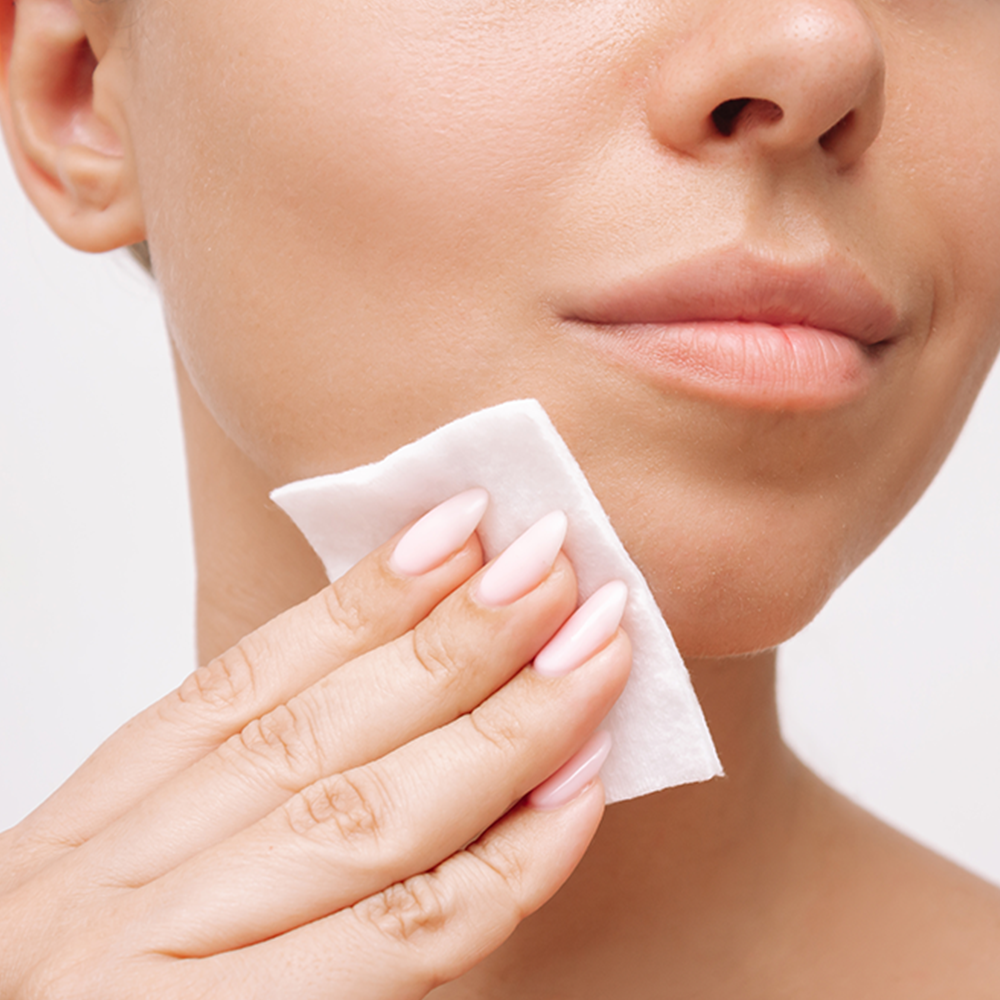
In the evening, the goal is to restore the barrier function without reintroducing aggressive active ingredients during the adjustment phase. Textures rich in lipids similar to the skin's natural hydrolipidic film, combined with soothing ingredients, support the recovery of the imbalanced skin barrier without interfering with the ongoing adaptation process.
Oral support
Skin rebalancing can also be supported through a nutricosmetic approach, in addition to the topical routine. Zinc contributes to the maintenance of normal skin, while certain targeted biomolecular active ingredients help support the skin microbiome and barrier function. This "from within" approach is part of the integrative biology philosophy promoted by Biocyte, the first French laboratory to have developed oral hyaluronic acid and keratin, and a pioneer in high-dosage probiotics targeting microbiome balance.


FAQ on the skin rebound effect
How long does the skin's rebound effect last?
The rebound effect lasts on average from two to six weeks depending on its origin. A post-sun rebound effect generally subsides in three to four weeks, while a purge linked to a change in cosmetic routine can last up to six weeks. After stopping a strong dermatological treatment, the readjustment phase can be longer, especially if the sebaceous gland had been strongly inhibited. Patience remains a determining factor here, as interrupting the process prematurely often prolongs the imbalance.
Does the rebound effect affect all skin types?
No, not all skin types react with the same intensity to a rebound effect. Naturally combination to oily skin, whose sebaceous activity is already more sustained, generally presents a more marked reaction in terms of shine and imperfections. Dry or sensitive skin, on the other hand, expresses the rebound effect more through tightness and increased reactivity, with more visible damage to the skin barrier than to sebum production.
How to differentiate a rebound effect from a true allergy or irritation?
A skin rebound effect is distinguished from an allergy by its timing and nature. It appears gradually after an identifiable change (sun, routine, stopping an active ingredient), evolves over a few weeks toward spontaneous improvement, and manifests primarily as a sebum imbalance or diffuse sensitivity. Conversely, an allergy or irritation occurs more rapidly after applying a specific product, may be accompanied by marked itching or well-defined patches, and does not improve without removing the product in question.
Should a treatment be stopped at the first signs of a rebound effect?
Stopping a treatment at the first signs of a rebound effect is generally not the most appropriate response, unless there is a clearly irritative reaction. This phenomenon corresponds to a transient adjustment phase, and prematurely interrupting a routine can delay the establishment of a new skin balance. It is preferable to maintain a simplified routine, limit the addition of new active ingredients during this period, and re-evaluate the situation after four to six weeks.
Can the rebound effect be prevented before it appears?
Anticipating a rebound effect is possible by introducing changes progressively rather than abruptly. Gradually reducing sun exposure at the end of a holiday, decreasing a strong active ingredient in stages rather than stopping it suddenly, or overlapping a new routine with the old one for a few weeks will limit the intensity of the readjustment. Maintaining a functional skin barrier throughout the transition remains the most decisive preventive factor.
Can food supplements limit the cutaneous rebound effect?
A nutricosmetic approach can support the management of the rebound effect, in addition to an appropriate topical routine, but should not replace it. Active ingredients that help maintain normal skin or support the skin microbiome contribute to better resilience of the skin barrier during the adjustment phase. In case of pregnancy or breastfeeding, it is important to seek advice from a healthcare professional before any supplementation.
Sources
- Podwojniak et al., Acne and the cutaneous microbiome: A systematic review of mechanisms and implications for treatments, Journal of the European Academy of Dermatology and Venereology, 2024 — PMC.
- Dong et al., UV-A Radiation Impairs Sebaceous-Gland-Related Skin Barrier Function by Inducing Inflammation and Altering Intracellular Sebum-Like Lipid Composition, Journal of Cosmetic Dermatology, 2025.
- Sun Exposure and Photoprotection: Impact on Acne and Patient Outcomes, HMP Global Learning Network / Acne News.
- Nelson et al., 13-cis Retinoic Acid Induces Apoptosis and Cell Cycle Arrest in Human SEB-1 Sebocytes, ScienceDirect / PubMed.
- Solar UV radiation reduces the barrier function of human skin, PMC.

Biocyte Editor: Lise Pujol, Doctor of Pharmacy
Lise Pujol specialized in micronutrition during her early years of pharmacy practice, before completing the University Diploma (DIU) in Micronutrition, Nutrition, Prevention, and Health from Professor Castronovo. Today, she brings this expertise to Biocyte, where she contributes to formula development and scientific outreach for field teams.