
 Skin
Skin Hair & Nails
 Sun Care
 Slimming
 Health

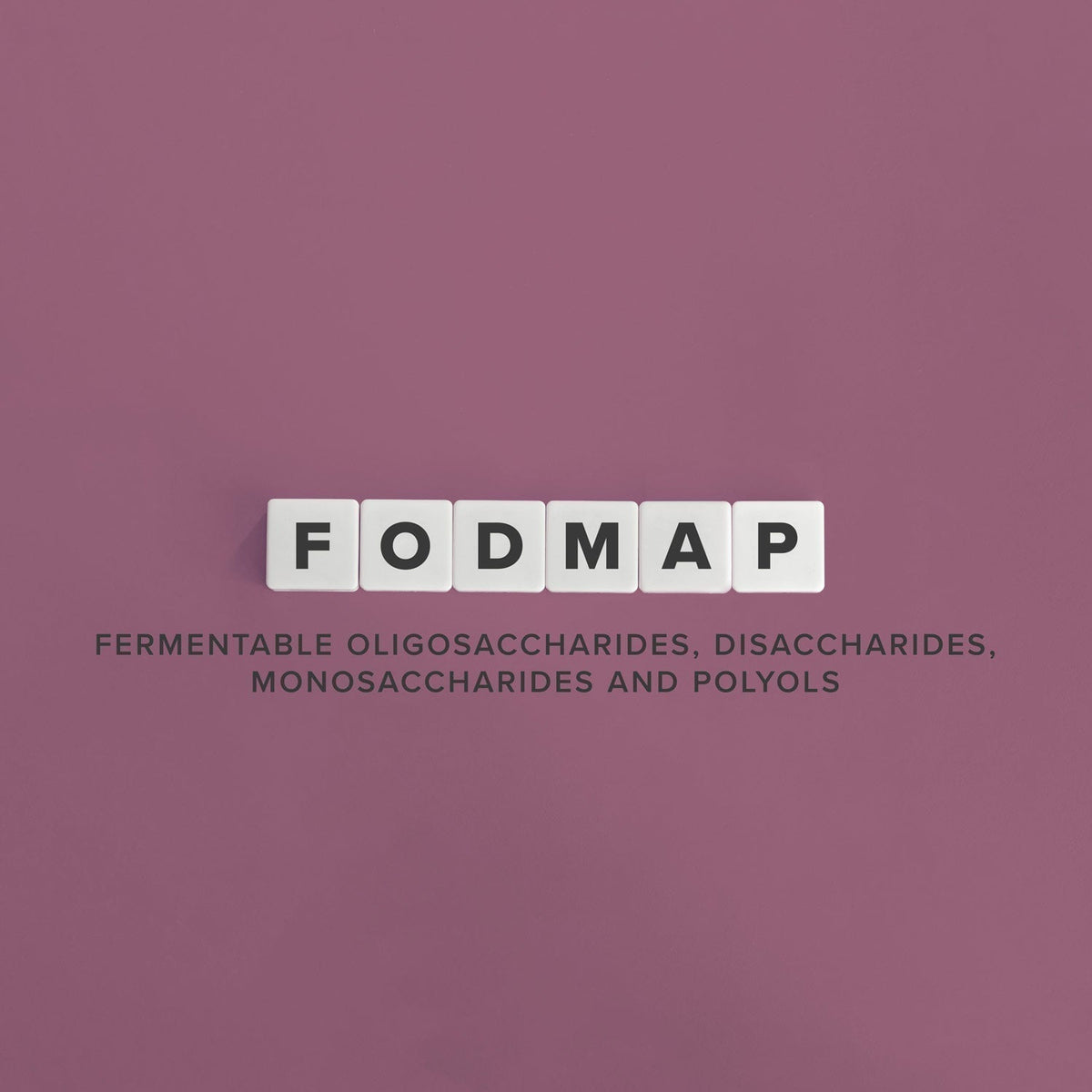
FODMAP Diet: The Complete Guide to Better Digestion and Irritable Bowel Relief

Key takeaways
The FODMAP diet is a three-phase dietary protocol—elimination, reintroduction, and personalization—designed to identify fermentable carbohydrates responsible for digestive issues, particularly in irritable bowel syndrome.
FODMAP-rich foods are temporarily eliminated and then reintroduced family by family to map out individual intolerances.
The diet should not be permanent: a prolonged low-FODMAP diet depletes gut microbiota diversity and exposes the body to nutritional imbalances.
Reading labels is essential: inulin, polyols, and fructose-glucose are common hidden FODMAPs in processed products.
Probiotics and digestive enzymes can support the protocol, provided you check for the absence of fermentable excipients in their formulation.
Persistent bloating after meals, abdominal pain with no identified organic cause, and an unpredictable transit that resists all usual adjustments: for millions of people, these symptoms are the day-to-day reality of irritable bowel syndrome. Faced with this chronic functional disorder, gastroenterology now has a robust dietary protocol, validated by randomized clinical trials and recognized by major global scientific societies: the FODMAP diet.
Far from being a weight-loss diet or a nutritional fad, the FODMAP diet is a structured, temporary, and personalized approach that aims to precisely identify which fermentable carbohydrates disrupt each individual's digestive health. Its implementation is complex, however: each phase requires a rigor in execution that can only be guaranteed with support from a dietitian or a specialized doctor. Understanding how it works, its phases, its constraints, and its limits is essential to applying it correctly and deriving real benefit.
What is the FODMAP diet?
The FODMAP diet is a dietary protocol targeting certain fermentable carbohydrates, recognized as the standard for managing functional digestive disorders such as irritable bowel syndrome.
Definition: FODMAP, what does this acronym mean?
FODMAPs refer to a group of short-chain carbohydrates and polyols naturally present in many common foods. Their common characteristic: they are poorly or insufficiently absorbed by the small intestine, which makes them capable of triggering digestive issues in individuals with high intestinal sensitivity.
The acronym FODMAP is composed as follows:
- Fermentable: these carbohydrates are fermented by colon bacteria, producing gas and causing excessive intestinal fermentation.
- Oligosaccharides: fructo-oligosaccharides (FOS) and galacto-oligosaccharides (GOS), found in wheat, garlic, onions, and legumes.
- Disaccharides: mainly lactose, found in unaged dairy products.
- Monosaccharides: fructose in excess of glucose, found in honey, certain fruits, and high-fructose corn syrup.
- Polyols: sorbitol, mannitol, xylitol, found in certain fruits, vegetables, and synthetic sweeteners.
When they reach the colon without having been properly absorbed, these carbohydrates exert two main effects on digestive health. First, they exert an osmotic effect: they pull water into the intestinal lumen, which can speed up intestinal transit and cause loose stools or diarrhea. Second, they are a prime substrate for fermentation by bacteria in the gut microbiota, resulting in gas production (hydrogen, methane, carbon dioxide) directly responsible for the intestinal bloating, cramps, and abdominal pain that are so characteristic.
It is essential to understand that this is not a question of toxicity, but of individual tolerance and absorption capacity. In a person without specific intestinal sensitivity, these carbohydrates are digested without noticeable symptoms. In a patient with irritable bowel syndrome, however, even small amounts can trigger a disproportionate reaction.
Origin of the protocol: Monash University and clinical research
The FODMAP diet was developed in the early 2000s by a team of researchers at Monash University in Melbourne, Australia, led by Peter Gibson and Sue Shepherd. Starting from the observation that existing dietary strategies for irritable bowel syndrome lacked a rigorous scientific basis, they conducted a series of controlled clinical trials to evaluate the impact of reducing fermentable carbohydrates on digestive symptoms.
The first results were published as early as 2006, then consolidated by randomized double-blind studies over the following decade. The protocol was gradually structured into three distinct and sequential phases—elimination, reintroduction, and personalization—allowing for the precise identification of the FODMAP families responsible for symptoms in each individual, moving far beyond a simple, uniform list of foods to avoid.
Today, Monash University maintains a world-leading app, regularly updated with the FODMAP composition data of hundreds of foods. The FODMAP diet is recognized as a first-line dietary strategy in the management of irritable bowel syndrome by numerous gastroenterology scientific societies, notably the British Dietetic Association and the Monash University Gastroenterology Research Group.
Who is the FODMAP diet for?
The FODMAP diet is primarily indicated for people suffering from irritable bowel syndrome (IBS), also referred to as functional colopathy or functional intestinal disorders. This chronic disorder manifests as recurrent abdominal pain, intestinal bloating, difficult digestion, and alternating constipation and diarrhea, in the absence of any identifiable organic lesion.
It may also be of interest, upon medical advice, for certain people with inflammatory bowel disease (IBD) in remission, or for patients exhibiting intestinal sensitivity to FODMAPs without a formal IBS diagnosis. In all cases, a prior medical assessment is essential to rule out other digestive pathologies that could mimic the symptoms of IBS.
Conversely, the FODMAP diet is not indicated as a weight-loss diet, nor as a solution for occasional digestive discomfort. It is not suitable for people with a history of eating disorders, nor for children without medical supervision. In the case of pregnancy or breastfeeding, it is imperative to seek advice from a healthcare professional before any significant change to your diet or any implementation of a restrictive protocol such as the FODMAP diet.
The strength of the FODMAP diet lies precisely in its methodical structure. It is not a list of forbidden foods to be followed indefinitely, but a progressive diagnostic protocol designed to lead to a personalized rather than a uniform low-FODMAP diet. However, its real complexity—three distinct phases, reintroductions that must be carried out rigorously, and individual tolerance thresholds to interpret—fully justifies the support of a dietitian trained in this approach or a specialized doctor.

How does the 3-phase FODMAP protocol work?
The strength of the FODMAP diet lies precisely in its methodical structure. It is not a list of forbidden foods to be followed indefinitely, but a progressive diagnostic protocol designed to lead to a personalized rather than a uniform low-FODMAP diet. However, its real complexity—three distinct phases, reintroductions that must be carried out rigorously, and individual tolerance thresholds to interpret—fully justifies the support of a dietitian trained in this approach or a specialized doctor.
Phase 1: Strict elimination (4 to 8 weeks)
The first phase consists of temporarily and strictly removing all FODMAP-rich foods from the diet. This elimination phase generally lasts between four and eight weeks—no less, to allow time for symptoms to stabilize, and no more, to limit the impact on the gut microbiota and avoid any nutritional imbalance.
Its primary objective is diagnostic: to lower the overall level of ingested FODMAPs below the individual tolerance threshold in order to observe a regression of digestive disorders. All FODMAP families—oligosaccharides, disaccharides, monosaccharides, and polyols—are removed simultaneously. This rigor is necessary: partial elimination would make the next phase uninterpretable.
For the majority of patients with irritable bowel syndrome, the elimination phase produces a significant improvement in intestinal bloating, abdominal pain, and bowel transit disturbances within the first two weeks. If no improvement is observed after four to six weeks of strict adherence to the protocol, FODMAPs are likely not the primary triggering factor.
This phase is practically demanding. It requires rigorous meal planning, careful label reading, and, ideally, guidance from a dietitian trained in the protocol to avoid any nutritional deficiency.
The protocol is designed to improve digestive comfort without compromising the gut microbiota.
Phase 2: Progressive reintroduction by FODMAP family
Once the elimination phase is successfully completed, the most informative phase of the protocol begins: reintroduction. Each FODMAP family is tested separately according to a structured schedule: one family at a time, for two to three days, returning to the basic low-FODMAP diet between each test.
The families tested successively generally include fructose, lactose, fructans, GOS, sorbitol, and mannitol. For each test, symptoms are carefully evaluated and recorded, ideally in a food-symptom diary. This systematic approach allows for precise identification of which families trigger digestive issues and at what dosage. Because intestinal sensitivity varies significantly from one individual to another, the results are highly personal: one person may perfectly tolerate lactose but react strongly to fructans, or show a strictly dose-dependent response to fructose.
Phase 3: Customization and long-term FODMAP diet
The third phase marks the exit from the strict protocol to enter into a sustainably personalized diet. Based on the results obtained during reintroduction, each person rebuilds a varied and balanced diet by integrating tolerated FODMAP families and limiting those that trigger symptoms.
The goal is never to maintain a fully low-FODMAP diet permanently. On the contrary, the more dietary variety is restored, the more the gut microbiota benefits from diversified prebiotic substrates. Phase 3 aims for a lasting balance between digestive comfort and nutritional richness, accepting that some foods may remain to be avoided or consumed below an individual tolerance threshold.
The protocol is designed to improve digestive comfort without compromising the gut microbiota.
Allowed foods and foods to avoid: the FODMAP lists
Not all foods are equal when it comes to digestive issues: some are naturally low in FODMAPs and well tolerated, others are rich in them and can trigger symptoms. Here are the main categories to know.
FODMAP-rich foods to eliminate in Phase 1
FODMAP-rich foods cover a wide spectrum of common products. In the elimination phase, the following categories are to be removed entirely.
Fruits: apple, pear, mango, cherry, peach, apricot, watermelon, blackberry, plum, and fresh fig are among those most concentrated in fructose and/or polyols (sorbitol, mannitol). These FODMAP-rich foods are among the most frequent triggers for abdominal pain and intestinal bloating.
Vegetables: garlic, onion, leek (white part), shallot, artichoke, Jerusalem artichoke, asparagus, mushrooms, beetroot, and Brussels sprouts. Garlic and onion are the most concentrated sources of fructans, and are particularly problematic for individuals with high intestinal sensitivity.
Legumes: lentils, chickpeas, kidney beans, flageolets. Their high galacto-oligosaccharide (GOS) content makes them FODMAP-rich foods frequently involved in postprandial digestive disorders.
Lactose-rich dairy products: cow, goat, and sheep milk, standard yogurts, fresh non-aged cheeses (ricotta, cottage cheese, fromage blanc), ice cream.
Gluten/fructan-containing cereals: wheat, rye, barley, and all their derivatives, bread, pasta, semolina, biscuits, pastries. Wheat is both a source of fructans and often of ultra-processed products containing other FODMAP ingredients.
Fermentable sweeteners and sugars: honey, agave syrup, high-fructose corn syrup, and all polyols used in sugar-reduced products: sorbitol (E420), mannitol (E421), xylitol (E967), maltitol (E965), isomalt (E953).
Low-FODMAP foods: what you can eat
Contrary to popular belief, a low-FODMAP diet remains taste-rich and nutritionally balanced, provided you master the available substitutes.
Table of FODMAP-rich and low-FODMAP foods
| FODMAP-rich foods | Low-FODMAP alternatives |
|
| Fruit | Apple, mango, watermelon, apricot, persimmon, cherry, fig, blackberry, nectarine, peach, pear, plum |
Banana, blueberry, cranberry, lemon, lime, strawberry, raspberry, passion fruit, papaya, kiwi, mandarin, grapefruit, orange, rhubarb, coconut, grape, pineapple, cantaloupe (in moderate quantities) |
| Vegetable |
Artichoke, broccoli, asparagus, beetroot, Brussels sprouts, eggplant, fennel, leek, garlic, onion, shallot, cauliflower, mushroom, corn, green peas, Jerusalem artichoke |
Spinach, carrot, endive, olive, ginger, celery, potato, sweet potato, zucchini, cucumber, lettuce, red bell pepper, green beans, radish |
| Cereals |
Wheat in all forms (bread, pasta, biscuit, pastry, etc.), rye, semolina, barley |
Buckwheat, gluten-free flour, rice, polenta, quinoa, tapioca |
| Nuts |
Cashew, pistachio |
Almond, chia, macadamia, pecan, hazelnut, peanut, sesame, walnut |
| Milk |
Cow's milk, condensed milk, milk powder |
Lactose-free milk & plant-based drinks (coconut, soy, almond, rice milk) |
| Cheese |
Fresh soft cheese, crème fraîche, fromage blanc |
Aged hard cheese, brie, camembert, cheddar, feta, mozzarella, parmesan |
| Butter |
Butter, margarine |
Lactose-free, vegetable butter |
| Syrup |
Corn syrup, fructose |
Sugar syrup, maple syrup, molasses |
| Sugar |
Fructose |
White sugar, brown sugar, stevia |
| Ice Cream |
Ice cream with lactose |
Sorbet, gluten-free ice cream, lactose-free ice cream |
| Protein |
Prepared dish with sauce and broth |
Meat, poultry, fish, seafood, and eggs are naturally FODMAP-free. Firm tofu and tempeh are also well tolerated and are excellent protein alternatives for vegetarian or vegan diets. |
| Alcohol |
Cider, rum, vermouth, sweet fortified wine, crème de cassis, port |
Beer, gin, whisky, vodka, wine |
| Drink |
Commercial fruit juice, fruit juice concentrate |
Coffee, tea, fresh homemade fruit juice |
This table helps visualize certain foods naturally rich in FODMAPs as well as their often better-tolerated alternatives. The goal of a low-FODMAP diet is not to permanently exclude certain foods, but rather to identify those that may be associated with digestive discomfort based on individual sensitivity.
Common traps: additives, sweeteners, and hidden FODMAP ingredients
One of the most frequent pitfalls in practicing the FODMAP diet is the presence of fermentable ingredients in supposedly neutral processed products. Systematically reading labels therefore becomes an essential skill of the protocol.
Among the ingredients to identify immediately: inulin and chicory, used as prebiotic fibers in low-fat yogurts, cereal bars, or "wellness" drinks; polyols (sorbitol, mannitol, maltitol, xylitol) in sugar-free confectionery and chewing gum; glucose-fructose syrup in industrial drinks; and garlic and onion powder in broths, industrial tomato sauces, and ready-made meals.
Likewise, some products labeled "gluten-free" are not automatically compatible with a low-FODMAP diet: they may contain honey, lactulose, inulin, or fructose-rich fruit juice concentrates.
FODMAP diet and microbiota: what science says
The link between diet and gut microbiota is at the heart of current research into digestive health. The FODMAP diet, by acting on fermentable carbohydrates, directly influences the composition and activity of the gut flora.
Clinical efficacy on irritable bowel syndrome
The efficacy of the FODMAP diet on symptoms of irritable bowel syndrome is among the best-documented dietary interventions in functional gastroenterology. A meta-analysis by Marsh et al. (2016), covering several randomized controlled trials, highlighted a significant reduction in digestive symptom scores in 50 to 86% of patients following a low-FODMAP diet, compared to control diets. The symptoms most clearly improved are intestinal bloating, abdominal pain, feelings of distension, and bowel transit disturbances.
The effect on digestive health is generally noticeable within the first two weeks of the elimination phase. A randomized crossover study by Halmos et al. (2014), published in Gastroenterology, also demonstrated that patients with irritable bowel syndrome consuming a low-FODMAP diet had significantly lower symptom scores than those on a standard Australian diet, with a particularly marked reduction in intestinal bloating and abdominal pain.
It is important to precisely situate the FODMAP diet's mode of action: it does not alter the pathophysiological mechanisms of irritable bowel syndrome—such as intestinal hyperpermeability, dysbiosis, visceral hypersensitivity, or gut-brain axis disturbances—but rather reduces the osmotic and fermentable load placed on a hypersensitive intestine. It acts on dietary triggers, not the underlying cause. Precisely because this framework is subtle to integrate and translate into concrete food choices, monitoring by a healthcare professional, such as a dietitian or specialized doctor, remains a prerequisite for effective implementation without the risk of unnecessary restriction.
Long-term impact on gut microbiota diversity
The most documented scientific point of caution regarding the FODMAP diet concerns its impact on gut flora. Fructo-oligosaccharides (FOS) and galacto-oligosaccharides (GOS), two families of FODMAPs eliminated during phase 1, are also natural prebiotics that selectively nourish bifidobacteria and other beneficial bacterial populations in the gut microbiota.
A study by Halmos et al. (2015), also published in Gastroenterology, demonstrated a significant reduction in bifidobacteria populations in subjects following a low-FODMAP diet for three weeks, compared to a standard Australian diet. This reduction in the diversity and abundance of the gut microbiota represents a real risk if elimination is prolonged beyond the recommended duration.
It is precisely for this reason that the protocol is designed as transitional, not permanent. The objective of phase 3 is to reintroduce as many tolerated foods as possible, including foods rich in FODMAPs that function as prebiotics, to preserve the long-term ecological balance of the gut flora.
Risks and limitations: why this diet should not be permanent
Beyond the impact on gut microbiota, a strict FODMAP diet maintained over the long term exposes users to several identified nutritional risks: reduced intake of total dietary fiber, a risk of calcium deficiency (in case of complete avoidance of dairy products), iron deficiency (in case of restricting legumes), and a lack of certain antioxidants or polyphenols provided by excluded fruits and vegetables.
Furthermore, a study by O'Keeffe et al. (2018) documented a deterioration in perceived quality of life in patients following a strict FODMAP diet without structured professional support, due to the cognitive and social burden that this type of diet represents on a daily basis.
Prolonged dietary restriction can also foster an anxious relationship with food, especially in individuals with a history of eating disorders. These data confirm that the FODMAP diet is a clinical tool to be managed, not a regimen for self-medication.
Food supplements and the FODMAP diet: what you need to know
Following a FODMAP diet is not limited to what is on your plate: the choice of food supplements also deserves attention, as certain excipients or active ingredients may contain FODMAPs and interfere with the protocol.
Probiotics during the FODMAP diet: compatibility and value
The question of probiotics within the framework of the FODMAP diet deserves a nuanced answer. The elimination phase, by drastically reducing natural prebiotic intake—FOS, GOS, lactose—temporarily deprives the gut microbiota of its usual substrates, which can lead to a reduction in bifidobacteria populations and other beneficial bacteria in the intestinal flora. In this context, targeted probiotic supplementation may be of supportive value.
Digestive enzymes are a potentially relevant support, particularly during the reintroduction phase. Certain enzymes act directly on the hydrolysis of FODMAP carbohydrates before they reach the colon, thereby reducing their fermentable load and the risk of excessive intestinal fermentation.
Lactase is the best known and most well-documented: it allows lactose to be broken down into glucose and galactose, which are directly absorbable, permitting the consumption of dairy products by individuals with lactose intolerance. Alpha-galactosidase improves the digestibility of legumes and cruciferous vegetables rich in GOS, which are often responsible for postprandial intestinal bloating. Xylose isomerase is specifically used to facilitate fructose absorption.
These enzymes do not replace the FODMAP protocol and do not act on all fermentable carbohydrate families. However, they can provide useful support during reintroduction tests, helping to clarify whether a reaction is dose-related or related to the nature of the family being tested. Their use should be validated with the healthcare professional managing your protocol.
Which supplements must absolutely be avoided
Certain very common supplements are strictly incompatible with the elimination phase of the FODMAP diet.
Prebiotics in all their forms—inulin, FOS, GOS, lactulose—are FODMAPs in their own right. Many "intestinal wellness," "regularity," or "transit" supplements contain them, sometimes in significant quantities, which may be enough to trigger intestinal fermentation and bloating even during the strict elimination phase.
Gummy multivitamin complexes frequently contain maltitol syrup, sorbitol, or fructose as sweeteners. Protein drinks and sports nutrition bars may contain inulin, honey, or sugar alcohols in significant doses. Plant-based supplements containing artichoke, fennel, licorice, or fermented aloe vera may interfere depending on their delivery form and exact composition.
The rule is simple: during a FODMAP diet, read the entire ingredient list of any supplement before consuming it, and consult the dietitian managing your protocol if in doubt.
FAQ - FODMAP Diet: The most frequently asked questions
How long does the FODMAP diet last?
The complete protocol—elimination, reintroduction, and personalization—generally lasts between three and six months. The strict elimination phase should not exceed eight weeks: beyond this, the risks of gut microbiota depletion and nutritional imbalance become significant.
Can I do the FODMAP diet without medical supervision?
It is technically possible, but medical and dietary guidance is strongly recommended. The complexity of FODMAP food lists, the management of potential nutritional deficiencies, the interpretation of reintroduction phases, and the need to rule out underlying organic pathologies make monitoring by a doctor and a dietitian trained in the protocol particularly valuable.
Is the FODMAP diet effective for bloating without an IBS diagnosis?
Individuals without a formal diagnosis of irritable bowel syndrome may still have intestinal sensitivity to FODMAPs and benefit from a temporary low-FODMAP approach. However, before attributing chronic bloating or digestive difficulty to FODMAPs, other causes must be ruled out: SIBO (small intestinal bacterial overgrowth), celiac disease, exocrine pancreatic insufficiency, or isolated lactose intolerance.
FODMAP diet and sports: how to maintain performance?
The elimination phase can be restrictive for athletes due to limitations on complex carbohydrates (wheat, legumes) and certain fruits. Adaptation involves increasing portions of white rice, quinoa, potatoes, and rice pasta, as well as strictly maintaining protein intake through meat, fish, and eggs. A sports dietitian trained in the FODMAP diet is the most qualified professional in this specific context.
Is the FODMAP diet suitable for vegetarians and vegans?
The elimination phase is more complex with a vegetarian or vegan diet, as the main sources of plant-based proteins (legumes, seitan) are rich in FODMAPs. Substitutes exist—firm tofu, tempeh, quinoa, hemp seeds, and eggs for vegetarians—but nutritional planning is more demanding, making professional support all the more recommended.
Sources
- Halmos, E.P., Power, V.A., Shepherd, S.J., Gibson, P.R., Muir, J.G. (2014). A diet low in FODMAPs reduces symptoms of irritable bowel syndrome. Gastroenterology, 146(1), 67–75.
- Halmos, E.P., Christophersen, C.T., Bird, A.R., Shepherd, S.J., Gibson, P.R., Muir, J.G. (2015). Diets that differ in their FODMAP content alter the colonic luminal microenvironment. Gut, 64(1), 93–100.
- Marsh, A., Eslick, E.M., Eslick, G.D. (2016). Does a diet low in FODMAPs reduce symptoms associated with functional gastrointestinal disorders? A comprehensive systematic review and meta-analysis. European Journal of Nutrition, 55(3), 897–906.
- O'Keeffe, M., Jansen, C., Martin, L., Williams, M., Seamark, L., Staudacher, H.M., Irving, P.M., Whelan, K., Lomer, M. (2018). Long-term impact of the low-FODMAP diet on gastrointestinal symptoms, dietary intake, patient acceptability, and healthcare utilization in irritable bowel syndrome. Neurogastroenterology & Motility, 30(1).
- Staudacher, H.M., Whelan, K. (2017). The low FODMAP diet: recent advances in understanding its mechanisms and efficacy in IBS. Gut, 66(8), 1517–1527.
- Gibson, P.R., Shepherd, S.J. (2010). Evidence-based dietary management of functional gastrointestinal symptoms: the FODMAP approach. Journal of Gastroenterology and Hepatology, 25(2), 252–258.