 Skin
 Hair & Nails
 Sun Care
 Slimming
 Health
 K-Biocyte
 Clinical

Curcumin: benefits for the body

Key takeaways
Curcumin is the major active compound in turmeric, but it only accounts for 2 to 5% of the spice powder. Only a standardized extract provides a measurable functional intake.
The best-documented benefits of curcumin in humans concern the modulation of silent inflammation, oxidative stress, and joint comfort. Data on the skin and microbiota remain preliminary.
In its native form, curcumin is very poorly absorbed. Formulation technology (phytosome, micelle, liposome, piperine) is as important as the dosage.
In France, ANSES recommends not exceeding 153 mg of curcumin per day from dietary supplements for a 60 kg adult. It calls for increased vigilance with enhanced bioavailability forms.
Curcumin is not recommended in cases of biliary or liver impairment, use of anticoagulants, pregnancy, or breastfeeding without professional advice.
Curcumin, an orange-yellow pigment found in the rhizome of a tropical plant, is among the most studied plant compounds in the world. Its benefits go far beyond the plate: it helps modulate low-grade inflammation, antioxidant defenses, skin physiology, and joint comfort, which explains its place in many dietary supplements dedicated to joints.
However, there is a considerable gap between what studies show and what actually reaches the bloodstream. Understanding the benefits of curcumin therefore means understanding three things: what science has established, under what conditions the active compound becomes available to the body, and in what context it can be used safely.
Curcumin and turmeric: do not confuse the two
The two terms are often used interchangeably. However, the difference between curcumin and turmeric is the starting point for any serious product evaluation.
Turmeric, a plant; curcumin, an active compound
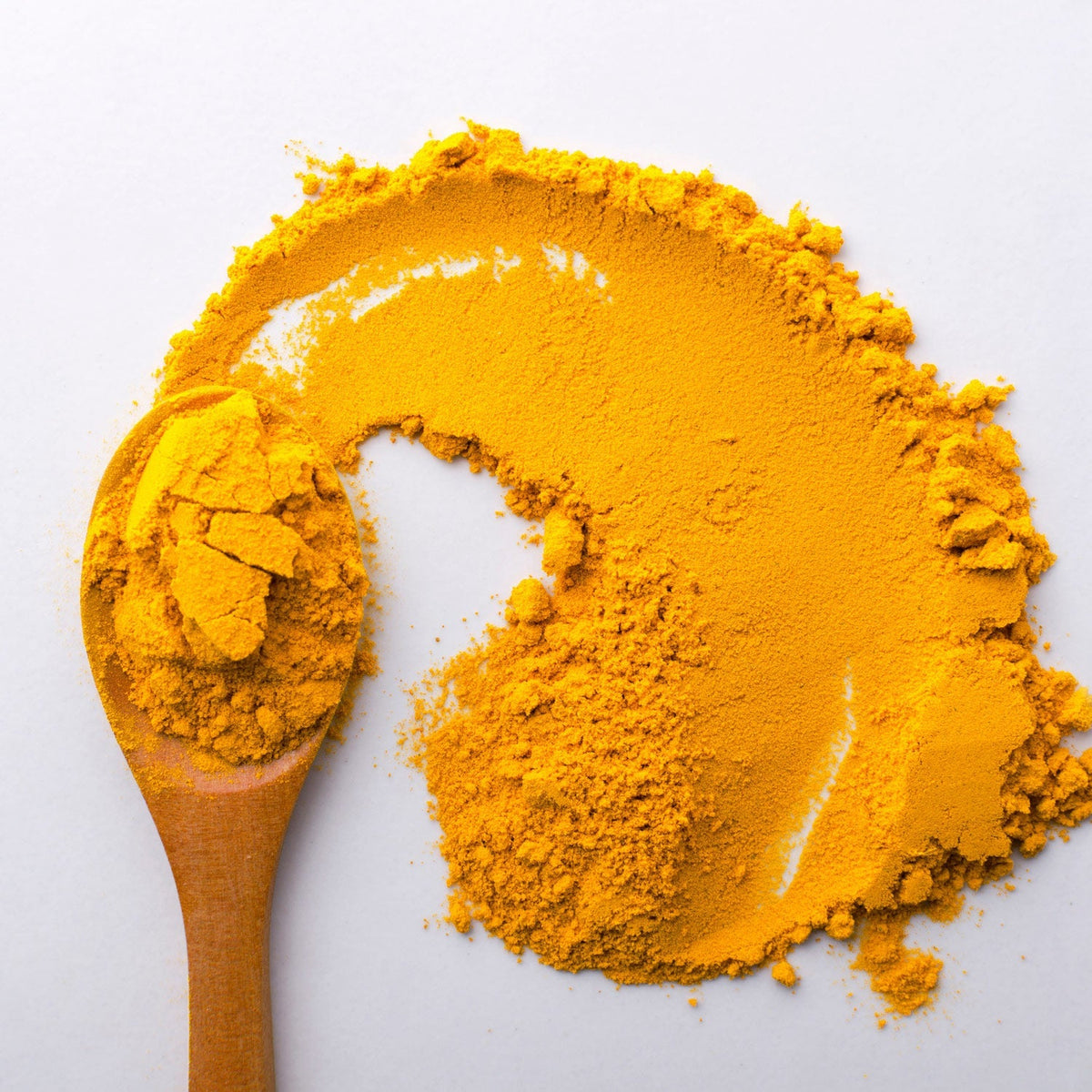
Turmeric (Curcuma longa) is a plant in the Zingiberaceae family, like ginger. Its dried and ground rhizome produces the well-known spice. It is composed mostly of starch and fiber, an essential oil rich in turmerones, and a minor fraction of curcuminoids.
Curcuminoids form a family of three polyphenols: curcumin, which accounts for about 75 to 80%, demethoxycurcumin, and bisdemethoxycurcumin. Curcumin is the focus of most research.
In other words, turmeric is the raw material; curcumin is its main bioactive compound. Analyses of commercial powders show an average curcumin content of around 3%, with significant variability depending on origin and cultivation.
Why curcumin concentration determines efficacy
A teaspoon of turmeric, or about 3 g, provides around 90 mg of curcumin. A standardized extract containing 95% curcuminoids concentrates the same amount in a fraction of a gram. Above all, it guarantees a consistent content from one batch to another.
This standardization determines the reproducibility of results. A non-standardized product exposes users to significant variations in content, making any evaluation impossible.
Concentration is, however, only one condition. A highly concentrated but poorly absorbed natural curcumin remains largely unavailable to tissues, as shown in the section on bioavailability.

The benefits of curcumin documented by science
Not all available data is equal. It is important to distinguish between cellular studies (in vitro), animal models, and randomized controlled trials in humans. Only the latter allow us to speak of demonstrated efficacy, an essential criterion for choosing among health dietary supplements. The following sections specify the level of evidence achieved for each field.
Silent inflammation and cytokine modulation
Silent inflammation, also known as low-grade inflammation, is distinguished from the body's acute response, which is normal and necessary. It refers to a subtle and persistent activation of immune signals. It is associated with tissue aging, which English-language literature calls inflammaging.
The most studied mechanism of curcumin is upstream of this cascade. It modulates the NF-κB pathway, a molecular switch that controls the production of messenger cytokines such as TNF-α and interleukin 6 (IL-6). It also acts on the COX-2 enzyme.
In humans, a meta-analysis of randomized trials published in Nutrition Reviews (Ferguson et al., 2021) observed a significant decrease in several circulating markers after supplementation, notably CRP, IL-6, and TNF-α. The magnitude of the effect remains moderate and varies depending on the forms and doses studied.
This mechanism sheds light on the visible health logic: silent inflammation is part of the processes that determine both skin quality, joint comfort, and perceived vitality.
Oxidative stress and cellular integrity
The link between curcumin and oxidative stress rests on a dual mechanism.
- Direct action = Its phenolic structure allows it to neutralize free radicals.
- Indirect action = Curcumin activates the Nrf2 pathway, which controls the production of the body's antioxidant enzymes: superoxide dismutase (SOD), catalase, and glutathione enzymes.
This second pathway is the most interesting. It mobilizes endogenous defenses whose effect persists beyond the presence of the molecule in the blood.
A meta-analysis of controlled trials (Alizadeh and Kheirouri, 2019) reported a decrease in malondialdehyde, a marker of membrane lipid oxidation, and an increase in SOD activity and total antioxidant capacity.
The benefit is more pronounced in contexts of high oxidative pressure (sun exposure, urban pollution, intensive training), where curcumin complements other antioxidant dietary supplements such as glutathione or coenzyme Q10.
Joint health: what the studies say
The link between curcumin and joints is one of the most solidly studied in human clinical research.
- A meta-analysis of eight randomized trials published in the Journal of Medicinal Food (Daily et al., 2016) showed an improvement in joint comfort and mobility scores compared to placebo. Doses were most often around 1,000 mg of curcumin per day.
- A double-blind trial conducted in 40 adults with knee cartilage wear (Panahi et al., 2014) showed an improvement in functional scores after six weeks. Participants received 1,500 mg of curcuminoids combined with 15 mg of piperine.
Two limitations are evident: the modest size and short duration of the trials, and doses above the recommended range in France (see below).
Mechanistically, in vitro studies show that curcumin modulates metalloproteinases, enzymes that degrade the cartilage matrix.
Regarding regulation, turmeric is subject to European claims currently under evaluation related to joint comfort. Its use therefore remains regulated.
Liver and digestive support
Curcumin stimulates the production and excretion of bile, essential for fat digestion. Turmeric is also subject to European claims currently under evaluation related to digestion.
One particularity deserves to be highlighted: since curcumin is poorly absorbed, a large part of the ingested dose reaches the colon. This is where it interacts with the mucosa and the microbiota.
The relationship with the liver is more nuanced. Experimental data suggest a beneficial effect on liver cells subjected to oxidative stress. However, nutrivigilance reports call for caution. This paradox is detailed in the section dedicated to precautions.
Immunity and microbiota: a link currently under exploration
The relationship between curcumin and the microbiota works in both directions. The microbiota converts curcumin into metabolites, including tetrahydrocurcumin, which may be more active. In turn, curcumin alters the composition of the intestinal flora. These interactions are part of the broader role of the intestinal microbiota in digestion and immunity.
Animal models show an increase in the genera Bifidobacterium and Lactobacillus. A review published in Nutrients (Scazzocchio et al., 2020) suggests that this may be one of the keys to understanding curcumin's effects despite its low absorption. However, human data are limited to small pilot studies. This is a research avenue, not an established benefit.
The real challenge: curcumin bioavailability
The extent of these mechanisms contrasts with a major physicochemical limitation. The bioavailability of curcumin is one of the lowest among the studied plant-based active ingredients.
Native curcumin: why it struggles to cross the intestinal barrier
Three obstacles combine:
- Very low water solubility, which limits its passage through the intestinal wall.
- Instability at intestinal pH, which promotes its rapid degradation.
- Very rapid uptake by the body: as soon as it reaches the intestinal wall and then the liver, the molecule is converted into conjugated forms (glucuronides, sulfates), which are less active and quickly eliminated.
A landmark review published in Molecular Pharmaceutics (Anand et al., 2007) reports very low, even undetectable, free curcumin plasma concentrations, even after oral doses of several grams.
In practical terms, the dose shown on a label says nothing about the amount actually available to the tissues.
Optimized forms: piperine, phytosomes, micellization, lipid formulations
Several technologies aim to achieve optimized curcumin:
- Piperine. This black pepper alkaloid slows the conversion of curcumin by the body. A landmark study (Shoba et al., 1998) measured a 20-fold increase in bioavailability by combining 20 mg of piperine with 2 g of curcumin. The downside of this mechanism: piperine also slows the transformation of many medications by the body.
- Phytosomes. These curcumin-lecithin complexes multiplied total curcuminoid absorption by approximately 29 in a comparative study (Cuomo et al., 2011).
- Micellization. This solubilization in micelles multiplied plasma exposure by approximately 185 in a healthy volunteer trial (Schiborr et al., 2014).
- Lipid formulations, liposomal forms, or cyclodextrins. These forms encapsulate the molecule to stabilize it and facilitate its passage.
These multipliers are not comparable with each other. The doses, the measured molecules (free or conjugated curcumin), and the populations differ from one study to another.
Micro-encapsulation for bioavailability is part of Biocyte's expertise, which has integrated it into its Health range and now applies it to a range of liposomal dietary supplements.
One essential corollary: improving absorption also increases the body's actual exposure. This is precisely the point on which ANSES calls for vigilance.
How to read a label to assess the real effectiveness of a supplement
Evaluating a curcumin capsule requires checking six elements:
- the plant and the part used (Curcuma longa, rhizome);
- the extract's strength, expressed as a percentage of curcuminoids;
- the amount of curcuminoids per daily dose, not the total extract; the formulation technology, ideally documented by a human pharmacokinetic study;
- the possible presence of piperine;
- the presence of the warnings recommended by ANSES.
For example, 500 mg of extract standardized to 95% provides 475 mg of curcuminoids. This is three times the recommended threshold in France for a classic form. A transparent label allows for this calculation; a label that does not allow it is already information.
Directions for use: dose, timing, and combinations
Choosing a curcumin dietary supplement is only one step: the conditions of intake directly influence the result.
What dose of curcumin per day depending on the objective?
EFSA has set an acceptable daily intake (ADI) of 3 mg of curcumin per kilogram of body weight, or 180 mg per day for a 60 kg adult. To take into account dietary intake, ANSES recommends that supplements do not provide more than 153 mg of curcumin per day. It specifies that this value only applies to classic forms: with an optimized form, the actual exposure can exceed the ADI even at a lower stated dose.
There is therefore a gap between research protocols, often between 500 and 1,500 mg per day, and the framework recommended to consumers in France. In practice:
- follow the daily dose indicated on the label;
- do not combine several products containing turmeric;
- rely on the duration of the studies (generally 4 to 12 weeks) and seek the advice of a healthcare professional beyond that.
No dose differentiated by objective is validated outside of study protocols.
Morning or evening, on an empty stomach or with a meal: what really changes
Curcumin is fat-soluble. Unless the formulation is already vectorized by lipids, taking it during a meal containing fats improves its absorption.
On an empty stomach, absorption decreases and some people report gastric discomfort. No clinical data distinguish between morning and evening: consistency of intake matters more than the time.
What to combine curcumin with to boost its effects?
The complementarity of active ingredients is based on mechanism.
- With omega--3 (EPA and DHA). They act on the lipid mediators of the immune response, a pathway distinct from that of curcumin. Caution, however, when taking anticoagulants: both active ingredients influence platelet aggregation.
- With vitamin C, vitamin E, zinc, or selenium. European regulations recognize their contribution to protecting cells against oxidative stress. They complement curcumin's indirect action on the Nrf2 pathway.
Precautions, contraindications, and interactions
The tolerance profile of curcumin is generally favorable at recommended doses. The most common side effects of curcumin are digestive: gastric discomfort, looser stools. Some situations nevertheless warrant particular vigilance.
Populations for whom curcumin is not recommended
ANSES advises against turmeric-based dietary supplements in several cases:
- Gallstones or obstruction of the bile ducts, since curcumin stimulates bile secretion
- Known liver damage
- Known hypersensitivity to Zingiberaceae (turmeric, ginger)
It is also customary to discontinue any supplementation about two weeks before a scheduled surgical procedure. Curcumin is not intended for children. In case of pregnancy or breastfeeding, it is important to seek advice from a healthcare professional before any supplementation.
Drug interactions to monitor
Curcumin can modulate platelet aggregation. Its combination with anticoagulants or antiplatelet agents (warfarin, direct oral anticoagulants, aspirin, clopidogrel) requires prior medical advice.
In practice, any long-term medication should be reported to the pharmacist before starting.
FAQ on the benefits of curcumin
What are the benefits of curcumin for joints?
Several randomized trials, synthesized in a 2016 meta-analysis, show an improvement in joint comfort and mobility scores compared to placebo. These trials remain small and used doses higher than the framework recommended in France.
Curcumin with piperine: is it really necessary?
The combination of curcumin and piperine significantly improves absorption, but phytosomes, micelles, and liposomal forms achieve this without piperine. However, piperine also slows the transformation of many medications by the body, which justifies caution when taking medication.
How many milligrams of curcumin per day?
For classic forms, ANSES recommends not exceeding 153 mg of curcumin per day via supplements, for a 60 kg adult. For optimized forms, the dose indicated by the manufacturer is authoritative and must not be exceeded.
Does curcumin act on silent or low-grade inflammation?
Clinical trials show a moderate decrease in several circulating markers, including CRP, IL-6, and TNF-α. The effect depends heavily on the form used: poorly absorbed native curcumin produces limited effects.
Curcumin and skin: what concrete effects on complexion and aging?
The mechanisms (oxidative stress, glycation, collagen degradation) are consistent with visible aging. However, clinical data by oral route remain preliminary. Curcumin is therefore considered as a complement to an anti-aging routine targeting skin firmness.
When should you avoid taking curcumin?
In cases of liver or biliary tract disease, if you are taking anticoagulants, immunosuppressants, or undergoing chemotherapy, and before scheduled surgery. If you are pregnant or breastfeeding, it is important to seek advice from a healthcare professional before taking any supplements.
Native curcumin or patented extract: what difference does it make on the label?
A patented extract generally combines a standardized potency with a formulation technology supported by human absorption studies. Native curcumin does not offer this. On the label, you should check three things: the amount of curcuminoids, the name of the technology, and the presence of safety warnings.
Sources
- Anand, P. et al. (2007). Bioavailability of curcumin: problems and promises. Molecular Pharmaceutics, 4(6), 807–818.
- ANSES (2022). Opinion on the risk assessment related to the consumption of dietary supplements containing turmeric (referral 2019-SA-0111).
- EFSA ANS Panel (2010). Scientific opinion on the re-evaluation of curcumin (E 100) as a food additive. EFSA Journal, 8(9), 1679.
- Hewlings, S.J. & Kalman, D.S. (2017). Curcumin: a review of its effects on human health. Foods, 6(10), 92.
- Ferguson, J.J.A. et al. (2021). Anti-inflammatory effects of oral supplementation with curcumin: a systematic review and meta-analysis of randomized controlled trials. Nutrition Reviews, 79(9), 1043–1066.
- Alizadeh, M. & Kheirouri, S. (2019). Curcumin reduces malondialdehyde and improves antioxidants in humans with diseased conditions: a comprehensive meta-analysis of randomized controlled trials. BioMedicine, 9(4), 23.
- Daily, J.W. et al. (2016). Efficacy of turmeric extracts and curcumin for alleviating the symptoms of joint arthritis. Journal of Medicinal Food, 19(8), 717–729.
- Panahi, Y. et al. (2014). Curcuminoid treatment for knee osteoarthritis: a randomized double-blind placebo-controlled trial. Phytotherapy Research, 28(11), 1625–1631.
- Vaughn, A.R. et al. (2016). Effects of turmeric (Curcuma longa) on skin health: a systematic review of the clinical evidence. Phytotherapy Research, 30(8), 1243–1264.
- Scazzocchio, B. et al. (2020). Interaction between gut microbiota and curcumin: a new key to understanding the health effects of curcumin. Nutrients, 12(9), 2499.
- Shoba, G. et al. (1998). Influence of piperine on the pharmacokinetics of curcumin in animals and human volunteers. Planta Medica, 64(4), 353–356.
- Cuomo, J. et al. (2011). Comparative absorption of a standardized curcuminoid mixture and its lecithin formulation. Journal of Natural Products, 74(4), 664–669.
- Schiborr, C. et al. (2014). The oral bioavailability of curcumin from micronized powder and liquid micelles is significantly increased in healthy humans and differs between sexes. Molecular Nutrition & Food Research, 58(3), 516–527.
- Tayyem, R.F. et al. (2006). Curcumin content of turmeric and curry powders. Nutrition and Cancer, 55(2), 126–131.

Biocyte Writer: Lise Pujol, Doctor of Pharmacy
Lise Pujol specialized in micronutrition early in her career in community pharmacy, before completing the Postgraduate Diploma in Micronutrition, Nutrition, Prevention, and Health under Professor Castronovo. Today, she brings this expertise to Biocyte, where she contributes to the development of formulas and the dissemination of scientific knowledge to field teams.