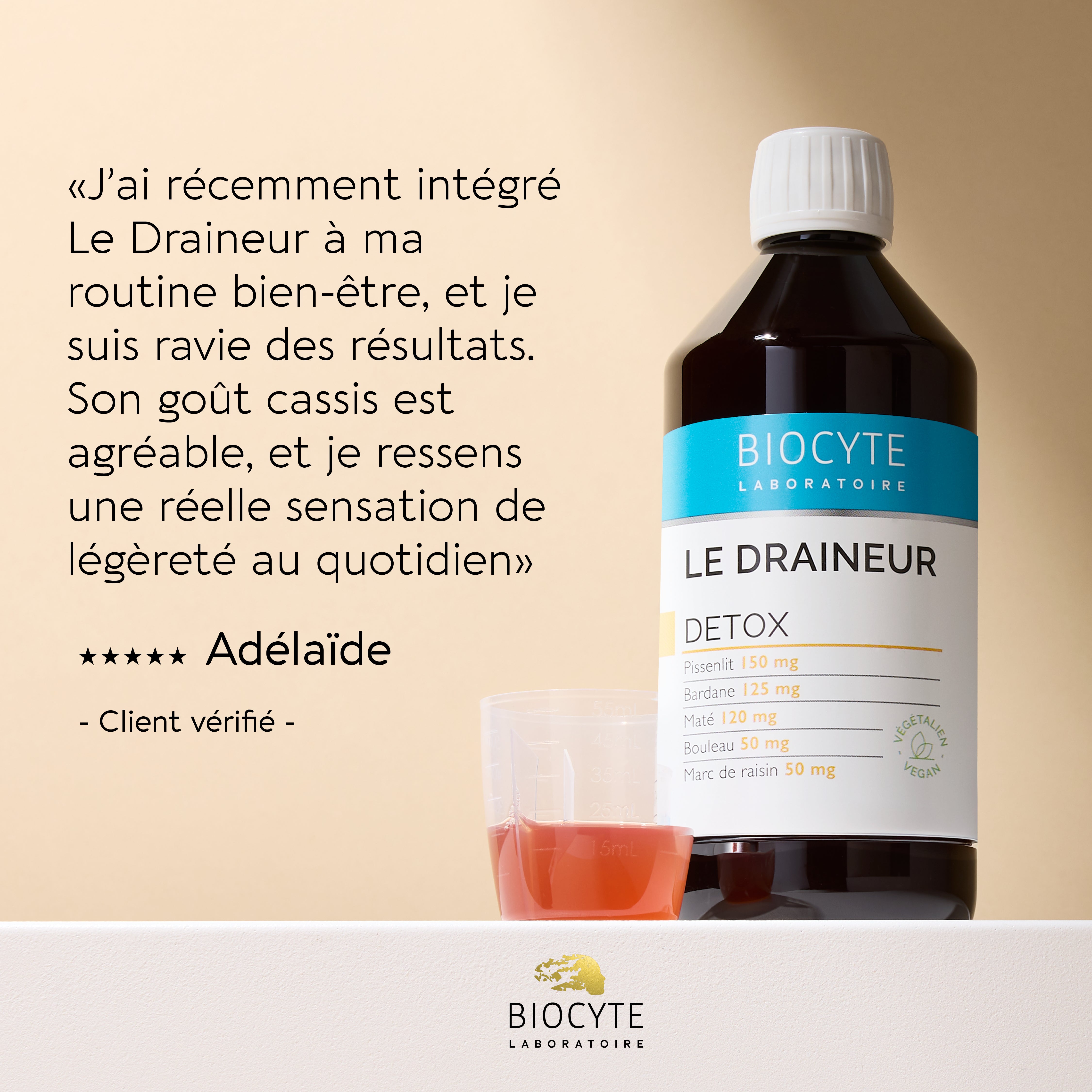
The feeling of being “bloated,” variations in volume throughout the day, or discomfort in the lower limbs are frequent reasons for seeking medical advice. In this context, thedrainage food supplementIt is positioned as a nutricosmetic and wellness tool, designed to support hydration balance, circulatory comfort, and natural elimination functions. The purpose of a category page is therefore to guide the choice: to understand the purpose of a drainage food supplement, identify relevant active ingredients, and then know how to integrate it into a coherent routine.
To remain reliable and compliant with the regulatory framework, it is essential to remember that adrainage food supplementIt is not intended to replace a healthy lifestyle, nor to claim any medical action. However, a well-constructed formula, combining draining plants and targeted micronutrients, can be integrated into a comprehensive program focused on lightness, balance, and daily comfort.
Why choose a drainage food supplement?
Choosing a drainage supplement often stems from the same observation: the body can retain more water at certain times, which contributes to a feeling of bloating and heaviness.water retentionIt is multifactorial: hormonal variations, salt intake, sedentary lifestyle, heat, irregular sleep patterns, or even dietary changes. In these situations, a drainage food supplement can be considered as support for physiological balance, with a gradual and measured approach.
From a biological standpoint, drainage relies on several complementary “axes.” First, water balance depends on the distribution of water between compartments (intracellular/extracellular) and on electrolyte regulation (sodium, potassium). Second, thelymphatic drainageparticipates in the return of fluids and the maintenance of a lighter tissue environment. Finally, the elimination functions (liver, kidneys, intestines) contribute to the management of metabolic waste, which explains the frequent association betweendetoxand dietary supplement drainage in internet users' search queries, even if the vocabulary deserves to be clarified.
In a "silhouette" approach, the drainage food supplement is also sought after to support a process ofslimming drainageThe key is to maintain precision: the main goal is to optimize comfort and the perception of lightness, especially when water retention obscures definition or exacerbates discomfort. Combining this with simple habits (regular hydration, walking, limiting highly salted foods) enhances the program's coherence and promotes a better experience.
Some people also associate the drainage supplement with discussions about cellulite, particularly when it has a so-called "aqueous" component. This form is often linked to water retention and a slowdown in lymphatic drainage, leading to a temporary increase in the dimpled appearance. In this context, acellulite food supplementIt can be part of a comprehensive approach aimed at supporting fluid balance and tissue comfort, in addition to a suitable lifestyle and local techniques. However, it is essential to distinguish between the different types of cellulite, as they do not all stem from the same physiological mechanisms.
Key ingredients in a drainage food supplement
The quality of a drainage food supplement depends on the relevance of the ingredients, their dosage, their form, and the transparency of the formulation.drainage plantsThese often form the backbone of the formulas: they are selected for their traditional use and, depending on the ingredients, based on literature data concerning hydration balance and comfort. Among the most common are dandelion, mouse-ear hawkweed, Java tea, meadowsweet, birch, cherry stem, and hibiscus. The aim is not to include a large number of plants, but to create a clear synergy with properly characterized extracts.
Beyond plants, certain micronutrients are integrated to support physiological functions associated with the feeling of heaviness. For example, vitamin C contributes to normal collagen formation to ensure the normal function of blood vessels, which indirectly fits into a logic ofvenous circulationandcirculatory comfortSimilarly, potassium plays a role in muscle function and electrolyte balance, a key point when thewater retentionis sought as an explanation for the variation in volume and the feeling of “bloating”.
The format also plays a role in adherence. Some consumers prefer a drainage supplement in ampoules or sticks to be diluted, sometimes combined with adraining herbal teain a daily routine; others prefer capsules for their convenience. In all cases, digestive tolerance, ease of use, and clear labeling determine the regularity, and therefore the long-term functional benefit, of the drainage supplement.
How to choose the right drainage food supplement?
The “right” drainage supplement is the one that corresponds to the dominant need and lifestyle. When the priority is thesensation of swelling(particularly at the end of the day or during hot periods), a formula focused on hydration balance and traditionally used draining plants may be beneficial. If the discomfort is concentrated in the lower limbs, research often focuses on venous circulation and circulatory comfort: some formulas then combine plant extracts and vitamins whose physiological roles are better documented.
The selection must also take into account the vocabulary of “detox” frequently associated with drainage. The expressionliver drainageThis term often appears in search engine results: it reflects the desire to support the body's natural elimination functions. The most accurate approach is to prioritize ingredients that align with a holistic strategy: hydration, fiber intake, limiting alcohol consumption, and a balanced diet. Within this framework, a drainage supplement can be considered a complement to a healthy lifestyle, without promising an instant "cleansing" effect.
Finally, perceived quality depends on concrete criteria: traceability, choice of standardized extracts, absence of superfluous ingredients, and consistency of dosages. Biocyte's expertise aligns with this approach: as a French nutricosmetic laboratory, the brand emphasizes the selection of active ingredients, rigorous formulation, and a results-oriented approach focused on measurable outcomes, all while maintaining a responsible stance.
How to use a drainage food supplement on a daily basis?
A drainage supplement should be used in a way that fits with your lifestyle, as its effectiveness depends primarily on regularity. Consider taking it as part of your daily routine: in the morning to establish a hydration rhythm, or during the day to complement your eating habits. Forms that require dilution often encourage you to drink more, which is particularly beneficial when water retention paradoxically coexists with insufficient hydration (drinking less can actually help the body conserve water more effectively). A draining herbal tea can complement this ritual, especially for those seeking a gentle and gradual approach.
The daily environment strongly influences how we feel. Dietary salt, for example, can promote water retention in some people; heat and prolonged standing can exacerbate heavy legs; and a sedentary lifestyle can hinder lymphatic drainage. In this context, combining a lymphatic drainage supplement with simple actions improves overall well-being: regular walking, ankle mobilization, elevating the legs at the end of the day, and a diet richer in vegetables. This holistic approach often provides the greatest perceived comfort, particularly in terms of a feeling of lightness.
For a body-focused approach, drainage supplements are sometimes used as part of a slimming and drainage strategy. Here, education is key: the main objective remains comfort, lightness, and consistency in habits, rather than a quick fix. Water retention and volume changes can fluctuate rapidly, while improvements in routines (diet, exercise, sleep) are more gradual. This understanding helps to set realistic expectations and tochoose a suitable drainerwithout overinterpreting the body's signals.
Precautions and advice before taking a drainage food supplement
Like any nutritional product, a drainage supplement requires adherence to the usage instructions on the label and avoids combining multiple "drainage" products without proper guidance. Certain plants may not be suitable for everyone; similarly, concurrent use with medications requires caution. If in doubt, consulting a healthcare professional is recommended, particularly for individuals undergoing treatment, pregnant or breastfeeding women, or those with kidney, liver, or cardiovascular conditions.
The regulatory framework also requires a measured approach: a drainage supplement is not intended to "treat" a problem, but to support normal bodily functions. Particular caution is advised when the feeling of bloating is very pronounced, unusual, or associated with other symptoms: in this case, it is best to seek medical advice to rule out any underlying cause requiring specific treatment.
Finally, tolerance and adherence remain crucial. A formula that is too stimulating, too concentrated, or poorly tolerated will not be used regularly, thus reducing its effectiveness. A good drainage supplement must therefore combine functional efficacy, ease of use, and digestive comfort to become a lasting part of a wellness routine.
FAQ — Drainage Dietary Supplement
What exactly is the purpose of a drainage food supplement?
A drainage food supplement aims toto support hydration balance and a feeling of lightnessThis is particularly beneficial when the body tends to retain water. It is often sought after for water retention, bloating, or during periods of discomfort, such as heat or a sedentary lifestyle. Its benefits are amplified when it is part of a comprehensive routine: hydration, exercise, a lower-salt diet, and regular sleep.
What is the difference between drainage, detox, and a drainage product?
“Drainage” primarily refers to fluid management and supporting lymphatic drainage and physiological elimination. “Detox” is a more general term that conveys the idea ofto support the body's natural elimination functions(liver, kidneys, intestines); this explains the research surrounding liver drainage. A “drainer” (often a natural drainer) generally refers to a product formulated with draining plants, sometimes combined with vitamins and minerals.
How long does it take to see effects with a drainage food supplement?
The effects vary depending on individual profiles, hydration levels, salt intake, physical activity, and sensitivity. The effectiveness of a drainage supplement is primarily assessed based on regular use and the consistency of the routine. When lifestyle habits are aligned (hydration, walking, diet), the feeling of lightness can become more noticeable, particularly in terms of reducing bloating and improving daily comfort.
Which drainage supplement should I choose for water retention?
For water retention, it's advisable to choose a drainage supplement that combines identifiable draining herbs, a clear formulation, and, if necessary, micronutrients that support electrolyte balance. The form also matters: sticks/drinks can help increase hydration, while capsules offer convenience. The key is to choose a product that suits your lifestyle and is easy to follow.
Can you take a drainage food supplement all year round?
A drainage supplement can be used as needed, particularly during periods when water retention and heavy legs are more pronounced (heat, standing, travel, changes in routine). The most responsible approach is to adjust intake according to the season and how you feel, while avoiding the accumulation of similar products. If you plan to take it for an extended period or have any doubts, consulting a healthcare professional is recommended.
Are there any contraindications to using a drainage food supplement?
Yes, depending on the ingredients. Some plants and active ingredients may not be suitable for all situations (pregnancy/breastfeeding, medication, kidney/liver/heart problems). It is essential to read the label, follow the dosage instructions, and seek professional advice if you have a specific health condition. A drainage supplement should remain a support for a healthy lifestyle and should not replace medical supervision when necessary.


 Skin
Skin Hair & Nails
 Sun Care
 Slimming
 Health