Why choose a spirulina dietary supplement?
The spirulina dietary supplement is part of a comprehensive nutritional approach, designed to support daily dietary balance and vitality. Derived from a microalga naturally rich in nutrients, spirulina is valued for its nutritional density, particularly its content of plant proteins, vitamins, minerals, and antioxidant pigments.
As part of a well-structured routine, a spirulina dietary supplement can meet several needs: support nutritional intake, help during periods of temporary fatigue, or complement a vegetarian or vegan diet. Its natural nutrient richness makes it a superfood that is particularly appealing to people looking for a health-boosting supplement that is easy to incorporate into their daily routine.
Spirulina is also popular in beauty and wellness routines, particularly for its role in supporting overall body balance. In the world of Biocyte, an expert in nutricosmetics at the intersection of nutrition and cosmetics, this type of active ingredient is part of a holistic vision: nourishing the body with targeted ingredients to support beauty and vitality from within.
What is spirulina and how does it work?
Spirulina is a microalga that is blue-green, although it more precisely belongs to the cyanobacteria family. It stands out for its concentrated nutritional composition, which combines proteins, minerals, vitamins, amino acids, and natural pigments such as phycocyanin.
A spirulina dietary supplement works primarily by providing nutrients. Its content of plant proteins makes it an appealing ingredient for complementing certain diets. It also contains iron, which is often sought in spirulina-based products, as well as natural antioxidants that help protect cells against oxidative stress when the claims are authorized by regulations.
The benefits of a spirulina dietary supplement
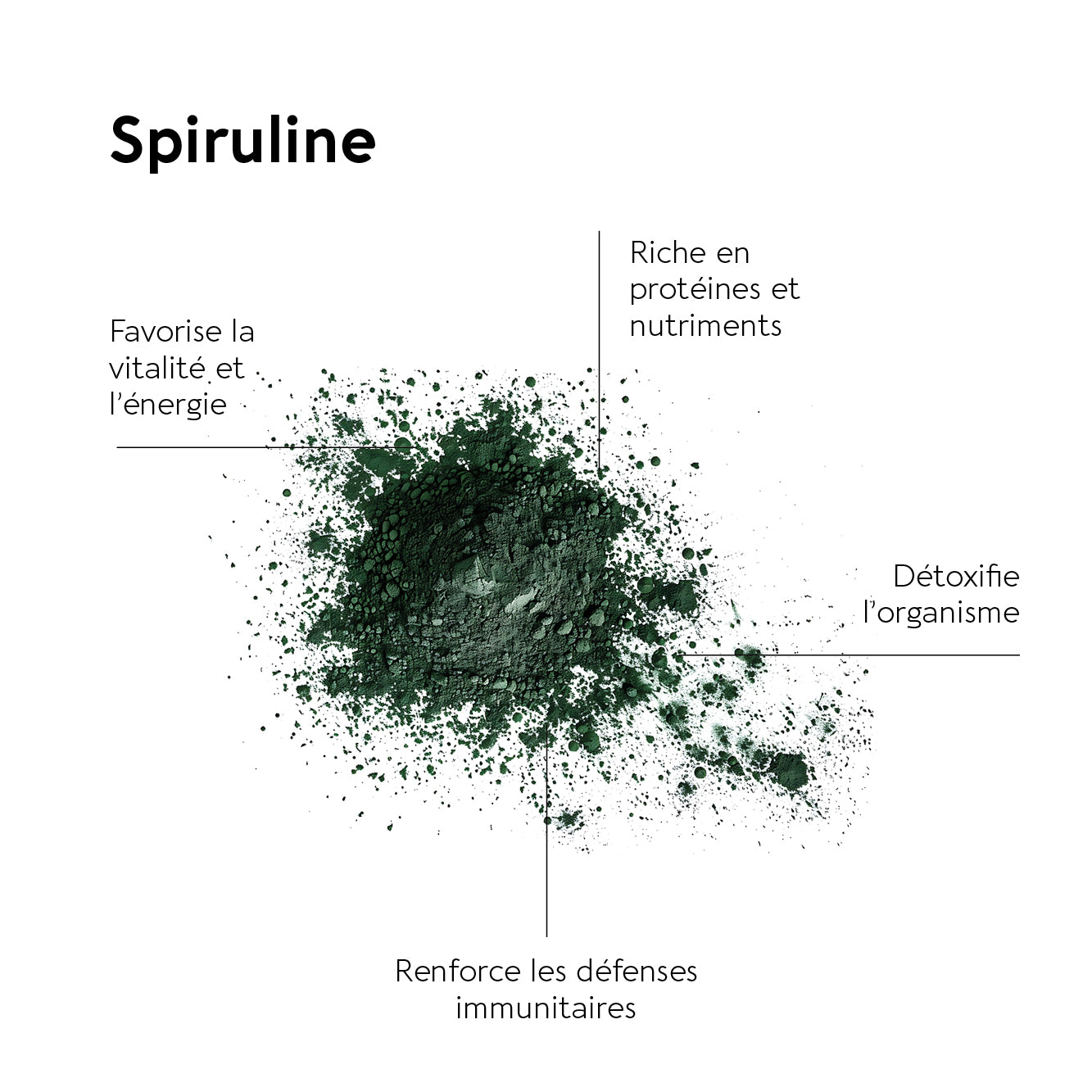
The benefits of a spirulina dietary supplement are based above all on its nutritional density. Its richness in plant proteins, minerals, and micronutrients helps to complement daily intake as part of a varied and balanced diet. It is particularly valued by people wishing to support their vitality naturally.
Spirulina is often associated with natural energy, as it provides nutrients involved in energy metabolism, depending on the product's exact composition. When it contains iron, this helps reduce fatigue and supports the normal functioning of the immune system. However, it is important to remember that the benefits always depend on the dosages, the quality of the spirulina, and the claims authorized for the nutrients present.
A spirulina dietary supplement can also be part of a beauty routine. Thanks to its nutritional profile, it supports the body's needs for essential nutrients, particularly in routines focused on skin, hair, and nails. This approach corresponds to a comprehensive nutricosmetic vision: the visible quality of the skin, hair, and nails also depends on nutritional intake.
Spirulina dietary supplement and daily vitality
Vitality depends on many factors: diet, sleep, hydration, physical activity, stress, and micronutrient balance. A spirulina dietary supplement can support this by providing nutrients naturally present in the microalga. It does not replace a balanced diet, but can complement it in a targeted way.
Spirulina is often chosen during periods of temporary fatigue, busy schedules, or increased nutritional needs. Its composition of proteins, minerals, and natural pigments makes it a complete ingredient, valued in wellness routines. It may also appeal to active people or athletes, as part of sports nutrition, thanks to its plant protein content.
For an effective approach, consistency is essential. A spirulina dietary supplement is ideally incorporated into a simple daily routine, combined with a varied diet, good hydration, and a balanced lifestyle.
Spirulina dietary supplement and nutritional balance
The spirulina dietary supplement is particularly appealing for supporting nutritional balance. Its natural richness in plant proteins helps complement certain intakes, particularly among people with a predominantly plant-based diet. It also contains various micronutrients, whose concentration varies depending on origin, quality, and production method.
Spirulina is often associated with natural iron, although the exact content depends on the product. Iron contributes to the normal formation of red blood cells and hemoglobin, as well as to the reduction of fatigue. These claims are regulated and refer to the nutrient itself when the regulatory dosage is met.
A spirulina dietary supplement can therefore be relevant in a structured nutritional routine, but it must be chosen with care. The quality of the cultivation, microbiological controls, purity, and absence of contaminants are essential criteria to ensure safe use.
Spirulina dietary supplement for skin, hair, and nails
The beauty of the skin, hair, and nails depends in part on nutritional balance. A spirulina dietary supplement can support this approach thanks to its richness in plant proteins, amino acids, minerals, and natural pigments. These nutrients contribute to the overall balance of the body, which is also reflected in the visible quality of the tissues.
Hair and nails are largely composed of keratin, a structural protein. Sufficient nutritional intake of amino acids and micronutrients helps support the needs of these structures. Spirulina can therefore be part of a skin, hair, and nail routine, complementing suitable treatments and a balanced diet.
In a nutricosmetic approach, Biocyte highlights the synergy between nutritional active ingredients and visible beauty. A spirulina dietary supplement can thus find its place in a complete routine, alongside other targeted active ingredients depending on needs: collagen, hyaluronic acid, keratin, vitamins, or minerals.
Who is the spirulina dietary supplement for?
The spirulina dietary supplement is for adults wishing to enrich their nutritional routine with an ingredient naturally dense in nutrients. It may be suitable for active people, those with a busy schedule, vegetarians, vegans or people looking for a natural supplement to support their daily balance.
It may also appeal to athletes, as spirulina provides plant proteins and micronutrients useful in a structured diet. However, it does not replace a complete diet or a protein intake tailored to individual needs.
Certain precautions are necessary. In case of pregnancy, breastfeeding, ongoing treatment, a known medical condition, or particular sensitivity, it is recommended to seek advice from a healthcare professional.
How to choose a quality spirulina dietary supplement?
Choosing a quality spirulina dietary supplement requires checking several criteria. The first concerns the origin and the cultivation conditions. Quality spirulina must be cultivated in a controlled environment, with particular attention paid to water purity, harvesting methods, and drying.
The second criterion is the composition. Organic spirulina may be sought by consumers sensitive to the origin of ingredients, but the label alone is not enough. You must also look at quality controls, nutrient content, the absence of contaminants, and brand transparency.
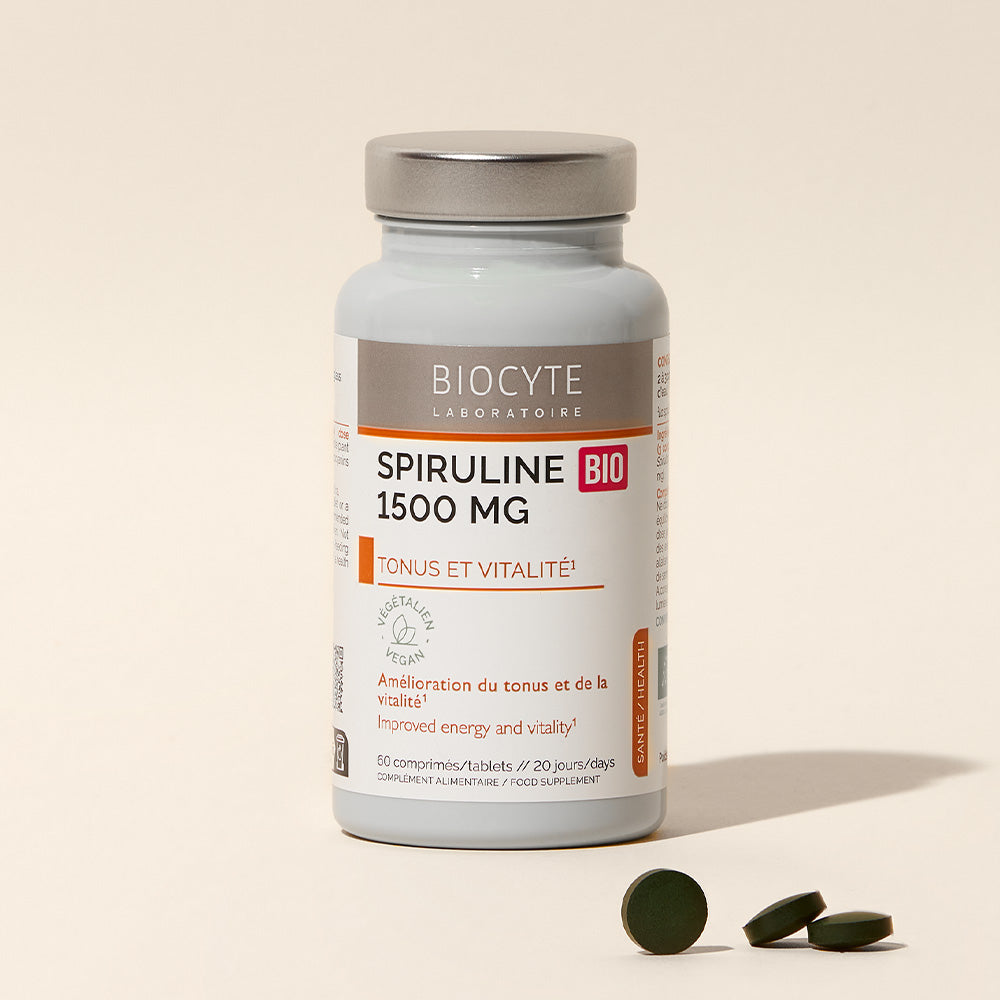
The format also matters. Spirulina powder is suitable for people who wish to incorporate it into a drink or preparation, while spirulina tablets are more convenient for a simple daily dose. The best choice therefore depends on habits, taste tolerance, and ease of use.
How to consume a spirulina dietary supplement?
A spirulina dietary supplement is consumed according to the recommendations indicated on the product. The dosage may vary depending on the format, concentration, and desired goal. It is therefore essential to follow the directions for use provided by the brand.
The spirulina powder can be added to a smoothie, juice, compote, or cold preparation. Its plant-based taste is quite pronounced, which may lead some people toward tablets. Spirulina tablets, on the other hand, are easy to carry and allow for a more neutral daily dose.
For good incorporation, it is preferable to introduce the spirulina dietary supplement gradually , especially in people with digestive sensitivities. Consistency remains important, but it must always be accompanied by a varied diet and a balanced lifestyle.
What criteria to check before buying a spirulina dietary supplement?
Before buying a spirulina dietary supplement, it is important to check the traceability, origin, quality controls, and composition. Quality spirulina must be free from undesirable contaminants, particularly heavy metals, microcystins, or residues linked to poorly controlled cultivation.
You should also look at the format, dosage, protein content, the possible presence of iron, and directions for use. A clear, transparent, and well-documented product inspires more confidence than a poorly detailed formula.
Finally, the choice of a spirulina dietary supplement must be part of an approach tailored to personal needs. Vitality, nutritional balance, beauty, sports nutrition, or a plant-based routine: each goal can lead to a specific format or formula.
FAQ on the spirulina dietary supplement
What is a spirulina dietary supplement?
A spirulina dietary supplement is a product formulated from spirulina, a microalga naturally rich in nutrients.
It is incorporated into a varied diet to complement certain nutritional intakes. Its composition of plant proteins, minerals, and natural pigments makes it a valued ingredient in vitality and wellness routines.
What are the benefits of spirulina?
The benefits of spirulina are linked to its nutritional composition. It provides plant proteins, minerals, vitamins, and natural pigments such as phycocyanin. It is often sought to support vitality and nutritional balance. Depending on the product's composition, certain nutrients present can contribute to the normal functioning of the body. For example, iron contributes to reducing fatigue when the product contains a significant quantity in accordance with regulatory thresholds.
How to choose a quality spirulina dietary supplement?
To choose a quality spirulina dietary supplement, it is essential to check the origin, cultivation method, quality controls, and brand transparency. Spirulina cultivated in a controlled environment offers more guarantees.
It is also useful to look at the format, nutrient content, and absence of undesirable substances. Organic spirulina can be an interesting criterion, but it must be associated with rigorous controls.
How often to consume spirulina?
Spirulina is consumed according to the recommendations indicated on the product packaging. The frequency depends on the dosage, format, and concentration of the formula. It is important not to exceed the directions for use.
A regular dose makes it easier to incorporate into a nutritional routine. However, it must remain complementary to a balanced diet and not substitute varied intakes.
Is the spirulina dietary supplement suitable for everyone?
The spirulina dietary supplement may be suitable for many adults, but it is not necessarily suitable for all situations. Pregnant or breastfeeding people, those undergoing treatment, or those with a particular condition should seek professional advice before use.
People with digestive sensitivities can also introduce it gradually. As with any dietary supplement, individual tolerance and product quality are important criteria.Is spirulina suitable for vegetarians and vegans?
Yes, spirulina is generally suitable for vegetarians and vegans, as it comes from a microalga and provides plant proteins. It can therefore complement a plant-based diet, particularly in a nutritional balance approach.
It is still advisable to check the full composition of the product. Some supplements may contain excipients, capsules, or additives that do not always meet vegan expectations.
Can spirulina be combined with other dietary supplements?
Spirulina can be combined with other dietary supplements depending on needs, but it is important to avoid nutritional duplication. For example, if several products contain iron, the cumulative dosages must be checked.
In a beauty or vitality routine, it can be combined with complementary active ingredients, depending on the goals. In case of doubt, professional advice allows the combination to be tailored to the individual profile.
In what form should spirulina be consumed?
Spirulina can be consumed in the form of powder, tablets, capsules, or sticks. Spirulina powder is appealing for people who wish to add it to a drink or food preparation.
The spirulina tablets are more convenient for a quick dose without a pronounced taste. The best format therefore depends on habits, sensory preference, and ease of daily incorporation.


 Skin
 Hair & Nails
 Sun Care
 Slimming
 Health
 K-Biocyte
 Clinical