 Skin
Skin Hair & Nails
 Sun Care
 Slimming
 Health

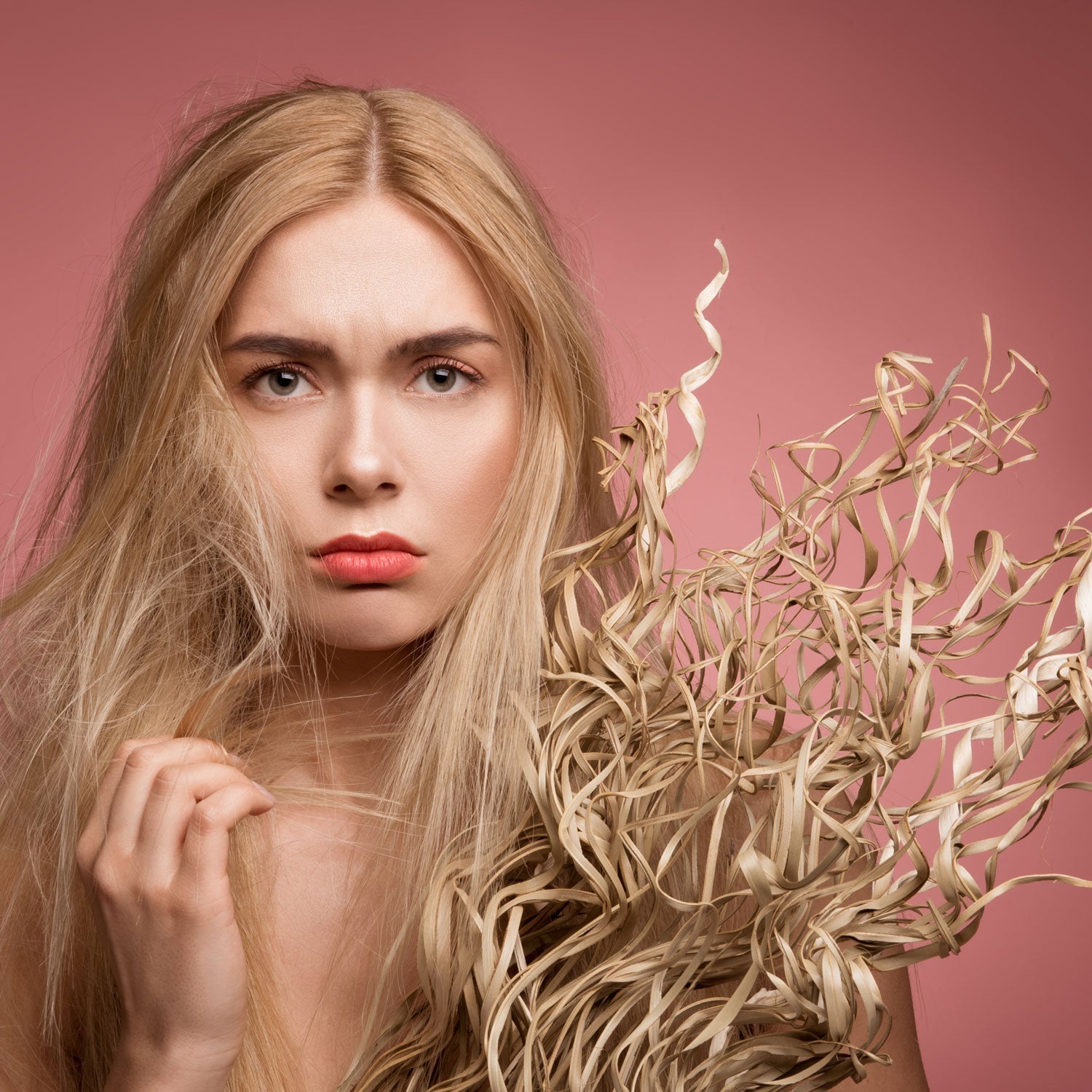
Damaged hair care: how to repair and strengthen hair fibers?
The search for an effective treatment for damaged hair concerns a large majority of people facing dull, fragile, or brittle hair. Contrary to popular belief, hair does not deteriorate suddenly: its degradation results from a progressive process involving the internal structure of the hair fiber, its protein composition, and its protective lipid envelope.
Understanding the mechanisms behind damaged and brittle hair is the first step to choosing truly appropriate hair care for damaged hair. An expert approach relies on precise identification of damage, the use of targeted biomolecular active ingredients, and the adoption of a consistent damaged hair routine that respects hair physiology.
SUMMARY
Damaged hair: how to recognize it?
Identifying damaged hair is not limited to noticing a loss of shine or a rough texture. Hair alterations manifest at several levels, visible and invisible, which directly influence the mechanical resistance and overall appearance of the hair.
Visible signs of damaged hair
Damaged hair generally shows a combination of characteristic signs:
- an irregular and dull surface, linked to the disorganization of cuticle scales
- an increase in split ends, reflecting a weakening of the hair fiber's tip
- a tendency to break during styling or brushing, typical of weakened hair
- a loss of suppleness and elasticity, indicative of structural keratin degradation
These manifestations indicate that the damaged hair fiber can no longer fulfill its protective and internal cohesive role, making the use of a damaged hair treatment specifically formulated to restore hair structure essential.
Difference between dry, brittle, and damaged hair
It is essential to distinguish between dry and damaged hair, brittle hair, and damaged hair in the strict sense, as each state corresponds to a different level of alteration.
- dry hair primarily reflects a deficit in protective lipids, often linked to insufficient sebum production
- brittle hair, on the other hand, reveals a loss of mechanical resistance, a consequence of the breakage of internal protein bonds
- damaged hair generally combines these two phenomena: the cuticle is damaged and the internal cortex is weakened
An effective damaged hair treatment must therefore act simultaneously on lipid nutrition, protein repair, and fiber protection, to restore lasting structural cohesion.
Why does hair become damaged over time?
Over time, the hair fiber undergoes an accumulation of micro-aggressions. Each exposure to heat, each chemical treatment or mechanical friction progressively alters the hair structure. The cuticle scales lift, the internal keratin weakens, and the hair's ability to retain moisture decreases.
Without appropriate repairing hair care, this damage worsens and transforms initially healthy hair into dry and damaged hair. This is why a damaged hair treatment should be considered not only as a corrective response but also as a long-term preventive lever.
What are the main causes of damaged hair?
Damaged hair rarely results from a single factor. Hair fiber degradation is explained by the convergence of mechanical, chemical, and environmental causes that progressively weaken the hair structure.
Excessive heat: straighteners, hair dryers, blow-drying
Repeated exposure to high temperatures is one of the major causes of damaged and brittle hair. Excessive heat causes rapid evaporation of water contained in the fiber, leading to a loss of elasticity and weakening of keratin chains.
Without adequate thermal hair protection, the frequent use of straighteners or hair dryers accelerates cortex degradation, making it essential to incorporate a damaged hair treatment that strengthens the fiber's thermal resistance.
Coloring, bleaching, and chemical treatments
Chemical processes profoundly modify hair structure. Coloring and bleaching alter the cuticle to allow pigment penetration, exposing the internal fiber to structural damage.
These repeated transformations explain why colored hair systematically requires a keratin-based treatment and repairing hair care capable of restoring protein cohesion and limiting breakage.
External aggressions: UV, pollution, hard water
Environmental factors play an often underestimated role in the appearance of damaged hair. UV radiation oxidizes hair proteins, pollution promotes particle accumulation on the fiber, and hard water alters the cuticular surface.
These repeated aggressions justify the regular use of a repairing hair treatment incorporating protective and film-forming agents capable of preserving the integrity of damaged hair fiber.
Lack of suitable care and inappropriate routines
Finally, an inappropriate damaged hair routine can worsen existing damage. The use of overly harsh shampoos, the absence of a damaged hair mask, or overly aggressive mechanical gestures compromise the hair's ability to regenerate.
An effective damaged hair treatment is part of a global approach, combining suitable products, gentle practices, and a deep understanding of the fiber's specific needs.
Damaged hair care: what active ingredients are truly effective?
The effectiveness of a damaged hair treatment primarily relies on the selection of active ingredients capable of interacting with the biological structure of the hair. Since the hair fiber is mainly composed of proteins (keratin), lipids, and water, a high-performance damaged hair routine must act simultaneously on these three components.
Keratin: repairing and strengthening the hair fiber
Keratin makes up nearly 95% of the hair structure. When the fiber is altered, keratin chains lose their organization, leading to a decrease in resistance and an increase in breakage.
A keratin hair treatment formulated with hydrolyzed proteins allows:
- to temporarily fill weakened areas of the cuticle
- to improve the cohesion of the damaged hair fiber
- to increase the mechanical resistance of damaged and brittle hair
In this context, the use of a keratin-based hair treatment helps support the structural cohesion of the fiber and improve the resistance of damaged and brittle hair.
In nutricosmetics, the oral intake of high-purity hydrolyzed keratin is part of a global approach aimed at supporting the endogenous synthesis of hair components. Biocyte, a French pioneer in nutricosmetics, has contributed to structuring this scientific approach at the interface of nutrition and cosmetics.
Vegetable oils and nourishing butters
Dry and damaged hair often suffers from a lipid deficiency. Vegetable oils and butters rich in essential fatty acids help restore the hydrolipidic film that naturally protects the hair fiber.
Their role in a hair repair treatment is manifold:
- limit dehydration
- smooth the cuticle
- improve suppleness and shine
They thus contribute to nourishing damaged hair without modifying its internal structure, which explains their interest in supplementing protein active ingredients.
Proteins, amino acids, and ceramides
Hydrolyzed proteins and amino acids are the elementary building blocks of keratin. Integrated into restorative hair care, they support the fiber's resistance and improve the hair's mechanical tolerance.
Ceramides, on the other hand, play a key role in the cohesion of the cuticle. Their presence reinforces the fiber's impermeability, thus reducing breakage and split ends.
Moisturizing active ingredients to restore suppleness
Contrary to popular belief, hydration remains essential, even for damaged hair. Targeted humectant agents help maintain an optimal water level in the fiber, improving elasticity and manageability.
| Key active ingredient | Main action | Visible benefits |
| Hydrolyzed keratin |
Contributes to structural reinforcement |
Less breakage, more resistant fiber |
| Vegetable oils |
Provides lipid nutrition |
More supple and shinier hair |
| Ceramides |
Supports cuticular protection |
Reduction of split ends |
| Amino acids |
Aids protein support |
Improved elasticity |
| Moisturizing agents |
Helps maintain water |
Softer and more manageable hair |
Hydrolyzed proteins and amino acids are the elementary building blocks of keratin.
What routine should you adopt to repair damaged hair?
A coherent damaged hair routine relies on regularity and complementary actions. Each step helps limit damage while promoting the progressive repair of the fiber.
Gently cleanse without irritating the scalp
Cleansing is the first step in caring for damaged hair. Overly harsh formulas further weaken the cuticle. It is preferable to opt for gentle cleansing bases that respect the scalp and hair fiber.
Apply a repairing damaged hair treatment after each wash
After cleansing, applying a hair repair treatment is essential to seal the cuticles and restore fiber cohesion. This step helps limit breakage during styling and protects fragile hair.
Deep masks: frequency and best practices
A damaged hair mask is an intensive treatment designed to enhance the repairing action. Used once or twice a week, it delivers concentrated active ingredients capable of acting deeply.
Best practices to favor:
- apply to towel-dried hair
- sufficient leave-in time to promote active ingredient penetration
- thorough rinsing to avoid weighing hair down
Protect hair daily
Prevention remains a fundamental pillar. Adapted hair protection limits the impact of heat, UV rays, and pollution, thus helping to preserve the results obtained through damaged hair care.
Are food supplements useful for damaged hair?
The nutricosmetic approach is based on a key principle: hair beauty also depends on its nutritional environment. When the fiber is weakened, acting from within helps support the biological mechanisms involved in its resistance. This strategy is part of a tailored nutricosmetic approach, which aims to improve hair quality by acting from within, in addition to topical treatments.
Acting from within to strengthen the hair fiber
Damaged hair can reflect insufficient nutritional intake of proteins, vitamins, or minerals. Targeted supplementation helps optimize the quality of the fiber produced at the follicle level.
Key nutrients for hair repair
Certain nutrients play a recognized structuring role:
- sulfur amino acids, involved in keratin synthesis
- B group vitamins, participating in cell metabolism
- trace elements essential for maintaining hair structure
Among the micronutrients of interest, biotin plays a central role in maintaining hair quality, hence the relevance of biotin-based food supplements in a structured nutricosmetic approach.
Biocyte relies on formulations based on clinical data to sustainably support hair resistance and quality.
When to consider a targeted routine?
When damaged hair persists despite the application of suitable external treatments, a structured nutritional approach can be integrated into a global strategy, always in addition to a balanced lifestyle.
How long does it take to repair damaged hair?
Visible results in the short term
The first effects of a treatment for damaged hair are often quickly noticeable on the surface appearance: hair is softer, shinier, and easier to style.
Progressive improvement of hair structure
The restoration of damaged hair fiber requires several weeks. The repetition of treatments and the consistency of the routine determine the strength and durability of the results.
Can severely damaged hair be completely repaired?
When the fiber is deeply altered, complete repair is not possible. However, well-chosen hair repair treatments can significantly improve the hair's resistance, appearance, and longevity.
FAQ – Damaged hair care
What is the best treatment for damaged hair?
An effective damaged hair treatment combines protein repair, lipid nutrition, and targeted fiber protection.
Can damaged hair be repaired naturally?
Natural solutions improve appearance, but deep repair requires specifically formulated active ingredients.
How often should a damaged hair treatment be used?
A treatment after each wash, supplemented by a damaged hair mask once or twice a week, constitutes an optimal basis.
Can damaged hair return to its previous state?
The fiber does not regenerate completely, but its appearance and resistance can be significantly improved.
Should severely damaged hair be cut?
Trimming the ends remains a complementary step to eliminate overly weakened areas.
Sources
- Robbins C.R., Chemical and Physical Behavior of Human Hair, Springer.
- Draelos Z.D., Hair cosmetics: An overview, Dermatologic Clinics.
- Bolduc C., Shapiro J., Hair care products: Waving, straightening, conditioning, and coloring, Clinics in Dermatology.
- Ruetsch S.B., Kamath Y.K., Rele A.S., Lipid composition of human hair, International Journal of Cosmetic Science.
- Heinrich U. et al., Nutrition for healthy skin, hair and nails, Skin Pharmacology and Physiology.
Key takeaways
- Damaged hair results from progressive alteration of the hair fiber, due to mechanical, chemical, and environmental aggressions.
- Effective damaged hair care relies on targeted keratin repair, the addition of protective lipids, and controlled hydration.
- Identifying the difference between dry, brittle, and damaged hair allows for precise adaptation of the care strategy.
- Preventing future damage is as important as existing repair to sustainably preserve hair quality.
- A holistic approach, combining external care and nutritional support, optimizes hair strength and suppleness.