 Skin
Skin Hair & Nails
 Sun Care
 Slimming
 Health

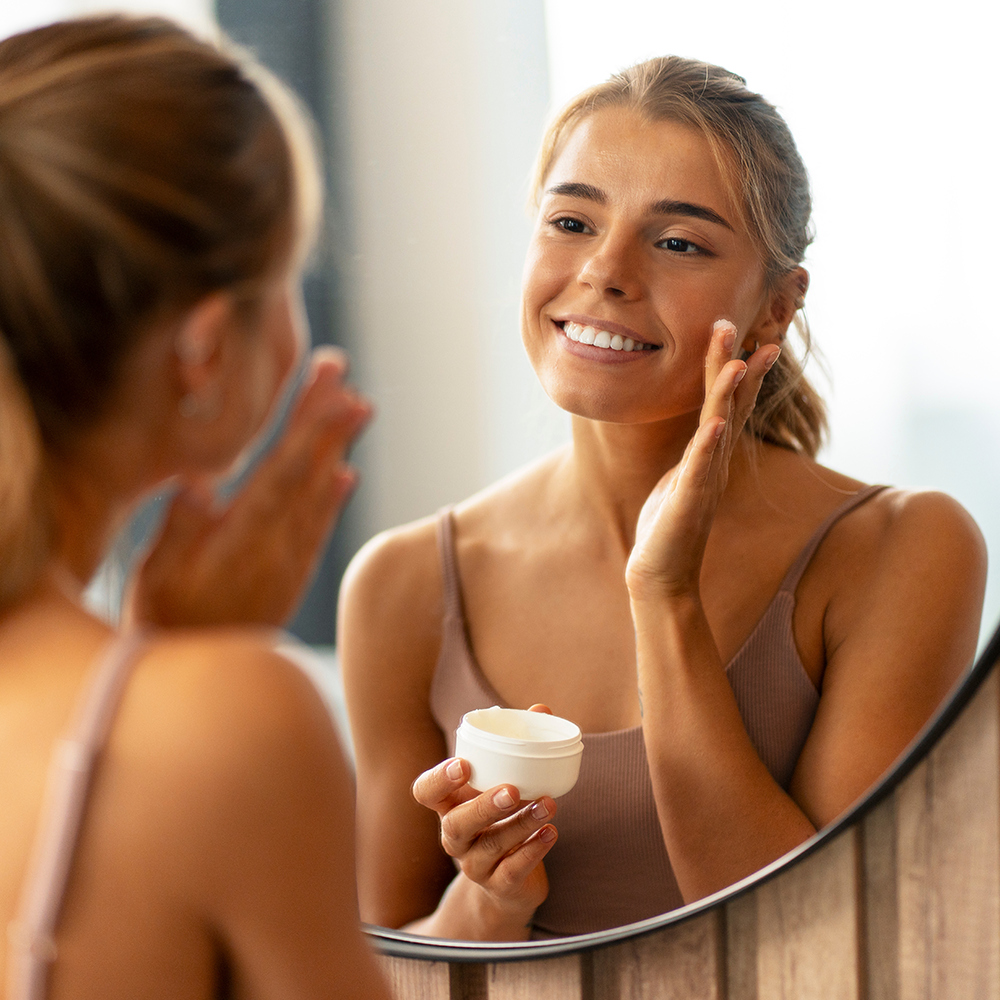
How to get a tan without sun exposure?
Achieving a tanned complexion without direct sun exposure is now a major beauty and nutricosmetics expectation. Research on how to get a sunless tan reflects a dual need: maintaining a natural aesthetic while limiting the impact of UV rays on the skin. This evolution is consistent with current scientific knowledge on photoaging, oxidative stress on the skin, and the cumulative effects of the sun on epidermal cells.
In this context, several approaches can be combined to answer the question of how to get a sunless tan: improving skin appearance with a self-tanning product, enhancing radiance and surface color through diet, or integrating a sun supplement into a global beauty routine. The goal is not to perfectly replicate a sun-induced tan, but to achieve golden skin, a progressive tan, and an even finish, using a more controlled strategy.
Why get a sunless tan?
Opting for a sunless tan meets today's dual expectations: achieving an aesthetic tanned complexion while limiting the impact of UV rays on the skin, within a framework of more controlled and preventive beauty.
The risks of UV exposure
Understanding how to get a sunless tan first requires recalling why repeated UV exposure is a concern. Ultraviolet radiation, whether from the sun or tanning beds, contributes to premature skin aging and is a major factor in skin cancers. The World Health Organization (WHO) reminds us that skin cancers are primarily linked to UV exposure, with cumulative effects over time.
Biologically, UV rays promote the formation of reactive oxygen species, damage cellular DNA, and accelerate the degradation of collagen and elastin fibers. In other words, seeking a tan through repeated exposure can come with a high skin cost: earlier wrinkles, pigment irregularities, loss of elasticity, and a less even complexion in the long term.
UV rays are also involved in the appearance of sun spots, also called pigment spots or solar lentigines. These marks result from irregular melanin production after repeated exposures. Over time, they can alter the evenness of the complexion and make the skin visibly less uniform. In this context, understanding how to get a sunless tan helps limit these pigment imbalances while maintaining a harmonious tanned complexion.
Sensitive skin: what alternatives in case of solar urticaria?
Some skin types exhibit increased sensitivity to radiation, which can result in reactions such as solar urticaria. This skin reaction typically manifests as redness, patches, or itching soon after exposure, making classic tanning difficult or even uncomfortable. It illustrates the limits of direct exposure for certain skin types.
In this context, understanding how to get a sunless tan becomes particularly relevant. Solutions such as UV-free tanning, self-tanning products, or even nutricosmetic approaches allow for a tanned complexion without triggering these reactions. This strategy is part of a preventive approach, respectful of skin balance and adapted to the most reactive skin types.
The benefits of a sunless tan
Thinking about how to get a sunless tan shifts the objective: it is no longer about exposing the skin to achieve a color, but about building a UV-free tan that is more compatible with a skin prevention routine. The main advantage is obvious: achieving a healthy glow and golden skin without deliberately seeking out radiation that damages skin tissues.
This approach also offers more control. The intensity of the result, its progression, uniformity, and maintenance can be adjusted according to skin tone, skin texture, and season. For fair, reactive skin or skin prone to pigment irregularities, this is of particular interest. In a logic of expertise, Biocyte precisely aligns with this global vision of beauty: combining cosmetic protocols and nutricosmetic programs to support skin appearance with technical precision.
How to get a natural sunless tan?
Asking how to get a natural sunless tan means prioritizing internal and progressive approaches capable of supporting skin radiance and promoting a tanned complexion without resorting to UV rays or immediate artificial means.
Diet for a tanned complexion
When a user wonders how to get a sunless tan, diet is often one of the first levers mentioned. Certain food pigments, particularly carotenoids, can accumulate in tissues and slightly influence skin tone, especially towards yellow-golden shades perceived as more luminous. Clinical and observational studies have shown that an increase in the consumption of fruits and vegetables rich in carotenoids is accompanied by measurable changes in skin coloration.
Concretely, a varied diet including carrots, sweet potatoes, apricots, mangoes, spinach, or green vegetables helps enrich the skin's antioxidant environment. This does not mean that diet alone replicates a sun tan, but it can support a visually natural tan, more subtle, and contribute to a better complexion radiance. The nuance is important from an editorial and regulatory point of view: the goal is a brighter and more golden appearance, not an excessive promise of pigmentation.
From a physiological perspective, carotenoids deposited in the skin also play a role in skin oxidative balance. Several reviews indicate that they contribute to the skin's antioxidant defense and can support the skin's response to environmental stress. Thus, in a sunless tanning strategy, diet primarily acts as a groundwork: it prepares the visual quality of the skin, supports radiance, and promotes a more harmonious progressive tan.
The role of food supplements
The question of how to get a sunless tan also leads to sun supplements, often taken before sunny days or during periods when one wishes to maintain a luminous complexion. Their interest lies in a logic of synergy: combining pigments, antioxidants, and sometimes active ingredients targeting skin quality to support the appearance of a tanned complexion.
Scientifically, the ingredients in this category are generally formulated to act on several axes: supporting the oxidative environment, assisting surface coloration, and maintaining skin quality. Some clinical data on carotenoids show that well-managed supplementation can influence skin color parameters and the response to light stress, although results vary depending on dosage, duration of use, phototype, and overall lifestyle.
In an expert routine, sun supplements do not replace either self-tanner or photoprotection. Rather, they act as a foundational support in a holistic approach. It is precisely on this type of approach, at the interface of nutrition and cosmetics, that Biocyte has built its expertise as a French nutricosmetic laboratory. In case of pregnancy or breastfeeding, it is important to seek advice from a healthcare professional before any supplementation.
Cosmetic solutions for a sunless tan
To effectively answer the question of how to get a sunless tan, cosmetic solutions offer visible and customizable results, allowing for a quick tanned complexion while controlling the intensity and uniformity of the finish.
Self-tanners
Among the most direct answers to the question of how to get a sunless tan, self-tanner remains the most obvious solution. Its principle is well known: dihydroxyacetone, or DHA, reacts with amino acids present in the stratum corneum through a Maillard-type reaction, forming brown pigments called melanoidins. This coloration is superficial and transient, as it gradually disappears with the skin's natural desquamation.
Self-tanner does not work like the sun: it does not directly stimulate the skin deeply; it colors the surface of the epidermis. This explains why the result can be quick, often visible in a few hours, but also why maintenance is necessary. The FDA also reminds us that self-tanning products do not provide sufficient sun protection.
Textures have evolved considerably. Current formulas aim to improve sensory comfort, regularity of application, and chromatic rendering. Some combine DHA and erythrulose for a more progressive color development. Others incorporate moisturizing agents to promote an even tan. The choice of galenic depends on the desired level of control: mousse for a more pronounced result, lotion for a progressive tan, serum or drops to customize intensity.
"Healthy glow" skincare products
When the goal is not a visible tan but rather a healthy glow, other skincare products can complement the routine. Tinted creams, illuminating gels, corrective serums, or lightly colored bases immediately give the illusion of a tanned complexion without making lasting changes to the stratum corneum.
Their interest is twofold. On the one hand, they visually correct dull skin, shadowed areas, and color disparities. On the other hand, they allow for testing a finish before moving on to a more durable self-tanning product. For dry or dehydrated skin, these textures enriched with humectant agents can also improve surface appearance, contributing to a brighter look.
How to achieve a natural sunless tan?
Achieving a credible result involves much more than just choosing the product: understanding how to get a sunless tan means adopting the right practices to ensure a natural, even, and lasting tan.
Preparing your skin
The success of a natural tan first depends on skin preparation. This is often an underestimated point when looking for how to get a sunless tan. Uneven, rough, or insufficiently hydrated skin poorly retains color and promotes darker areas. Gentle exfoliation, performed beforehand, helps smooth the stratum corneum and even out the application surface.
Hydration then plays a central role. Supple and well-hydrated skin better receives surface pigments and restores them more evenly. Thicker areas such as elbows, knees, ankles, or knuckles require special attention, as they absorb coloring agents more readily. Therefore, preparing your skin for tanning is already answering the question of how to get a sunless tan with greater precision.
Properly apply products
Application alone accounts for a large part of the result. To achieve an even tan, it is best to work on clean, dry skin, with little product at first, then gradually adjust. Movements should be continuous, smooth, and regular. Dedicated tools, such as applicator mitts, limit overload and improve diffusion.
The face requires a specific approach. The skin there is often thinner, more vascularized, and more exposed to texture variations. Progressive formulas or drops to mix with a moisturizing cream are often better tolerated in a facial tanning routine. The neck and décolleté should be included to maintain visual consistency. In all cases, eyebrows, lip contour, and nasal alae require light application to avoid any demarcation.
Maintain your tan
Once the desired result is achieved, maintenance becomes key to a stable progressive tan. As the coloration from self-tanner remains superficial, it fades with cell renewal. Reapplying a small amount at regular intervals is often more effective than waiting for the color to completely disappear and then starting with an intense layer.
Maintenance also involves daily hydration, gentle cleansers, and avoiding overly frequent exfoliation. In a complete sunless tanning strategy, regularity outweighs intensity. This allows for a credible tanned complexion, without overloading or patchiness.
Mistakes to avoid for sunless tanning
Poor skin preparation
The first mistake is to apply a product to unprepared skin. Without prior smoothing, texture irregularities become visually more pronounced. Dry skin also emphasizes areas where pigment adheres. This immediately compromises the goal of an even tan.
Product overdose
Seeking a quick result often leads to overloading the application. However, when it comes to how to tan without sun, excess is counterproductive. A layer that is too rich increases the risk of streaks, artificial shades, and demarcation lines. A gradual build-up of color generally gives a more sophisticated result.
Neglecting hydration
Dehydrated skin loses its radiance, suppleness, and optical uniformity. Even with a good self-tanning product, the result appears duller if the skin lacks moisture. Hydration is therefore not an accessory gesture, but a technical pillar of natural tanning.
Confusing tanning and sun protection
This is probably the most important mistake to correct. A UV-free tan does not equate to protection against solar radiation. Health authorities and dermatological reviews remind us that self-tanners do not exempt users from applying sunscreen when exposed to the sun. A darker surface complexion does not mean that the skin is biologically protected.
FAQ: how to tan without sun?
How to tan without sun quickly?
To quickly answer how to tan without sun, self-tanner remains the most effective option. Coloration generally appears within a few hours, as it depends on a chemical reaction on the surface with the stratum corneum. For a more natural look, it is preferable to apply a thin layer, even if it means repeating the process the next day.
Is it dangerous to tan without sun?
Overall, tanning without sun is considered a safer alternative than intentionally seeking a UV tan, provided the products are used as intended. Precautions primarily concern application to mucous membranes, around the eyes, and, for sprays, avoiding inhalation.
How long does a sunless tan last?
The duration varies depending on the product, application area, skin condition, and rate of cell renewal. In practice, a UV-free tan often lasts a few days, with intensity gradually decreasing. Light and regular maintenance helps maintain golden skin without a heavy effect.
Can you tan naturally without sun?
Yes, but in a more subtle way. A diet rich in carotenoids, combined with a good lifestyle and well-maintained skin, can promote a brighter and slightly golden complexion. Available data show that the consumption of fruits and vegetables influences measurable skin color, without, however, replicating a sun tan in the strict sense.
Do self-tanners give a natural result?
Yes, provided you choose the right texture, prepare the skin, and respect the progression. Current formulas allow for an increasingly refined result. The outcome, however, depends on the quality of application, hydration, and the initial skin tone. For a very credible result, it is better to aim for a progressive tan rather than too strong an immediate intensity.
Does sunless tanning protect against UV?
No. This is a fundamental point. A self-tanner colors the skin's surface, but does not replace a photoprotective product. In case of exposure, essential reflexes must be maintained: suitable sunscreen, protective clothing, and limiting intense exposure.
Sources
- WHO, Ultraviolet radiation: UV effects on skin and eye health.
- FDA, Sunless Tanners & Bronzers: how self-tanners work and their limitations, insufficient sun protection.
- Pyankovska et al., Sunless Tanners in Dermatology: A Review of Ingredients, Efficacy, and Safety Profiles: recent dermatological review on the efficacy, safety, and limitations of self-tanners.
- Muizzuddin et al., Dietary Carotenoids Contribute to Normal Human Skin Color and UV Photosensitivity: link between dietary carotenoids, skin color, and UV response.
- Whitehead et al., You Are What You Eat: Within-Subject Increases in Fruit and Vegetable Consumption Confer Beneficial Skin-Color Changes: changes in skin coloration after increased fruit and vegetable consumption.
- Pezdirc et al., Fruit, Vegetable and Dietary Carotenoid Intakes Explain Variation in Skin-Color in Young Caucasian Women: association between carotenoid intake and skin tone.
- Baswan et al., Role of ingestible carotenoids in skin protection: A review of clinical evidence: review of clinical trials on oral carotenoids and the skin.