 Skin
Skin Hair & Nails
 Sun Care
 Slimming
 Health

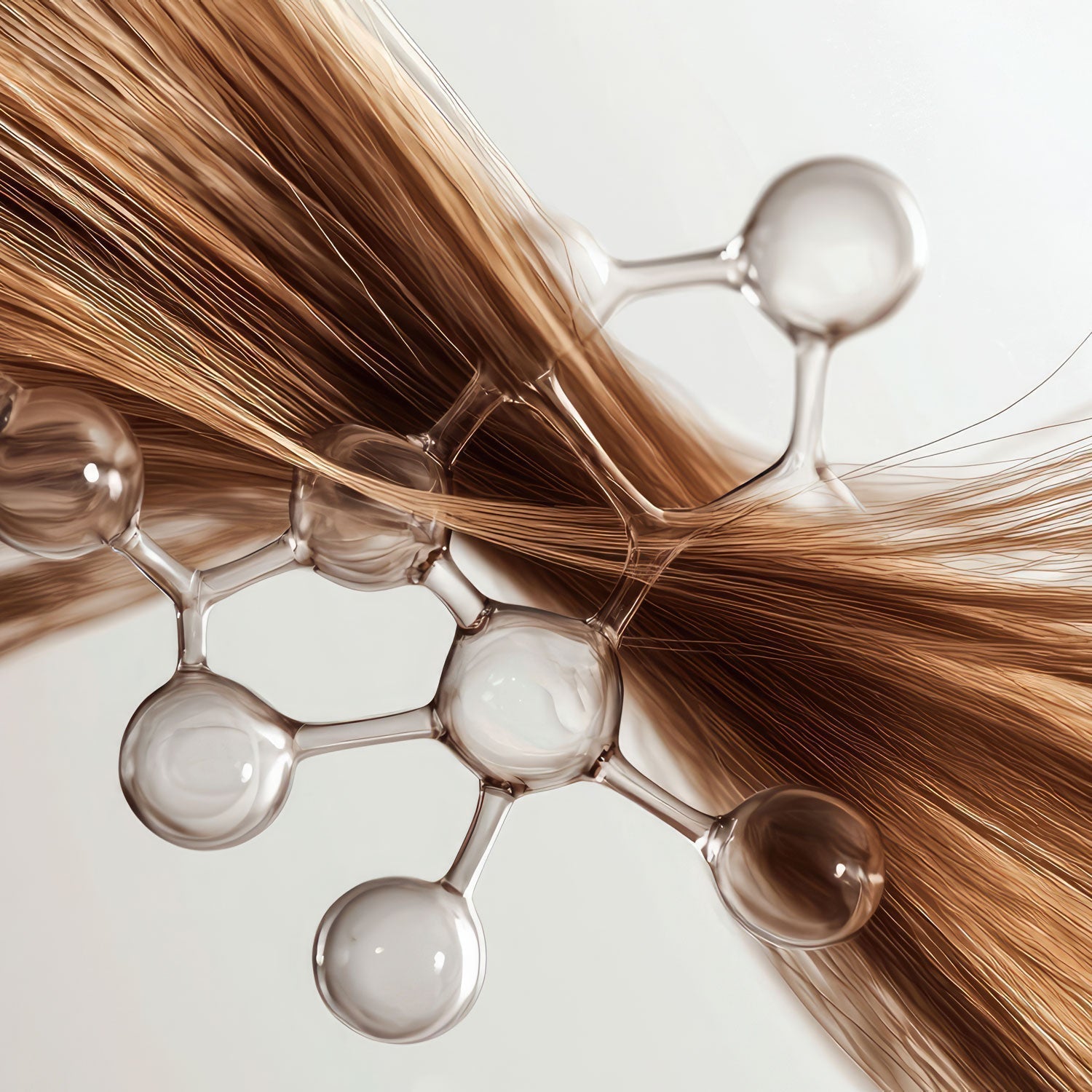
Keratin hair treatment: everything you need to know to repair and strengthen hair fibers
Over the years, keratin hair care has established itself as a cornerstone of hair routines for damaged hair. Persistent dryness, loss of shine, recurring breakage, or uneven texture are all tell-tale signs of progressive deterioration of the hair fiber. Behind these visible manifestations lies a precise biological phenomenon: the degradation of keratin, the major structural protein of hair.
In a context where hair is daily exposed to mechanical, thermal, chemical, and environmental stresses, understanding the role of keratin and the functional benefits of keratin hair care becomes essential. Far from a superficial approach, keratin care is part of an expert process, aiming to support the hair fiber in its structural and functional integrity. In this comprehensive care approach, hair care products adapted for damaged hair allow for adjusting textures, active ingredients, and frequency of use according to the actual level of hair fiber alteration.
This article offers an in-depth, scientific, and educational analysis of keratin hair care: its role, mechanisms of action, concerned hair profiles, and best practices for optimal and lasting use.
SUMMARY
What is keratin hair care?
Definition of keratin and its natural role in hair
Keratin is an insoluble fibrous protein, synthesized by keratinocytes, specialized cells found in the skin, nails, and hair follicles. In hair, it represents about 90 to 95% of the hair fiber's composition. This protein is made up of a sequence of amino acids, among which cysteine plays a central role. Disulfide bridges formed between cysteine residues ensure the cohesion, strength, and elasticity of the hair.
The hair fiber is organized around three concentric structures:
- the cuticle, the outer layer, protects the hair from aggressions. It consists of flattened keratinized cells, organized into overlapping scales.
- the cortex, located beneath the cuticle, constitutes the mechanical core of the hair. It is composed of highly structured keratin macrofibrils, responsible for the hair's strength and shape.
- the medulla, inconsistently present, plays a secondary role.
When keratin is intact and properly organized, the hair has a smooth surface, good elasticity, and optimal hair shine. Keratin hair care aims precisely to support this organization, by providing functional elements capable of interacting with the altered hair fiber.
Why do hair lose keratin?
Keratin loss is not a sudden phenomenon, but a progressive process resulting from repeated aggressions. The sources of degradation are numerous:
- chemical treatments, such as coloring, bleaching, or perms, alter the hair's pH and open the cuticle. This opening weakens the internal bonds of keratin and promotes protein leakage.
- thermal aggressions also constitute a major factor. Frequent use of straighteners, curling irons, or hairdryers at high temperatures alters hydrogen bonds and, in the long term, disulfide bridges.
- exposure to UV radiation, sea salt, or chlorine accentuates this phenomenon by oxidizing hair proteins.
As keratin degrades, the hair fiber becomes more porous. Dry and brittle hair appears when the cuticle no longer performs its protective role. The loss of internal cohesion leads to a decrease in mechanical resistance, making the hair more vulnerable to breakage. In this context, keratin hair care responds to a logic of structural support.
Difference between natural keratin and keratin integrated into treatments
The keratin naturally present in hair is produced locally by the hair follicle. In contrast, the keratin used in hair care is generally obtained by hydrolysis. This process fragments the protein into smaller peptides, facilitating their affinity with the hair fiber.
These hydrolyzed keratin fragments do not penetrate to the deep cortex but preferentially attach to the weakened areas of the cuticle. Their role is to smooth the hair's surface, strengthen the cohesion of the scales, and contribute to better mechanical resistance. This action explains why keratin care is often associated with a rapid improvement in the hair's softness and visual appearance.
Who is keratin hair care for?
Dry, damaged, and brittle hair
Dry hair is characterized by an alteration of the cuticular barrier, leading to increased water and lipid loss. This dryness is often accompanied by a weakening of keratin, making the hair more brittle. Keratin hair care helps strengthen the hair surface and support hair fiber repair by limiting structural losses. Dry hair requires a progressive approach, combining fiber strengthening and improved moisture retention capacity. Understanding which treatments to adopt for dry hair allows for consistent integration of keratin care, in addition to nourishing and protective active ingredients, to act on both the structure and comfort of the hair fiber.
For damaged hair, the action of keratin-based care helps improve the cohesion of the scales and restore a more homogeneous surface. This structural improvement results in reduced breakage during brushing and better tolerance to daily mechanical stresses.
Brittle hair indicates advanced hair fiber alteration, marked by a loss of cohesion between keratin chains. This mechanical fragility manifests as hair breakage during styling, brushing, or simple daily manipulation. Integrating keratin hair care helps support the hair structure by strengthening the weakened areas of the cuticle, thereby reducing breakage and improving the overall resistance of the hair fiber with successive applications.
Color-treated, bleached or highlighted hair
Coloring processes rely on opening the cuticle to allow pigment penetration. This structural modification weakens the hair fiber and increases keratin loss. Color-treated hair thus exhibits increased porosity and particular sensitivity to breakage.
In this context, keratin hair care plays a functional support role. By strengthening the hair surface, it contributes to better color retention and improved hair shine, which is often diminished after repeated chemical treatments.
Damaged curly, frizzy, or coily hair
Textured hair has a helical structure that makes sebum distribution less even along its length. This particularity makes it more susceptible to dryness and keratin weakening. Appropriate keratin hair care helps strengthen areas of mechanical tension, especially at the curves, without altering the hair's natural shape.
When integrated into a restorative hair routine, the applied treatment improves the hair's overall resistance while contributing to better visual definition.
Hair exposed to heat (straighteners, hairdryers)
Repeated thermal aggressions are one of the main factors in keratin degradation. Excessive heat causes partial denaturation of hair proteins and progressive alteration of the cuticle. Keratin hair treatment acts as structural support here, helping to protect damaged hair and limit the cumulative effects of heat.
What are the benefits of a keratin hair treatment?
Repair and strengthen the hair fiber
One of the major benefits of keratin hair treatment lies in its ability to mechanically strengthen the fiber. Hydrolyzed keratin peptides attach to weakened areas, contributing to measurable hair fiber repair in terms of tensile strength.
This action is particularly relevant for hair subjected to repeated mechanical stress, such as intensive styling or prolonged wearing of accessories.
Hair strength relies on a synergy of structural proteins. Alongside keratin, other components play a complementary role in the fiber's resistance and cohesion. Delving deeper into the benefits of collagen for hair provides a better understanding of how these proteins work together to maintain a more homogeneous and resistant hair fiber against daily aggressions.
Smooth the hair surface and reduce frizz
By improving the alignment of cuticle scales, keratin hair treatment helps to smooth the hair fiber. This action reduces porosity and limits uncontrolled exchanges with ambient humidity, which are responsible for frizz.
Improve shine and softness
A homogeneous hair surface reflects light better. Keratin hair treatment thus promotes increased hair shine, associated with a feeling of softness to the touch. This sensory improvement contributes to the overall perception of healthier hair.
Prevent breakage and split ends
By strengthening the internal cohesion of the hair, keratin hair treatment helps reduce breakage and limit the appearance of split ends. This preventive action is part of a global strategy for protecting damaged hair.
Different types of keratin hair treatments
Keratin-based solutions for hair rely on forms of keratin selected for their affinity with the hair fiber. Integrated into different care formats, they allow for supporting the hair structure at several levels, depending on its degree of fragility, porosity, and exposure to external aggressions.
|
Type of Treatment |
Effects |
| Keratin Shampoo and Conditioner |
Shampoos enriched with keratin allow gentle cleansing while providing progressive structural support. They easily integrate into a daily routine and form the basis of a restorative hair care routine. |
| Keratin Hair Mask |
The keratin mask offers a higher concentration of active ingredients. Its prolonged application time promotes a more thorough interaction with the hair fiber, particularly suitable for very fragile hair. |
| Leave-in Keratin Treatment |
Leave-in treatments provide continuous action throughout the day. They are particularly useful for maintaining the benefits of the treatment between washes. |
| Deep Keratin Treatment |
Deep treatments are part of a structured approach, aiming to support the hair fiber over several renewal cycles. Their effectiveness relies on the regularity and consistency of the routine. |
How to effectively use a keratin hair treatment?
How often should a keratin treatment be applied?
The frequency of use depends on the level of fragility and the hair type. Regular but reasoned application helps strengthen hair without weighing down the fiber.
Key steps for a keratin hair care routine
An effective routine rests on three pillars: respectful cleansing, targeted keratin supply, and daily protection of the hair fiber.
Mistakes to avoid to prevent weighing down hair
Overuse or improper adaptation of keratin hair treatment can lead to an overload effect. Listening to hair needs remains essential.
The effectiveness of a keratin hair treatment is part of a global vision of hair health. In addition to treatments applied to the fiber, targeted nutritional keratin supplements can help support the synthesis of hair proteins, as part of a coherent approach combining lifestyle, balanced diet, and adapted hair care routine.
Keratin hair treatment: results and duration of effects
Visible short-term results
From the first uses, keratin hair treatment improves the manageability, softness, and visual appearance of the fiber.
Long-term effects with a suitable routine
In the long term, a consistent restorative hair routine allows the benefits to last, with a more homogeneous and resistant fiber.
Factors influencing treatment effectiveness
The quality of keratin, the hydrolysis process, the overall formulation, and the regularity of application all condition the effectiveness of the treatment applied to the hair.
Keratin hair treatment and common misconceptions
Does keratin permanently straighten hair?
A keratin treatment is not intended to permanently alter the natural structure of the hair.
Are keratin treatments aggressive?
When formulated correctly, keratin treatments respect the hair fiber and are part of a functional and progressive approach.
Can a keratin treatment be used on fine hair?
Yes, provided that suitable textures and controlled frequency are chosen.
Is keratin hair treatment suitable for all hair types?
Yes, subject to adaptation of texture and frequency.
What is the difference between a keratin treatment and keratin straightening?
The treatment acts functionally, without permanent structural modification.
How long does it take to see the effects of a keratin hair treatment?
The first effects are generally noticeable from the initial applications.
Can a keratin hair treatment be combined with coloring?
Yes, this combination is common for supporting the hair fiber.
Should there be breaks between two keratin treatments?
Evaluation phases allow adapting the routine to the hair's actual needs.
Sources
- Robbins CR. Chemical and Physical Behavior of Human Hair. Springer
- Swift JA. Human hair cuticle: biologically conspired structure. Journal of Cosmetic Science
- Wolfram LJ. Human hair: a unique physicochemical composite. Journal of the American Academy of Dermatology
- Bolduc C, Shapiro J. Hair care products: conditioning, coloring and waving. Clinics in Dermatology
- Draelos ZD. Cosmetic dermatology: products and procedures. Wiley-Blackwell
Key takeaways
- Keratin hair treatment supports the hair's natural structure by strengthening weakened hair fibers.
- Keratin is a key protein involved in hair strength, flexibility, and shine.
- Dry, damaged, color-treated, or heat-exposed hair particularly benefits from a keratin-based routine.
- The effectiveness of a keratin hair treatment relies on the quality of the keratin, regularity of use, and suitability for the hair type.
- A comprehensive approach, combining external treatments and appropriate hair care, helps maintain results over time.
In the long term, a consistent restorative hair routine allows the benefits to last, with a more homogeneous and resistant fiber.
The quality of keratin, the hydrolysis process, the overall formulation, and the regularity of application all condition the effectiveness of the treatment applied to the hair.
Keratin hair treatment and common misconceptions
Does keratin permanently straighten hair?
A keratin treatment is not intended to permanently alter the natural structure of the hair.
Are keratin treatments aggressive?
When formulated correctly, keratin treatments respect the hair fiber and are part of a functional and progressive approach.
Can a keratin treatment be used on fine hair?
Yes, provided that suitable textures and controlled frequency are chosen.
Is keratin hair treatment suitable for all hair types?
Yes, subject to adaptation of texture and frequency.
What is the difference between a keratin treatment and keratin straightening?
The treatment acts functionally, without permanent structural modification.
How long does it take to see the effects of a keratin hair treatment?
The first effects are generally noticeable from the initial applications.
Can a keratin hair treatment be combined with coloring?
Yes, this combination is common for supporting the hair fiber.
Should there be breaks between two keratin treatments?
Evaluation phases allow adapting the routine to the hair's actual needs.
Sources
- Robbins CR. Chemical and Physical Behavior of Human Hair. Springer
- Swift JA. Human hair cuticle: biologically conspired structure. Journal of Cosmetic Science
- Wolfram LJ. Human hair: a unique physicochemical composite. Journal of the American Academy of Dermatology
- Bolduc C, Shapiro J. Hair care products: conditioning, coloring and waving. Clinics in Dermatology
- Draelos ZD. Cosmetic dermatology: products and procedures. Wiley-Blackwell
Key takeaways
- Keratin hair treatment supports the hair's natural structure by strengthening weakened hair fibers.
- Keratin is a key protein involved in hair strength, flexibility, and shine.
- Dry, damaged, color-treated, or heat-exposed hair particularly benefits from a keratin-based routine.
- The effectiveness of a keratin hair treatment relies on the quality of the keratin, regularity of use, and suitability for the hair type.
- A comprehensive approach, combining external treatments and appropriate hair care, helps maintain results over time.