
 Skin
Skin Hair & Nails
 Sun Care
 Slimming
 Health

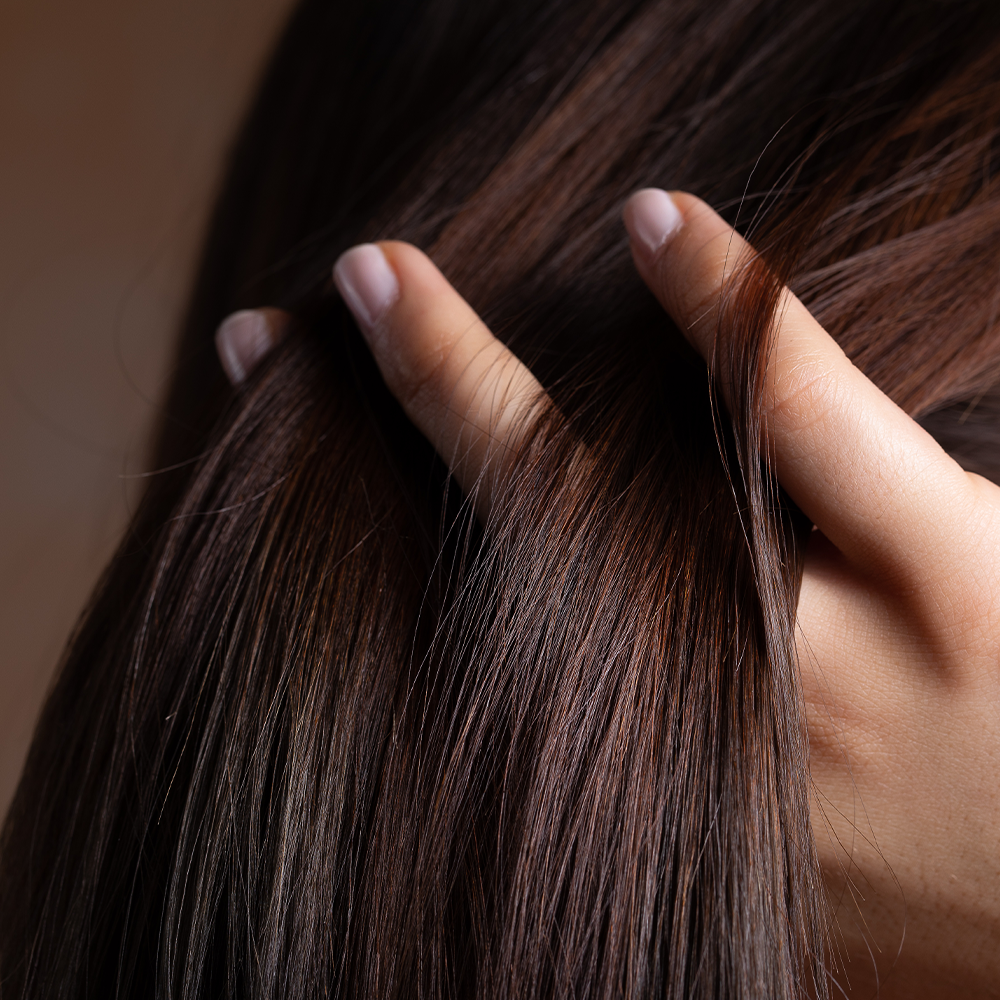
Hair loss due to stress: what to do?
Stress-related hair loss is much more common than one might think. In many women—but also in men—a period of intense stress, an emotional shock, or chronic stress can trigger reactive hair loss, also known as telogen effluvium. This type of stress-induced hair loss typically appears between 2 and 3 months after the triggering event and can be alarming, but it is usually reversible. Understanding its mechanisms helps in taking better action.
From the outset, it's essential to state that yes, stress can cause hair loss, and this link is scientifically established. The objective of this article is therefore simple: to help you recognize stress-related hair loss, understand how it works, identify natural solutions to prevent and reduce hair loss, and finally promote stronger regrowth.
To support a comprehensive approach, some internal solutions such as anti-hair loss food supplements can complement external care and anti-stress measures, especially during sustained hair loss.
Understanding the link between stress and hair loss
The first step to better manage hair loss due to stress is to understand what is actually happening in the scalp. Stress acts on different levels: hormonal, inflammatory, and vascular. These disruptions modify the hair cycle and explain reactive hair loss.
Why does stress cause hair loss?
Stress can profoundly alter the hair life cycle, which consists of three phases:
- Anagen phase (growth): this is the period during which hair actively grows
- Catagen phase (transition): the hair stops growing
- Telogen phase (rest): the hair remains in place before naturally falling out
In situations of significant stress, the body produces more cortisol, a hormone intimately linked to stress. This excessive cortisol directly impacts hair follicles: it brutally accelerates the transition from the anagen phase to the telogen phase. The result: a large number of hairs simultaneously enter the resting phase, then fall out at the same time a few weeks later.
This phenomenon is known as telogen effluvium, also called reactive hair loss. It results in diffuse, impressive but generally temporary hair loss.
We can also observe a decrease in the supply of essential nutrients to the roots and a disruption of the sebaceous glands' balance. The quality of the hair is weakened, and it becomes thinner and more fragile.
Recognizing stress-related hair loss
Knowing how to identify stress-related hair loss allows for quicker action. Stress-related hair loss has specific characteristics:
- Diffuse and sudden loss: unlike hormonal or genetic hair loss, here hair falls out uniformly over the entire head
- Thinner and less dense hair: the hair appears depleted and less voluminous
- Occurrence 2 to 3 months after a stressful event: this is the typical signature of telogen effluvium
If these signs resonate with you, it is likely that your hair loss is linked to a psychological or emotional factor. Biocyte experts recommend observing your lifestyle, emotions, sleep, and diet to detect the origin of the problem.
The most common causes
Although stress is a major cause, other factors can be associated with it or aggravate it. It is common for hair loss to occur in a more global context of weakening the body.
Triggering factors
The following situations are particularly known to trigger reactive hair loss:
- Intense fatigue, overwork, mild or advanced burnout: the body becomes exhausted and hormonal balance is disturbed
- Emotional shock: breakup, bereavement, acute anxiety, sudden life change
- Hormonal changes: pregnancy, postpartum, menopause, significant hormonal fluctuations
- Nutritional deficiencies: particularly in B vitamins, zinc, iron, essential amino acids; hair loss and vitamin deficiency are therefore closely linked
- Male pattern baldness: in men, androgenetic alopecia can coexist with reactive hair loss
Biocyte teams observe that these factors often act simultaneously. This is why a global approach—stress management, diet, food supplements, external care—yields better results.
Effective solutions to stop stress-related hair loss
The good news? Most stress-related hair loss is reversible. With the right actions, it is possible to reduce hair loss in a few weeks and reactivate hair growth.
Fighting stress
The priority is to reduce the impact of stress on the body. By lowering cortisol levels, hair health is directly improved.
Integrating relaxation techniques
Simple methods can deeply calm the nervous system.
- Heart coherence: 5 minutes, 3 times a day; an effective breathing technique to quickly reduce stress.
- Sophrology: particularly suitable for women prone to anxiety or performance-related stress
- Guided meditation: helps soothe mental tension, promotes better sleep, and improves emotional management
Integrating regular physical activity
Physical activity has a significant impact on stress levels. It:
- decreases cortisol production
- promotes blood circulation
- improves sleep
- helps eliminate toxins
A simple brisk walk or 20 minutes of dynamic yoga can already help manage temporary or chronic stress and reduce hair loss.
Adopting a hair-growth-promoting diet
Diet plays a crucial role in hair growth. To limit hair loss due to stress, prioritize the following nutrients:
- Proteins: essential for producing keratin, the main component of hair
- B vitamins: particularly B8 (biotin) and B6
- Zinc: contributes to normal hair growth
- Iron: essential for oxygenating the bulb
Some examples of anti-stress meals:
- grilled salmon with quinoa and steamed broccoli
- omelet with spinach and sesame seeds
- red lentils with sweet potato and avocado
For people whose diet lacks diversity, internal support can be considered through food supplements, especially keratin food supplements, rich in essential amino acids.
Scalp massages and care
A simple, often forgotten, but very effective gesture: scalp massage. It stimulates microcirculation, promotes nutrient supply, and relaxes localized tension. A few minutes a day are enough.
Gentle, non-aggressive hair care, enriched with fortifying active ingredients, perfectly complements this approach and helps fight hair loss.
How to promote regrowth after stress-related hair loss?
Once hair loss has stabilized, it's time for regrowth. This can be faster with a consistent and regular routine.
Hair routine to boost regrowth
The key to success lies in an "in & out" approach, meaning acting from the inside and outside simultaneously. External care strengthens the hair shaft, while food supplements support hair growth by providing the necessary nutrients. This synergy is particularly suitable for reactive hair loss.
Key ingredients to stimulate regrowth
Several ingredients play a direct role in hair vitality:
- Pure keratin: this protein makes up 95% of the hair shaft. Internal intake helps strengthen the hair structure.
- Vitamin B8 (biotin): known to contribute to the maintenance of normal hair.
- Zinc: acts on growth and scalp health.
Biocyte solutions containing these active ingredients are part of an effective approach to stimulate regrowth after stress-related hair loss.
When to consult a healthcare professional?
Although hair loss is often temporary, certain signs should encourage you to consult a professional:
- persistent hair loss for more than 6 months
- very localized hair loss, in a well-defined circular shape
- scalp pain, significant inflammation
- massive or uninterrupted hair loss
A dermatologist, general practitioner, or hair specialist can offer complementary support. Biocyte experts also advise consulting if hair loss is accompanied by intense fatigue or hormonal changes.
FAQ — Everything you need to know about stress-related hair loss
How long does stress-related hair loss last?
On average, stress-related hair loss lasts between 3 and 6 months, a period corresponding to the telogen phase.
Is stress-related hair loss reversible?
Yes. When stress decreases and the hair routine is adapted, regrowth gradually returns.
Which food supplement should I choose for stress and hair loss?
Biocyte solutions are formulated to support the hair fiber during reactive hair loss linked to stress.
Sources
- Headington JT. Telogen effluvium. Dermatol Clin
- Malkud S. Telogen Effluvium: A Review. J Clin Diagn Res
- American Academy of Dermatology - Stress and hair loss
- Journal of Investigative Dermatology - Impact of cortisol on hair follicles
- European Food Safety Authority - nutriments et santé capillaire