Why take a food supplement for constipation?
Intestinal transit is one of the most direct markers of overall digestive balance. When it slows down, the repercussions are not limited to simple discomfort: abdominal discomfort, a bloated stomach, a feeling of heaviness, or even persistent fatigue can set in over the long term. Faced with these imbalances, food supplements for constipation provide a targeted response,by acting on the physiological mechanisms that govern intestinal regularity.
Unlike a purely symptomatic approach, these formulas generally combine several complementary active ingredients, fiber, plants, magnesium, probiotics, capable of intervening at different levels of the digestive process. They support intestinal motility, improve stool consistency, and help rebalance the intestinal microbiota, the foundation of sustainable functional digestion.
What are the common causes of constipation?
Constipation is never the result of a single factor. In most cases, it is explained by a combination of physiological and behavioral determinants: a diet low in dietary fiber, insufficient hydration, a sedentary lifestyle, or even slow transitlinked to low colon motility. Chronic stress, by acting directly on the gut-brain axis, can also significantly disrupt intestinal regularity.
Changes in lifestyle, travel, schedule changes, pregnancy, and certain medications are also frequent triggers. In these contexts, the intestinal microbiota plays a central role: an impoverished or unbalanced intestinal flora reduces the production of short-chain fatty acids and alters the fermentation of fiber, two mechanisms essential for regular transit.
What ingredients should be favored in a food supplement for constipation?
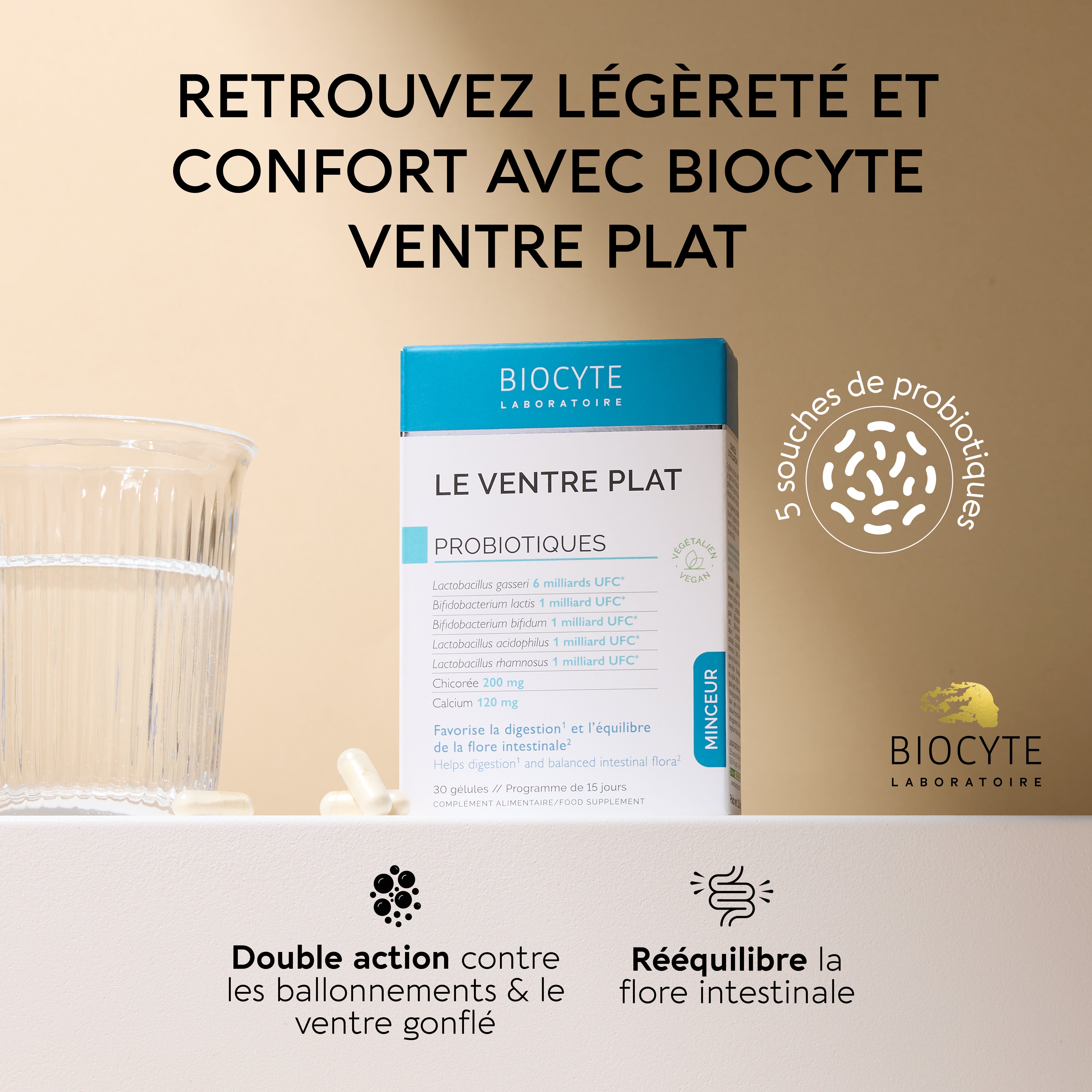
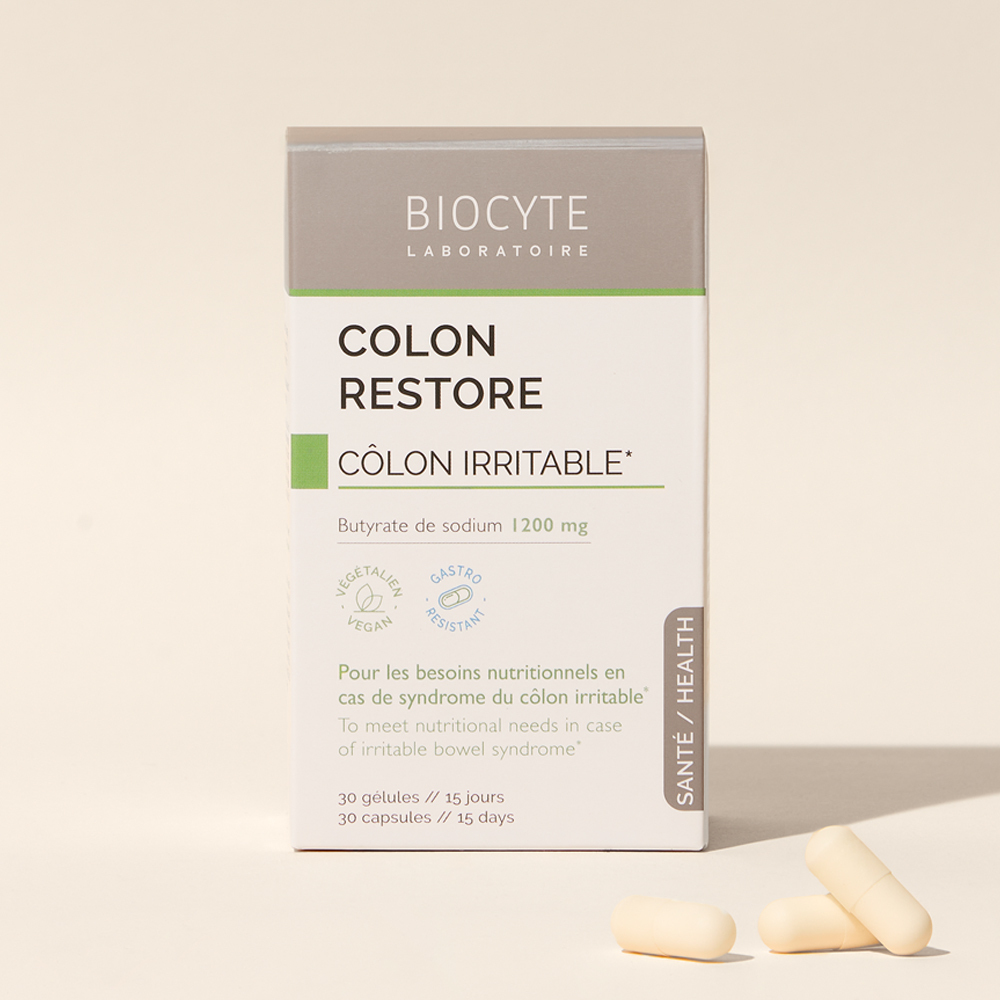
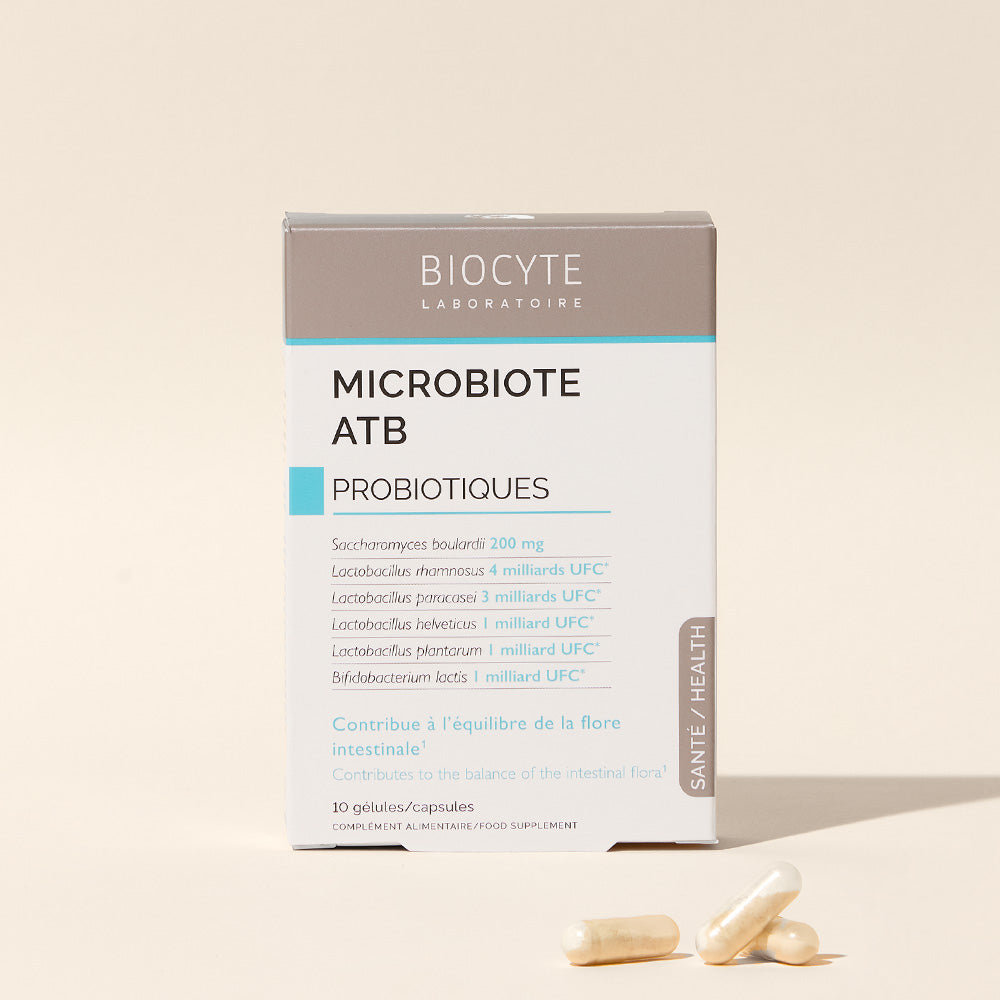
Probiotic strains like Lactobacillus rhamnosus, Lactobacillus plantarum or Bifidobacterium lactis are among the best-documented active ingredients for supporting the balance of intestinal flora and transit regularity. Saccharomyces boulardii, a well-tolerated probiotic yeast, also contributes to digestive comfort. Active ingredients such as sodium butyrate, a natural fuel for colon cells, or boldo extract, traditionally used to support digestive functions, complete these formulas. Digestive enzymes (amylase, lipase, protease) and chicory, a natural source of prebiotics, help to optimize digestion and nourish the intestinal microbiota.
How to choose a food supplement adapted to constipation?
The choice of a food supplement for constipation must be guided by the nature of the imbalance. A functional slow transit is not managed in the same way as occasional constipation linked to a change in routine. The first situation will benefit more from a formula combining dietary fiber and probiotics over the long term; the second may respond to a more targeted approach, incorporating active ingredients with a rapid osmotic effect.
The quality of the active ingredients and their synergy within the formula are determining criteria. The bioavailability of magnesium, the quantity and viability of probiotic strains upon arrival in the intestine, and the soluble fiber content are all technical parameters that distinguish a functional supplement from a generic formula. It is also advisable to check for the absence of unnecessary additives and the consistency of dosages with scientific literature.
What are the benefits of food supplements for intestinal transit?
Well-conducted supplementation acts atseveral levels simultaneously. On a mechanical level, soluble fibers increase the volume of the fecal bolus and accelerate transit time in the colon. On a functional level, magnesium facilitates the smooth muscle contractions involved in stool progression. On a microbiological level, probioticsand prebiotics strengthen the intestinal ecosystem, a prerequisite for balanced digestion and lasting regularity.
These combined effects translate concretely into a decrease in episodes of constipation, a reduction in bloating and the feeling of a swollen stomach, and an improvement in overall digestive comfort. Some active ingredients also act on the gut-brain axis, indirectly helping to reduce transit imbalances linked to stress. Food supplements specialized for transit, formulated with a rigorous selection of active ingredients, can represent effective support in this process.
How to integrate a food supplement into a routine to promote regular transit?
The effectiveness of a food supplement against constipation relies largely on consistent intake. Most active ingredients, especially fibers and probiotics, require several weeks to exert a measurable effect on the intestinal microbiota and digestive motility. It is therefore preferable to maintain the supplementation for a minimum of 4 to 6 weeks, maintaining a daily intake at a fixed time, ideally accompanied by a glass of water.
In parallel, certain dietary and behavioral habits amplify the benefits of supplementation. Gradually increasing dietary fiber intakethrough diet, maintaining sufficient hydrationthroughout the day, and practicing regular physical activityare essential complementary levers. Supplementation does not replace these fundamental habits; it reinforces them in a targeted way.
FAQ — Your questions about food supplements for constipation
What is the best food supplement for constipation?
There is no universal formula, but supplements combining soluble fiber (notably psyllium), probiotics, and magnesium offerthe most complete response to support slow transit. The choice depends on the profile of the imbalance, its duration, and individual tolerance to different active ingredients.
Which active ingredients are most used to promote intestinal transit?
Psyllium, magnesium in bioavailable forms, the probiotic strains Lactobacillus and Bifidobacterium, as well as prebiotics like inulin or FOS are among the most studied and best-documented active ingredients for supporting intestinal regularity and the balance of intestinal flora.
How long does it take for a food supplement for constipation to work?
The effectsvary according to the active ingredients. Magnesium can produce an osmotic effect within 24 to 48 hours. Soluble fibers generally require a few days of regular intake. Probiotics, for a lasting impact on the intestinal microbiota, require several weeks of continuous supplementation.
Can you take a food supplement for constipation every day?
Yes, for the majority of fiber, probiotic, and magnesium-based formulas. These active ingredients are well-tolerated on a daily basis, and their effectiveness is precisely conditioned by regular intake over time. Medical advice is still recommended in case of persistent chronic constipation or an associated digestive pathology.
Can probiotics help with constipation?
Certain probiotic strains, notably Bifidobacterium longum and Lactobacillus reuteri, have shown in controlled clinical trials an improvement in stool frequency and consistency. Their action involves restoring a balanced intestinal microbiota, which promotes more regular digestive motility.
What is the difference between a food supplement for constipation and a laxative?
A laxative acts mechanically or chemically to trigger a rapid bowel evacuation, often without effects on the underlying causes of slow transit. A food supplement for constipation intervenes in the fundamental physiological mechanisms—microbiota balance, motility, stool hydration—with a logic of lasting rebalancing rather than temporary stimulation.
What steps should be taken in addition to supplementation to improve transit?
Increasing dietary fiber intake (legumes, whole grains, fruits, and vegetables), maintaining hydration of 1.5 to 2 liters of water per day, moving regularly, and limiting ultra-processed foods are the behavioral pillars that amplify the action of food supplements and sustainably support digestive health.
Are there food supplements adapted for occasional and chronic constipation?
Yes, these two situations call fordifferent approaches. Occasional constipation can be managed with fast-acting formulas based on magnesium or plants. Chronic constipation requires more gradual management, focused on soluble fiber and probiotics over the long term, with medical follow-up if imbalances persist.


 Skin
 Hair & Nails
 Sun Care
 Slimming
 Health
 K-Biocyte
 Clinical