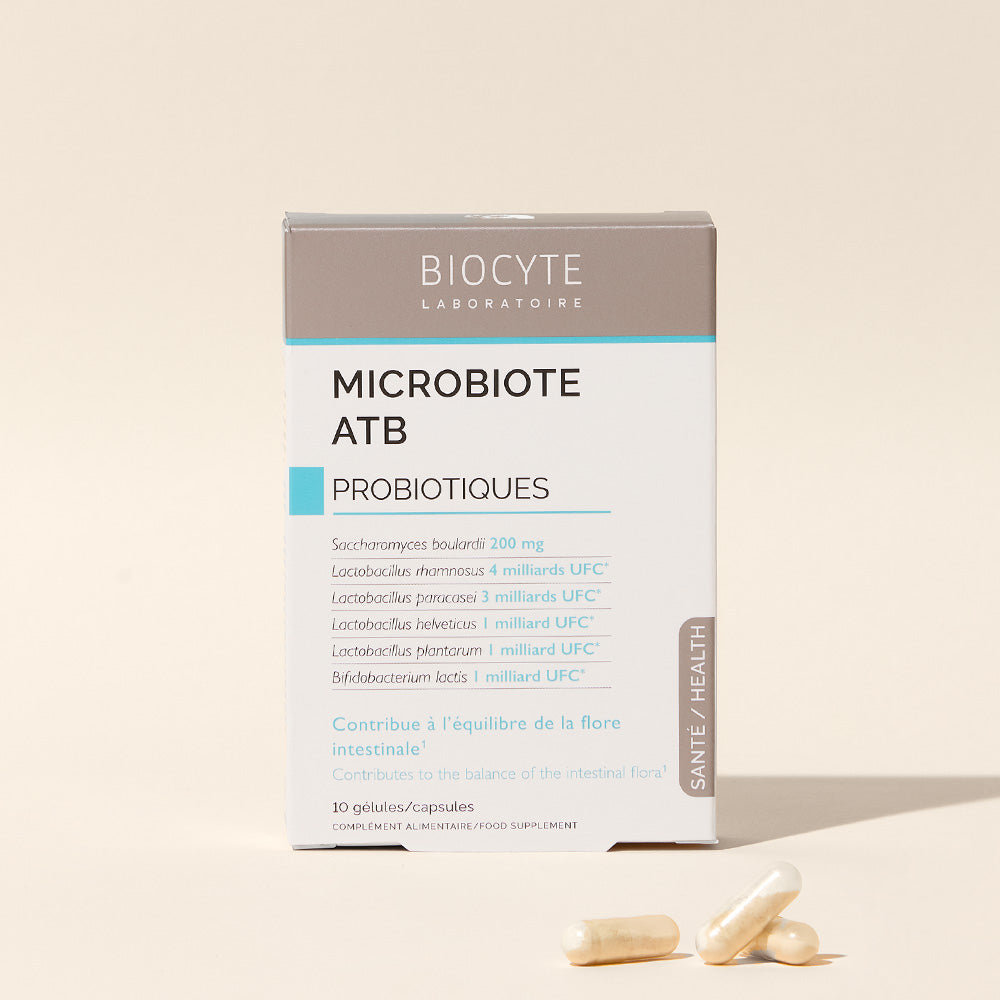
Why take a food supplement for bloating?
Bloating affects a significant portion of the population and sometimes becomes a long-term issue, without dietary changes alone being enough to resolve it. Behind the sensation of a swollen abdomen lie specific functional imbalances: slowed digestion, excessive intestinal fermentation, or a weakened microbiota. In this context, a food supplement for bloating can provide targeted support, provided that you choose active ingredients adapted to the real cause of the digestive discomfort.
Supplementation does not replace a balanced diet, but it allows for action where dietary adjustments reach their limits. Certain profiles, particularly people with a sensitive gut or irregular transit, derive specific benefits from a regular intake of probiotics, digestive enzymes, or natural active ingredients targeting intestinal motility. The goal is to provide precise functional support without disrupting the existing digestive balance.
What are the main causes of bloating?
Bloating most often results from an accumulation of intestinal gases produced during the fermentation of food in the colon. This fermentation is natural, but it becomes problematic when it is excessive, particularly in the event of an imbalance in the intestinal flora or high consumption of fermentable foods. Poor digestion upstream, linked to a deficiency in digestive enzymes, often aggravates the phenomenon: undigested substrates arrive in large quantities in the colon and fuel increased intestinal fermentation.
Other factors come into play: stress, which slows down intestinal motility; the composition of the gut microbiota, whose balance directly determines the quality of digestion; and certain dietary habits such as eating too quickly or regularly consuming foods that are difficult to break down. The resulting feeling of heaviness and the swollen abdomen are therefore not just temporary discomforts, but a reflection of a digestive function that deserves to be supported in a structured way.
What ingredients are found in a food supplement for bloating?
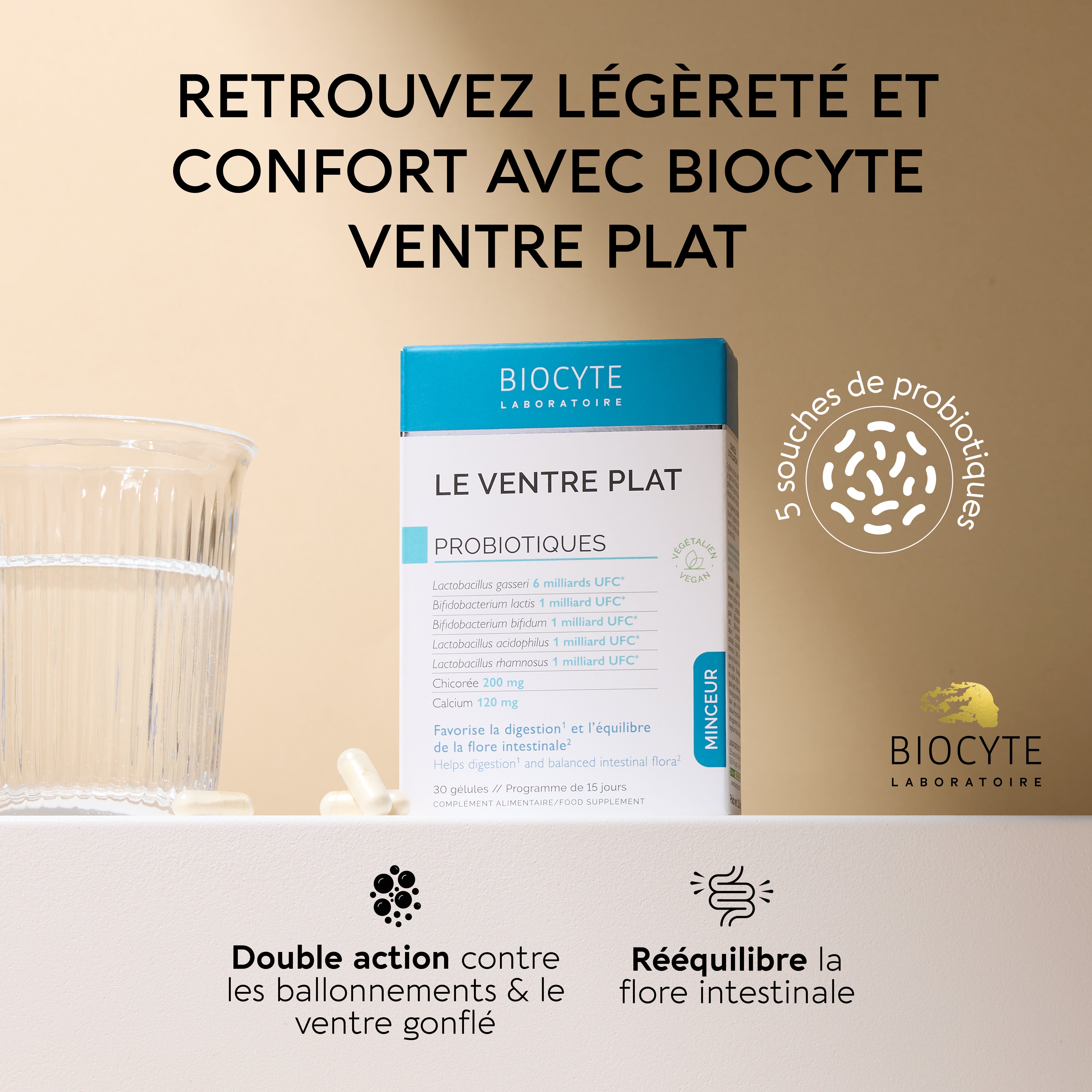
Effective formulas generally combineseveral families of active ingredients with complementary mechanisms. Probioticsplay a central role: strains such as Lactobacillus acidophilus orBifidobacterium longum help rebalance the gut microbiota and limit excessive gas production during fermentation. Their effectiveness depends on the dosage, the viability of the strains upon reaching the intestine, and their suitability for the person's digestive profile.
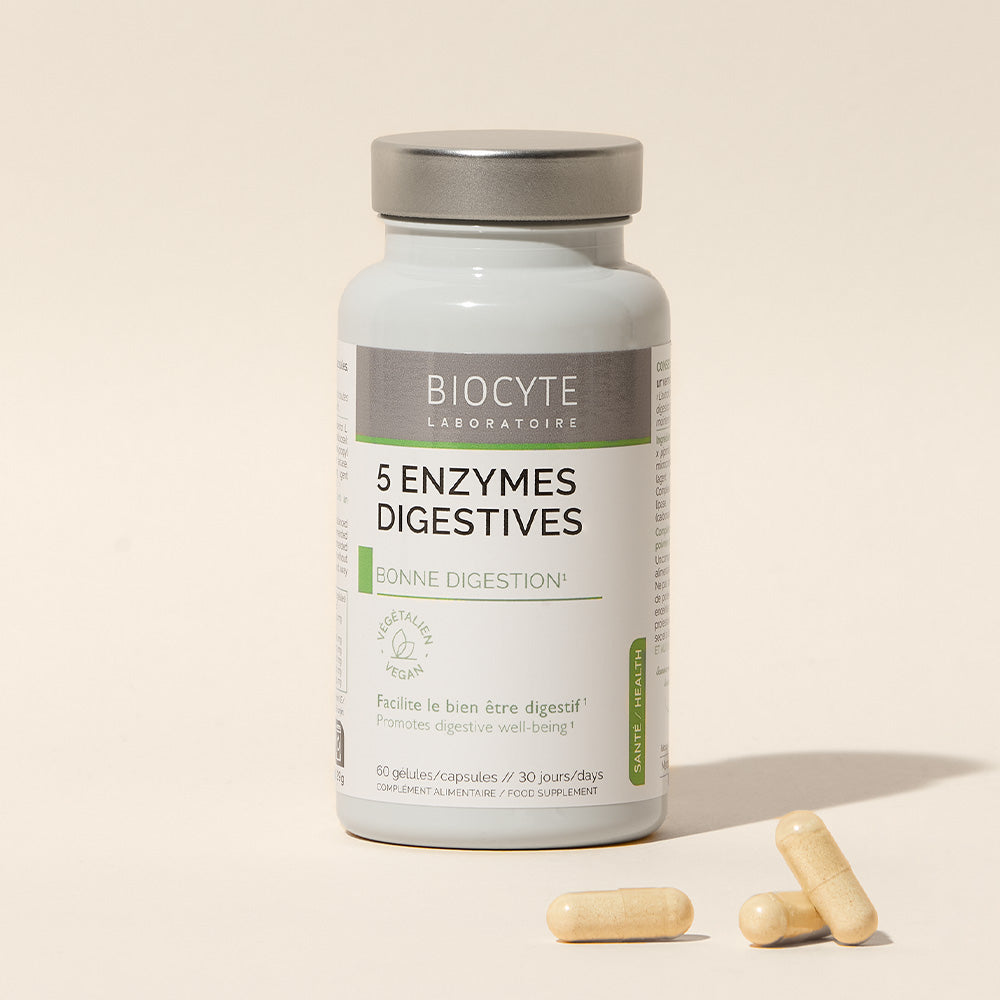
Digestive enzymes, such as lactase, amylase, or bromelain, play a complementary role by facilitating the breakdown of carbohydrates, proteins, and lipids starting in the stomach. Fewer undigested residues mechanically mean less substrate available for intestinal fermentation. Added to these active ingredients are frequently plants with digestive properties, such as fennel, activated charcoal, or turmeric, which support digestive comfort and help reduce the sensation of a swollen abdomen. Biocyte formulates several products based on these active synergies, notably by incorporating high-concentration probiotics for documented support of intestinal well-being.
How to choose a food supplement for bloating?
The choice must start with a simple diagnosis: does the bloating occur mainly after meals, in connection with certain foods, or diffusely throughout the day? In the first case, digestive enzymes are often the most relevant starting point. In the second, rebalancing the gut microbiotawith probiotics is generally the priority lever. Many situations involve both, which argues for formulas combining both types of active ingredients.
Beyond the composition, the galenic form and manufacturing quality are decisive. A poorly encapsulated probiotic will not survive the gastric passage and will never reach the intestine in a sufficient concentration to act. The same applies to digestive enzymes, whose activity depends on the pH and stability of the formula. Checking that dosages are expressed in CFU for probiotics, and in units of enzymatic activity for enzymes, is an indicator of the manufacturer's seriousness.
Who are food supplements for bloating intended for?
Digestive food supplements are primarily for people suffering from recurring digestive discomfort without an identified pathological cause: frequent post-prandial bloating, a feeling of heaviness after meals, irregular transit, or a persistent swollen abdomen. This profile represents a majority of people who turn to digestive supplementation, often after modifying their diet without sufficient results.
People with a sensitive gutconstitute a second clearly affected profile. In these individuals, the intestinal mucosa reacts in an exacerbated manner to certain foods or variations in the microbiota, which amplifies intestinal gases and the feeling of bloating. A regular intake of specific probiotics and active ingredients that modulate intestinal motility can help reduce this reactivity. Pregnant women, people on antibiotics, or those who have recently changed their diet significantly must, however, seek professional advice before starting supplementation.
How to integrate a food supplement into a digestive routine?
The effectiveness of a food supplement for bloating relies largely on consistency of intake. Probiotics, in particular, require several weeks of continuous administration to exert a measurable effect on the composition of the gut microbiota. Taking the routine discontinuously or for too short a period significantly limits the expected benefits for digestive comfort. A minimum duration of one month, ideally two to three months for chronic situations, is generally recommended.
The timing of intake also influences effectiveness. Digestive enzymes are more useful when taken during a meal, when they can act on food substrates. Probiotics, depending on the strain, are often recommended away from meals or on an empty stomach in the morning to maximize their survival during gastric transit. Combining this supplementation with a few simple habits, such as eating slowly, limiting carbonated drinks, and breaking up meals, amplifies the effects on digestive health.
Which food supplements should be combined to promote digestive comfort?
Acombined approach generally yields better results than an isolated active ingredient. The combination of probiotics and digestive enzymes is the most documented: it acts both upstream of digestion, by facilitating food breakdown, and downstream, by modulating intestinal fermentation. For people whose bloating is aggravated by stress or slow transit, the addition of adaptogenic plants or magnesium, which supports intestinal motility, can reinforce the overall digestive action.
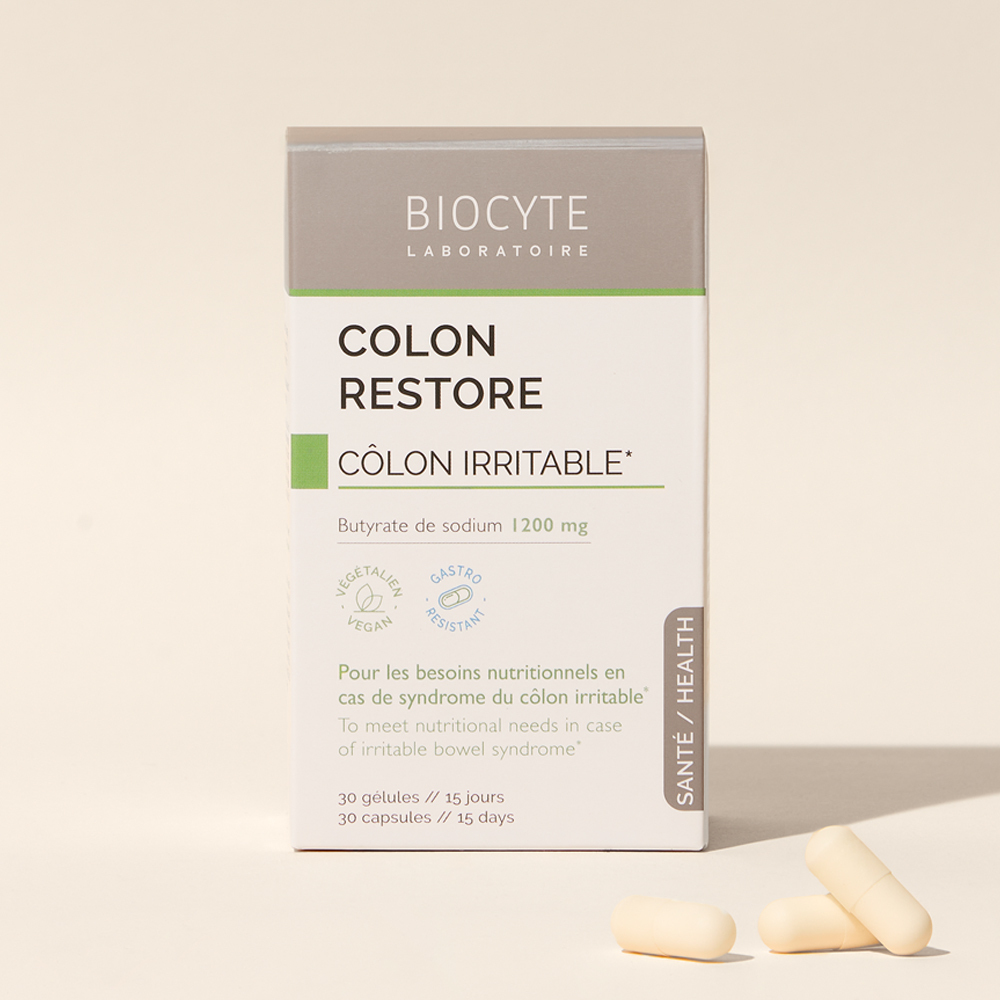
Some profiles also benefit from the intake of prebiotics, soluble fibers that selectively nourish beneficial bacteria in the microbiota. Inulin or fructo-oligosaccharides (FOS), present in certain formulas, help support the balance of the intestinal flora over time. Be careful, however: in hypersensitive individuals or those with irritable bowel syndrome, prebiotics can temporarily aggravate intestinal gas at the start of a routine. A gradual increase in dosage is recommended in this case.
FAQ — Everything you need to know about food supplements for bloating
What is the best food supplement for bloating?
There is no universal formula: the best food supplement for bloating is the one whose active ingredients match the primary cause of the discomfort. For difficult digestion after meals, digestive enzymes are often the priority. For an underlying imbalance of the gut microbiota, probiotics with targeted strains yield better results. Formulas combining both remain the most versatile solution for overall digestive comfort.
Which active ingredients are most used to reduce bloating?
The most frequently formulated active ingredients are probiotics (Lactobacillus, Bifidobacterium), digestive enzymes (lactase, amylase, protease), activated charcoal to absorb intestinal gases, and plant extracts such as fennel or lemon balm, recognized for their action on digestive comfort and intestinal motility.
How long does it take for a food supplement to act on bloating?
Digestive enzymes can have a noticeable effect from the very first doses, as they act directly on the digestion of the current meal. Probiotics require more time: a notable effect on the gut microbiota and digestive comfort is generally observed after three to six weeks of regular intake, sometimes longer depending on the initial state of the intestinal flora.
Can you take a food supplement for bloating every day?
Yes, in most cases. Probiotics and digestive enzymes are designed for daily use, often in routines of one to three months. Occasional use remains possible for digestive enzymes, but regularity is what conditions effectiveness on the microbiota and intestinal transit. In the event of a known digestive pathology, medical advice is recommended before any supplementation.
Are probiotics effective against bloating?
A systematic review covering 104 clinical trials published between 2011 and 2021 identified Lactobacillus rhamnosus, Lactobacillus acidophilus, and Bifidobacterium animalissubsp. lactisas the best-documented strains for acting on bloating and digestive quality of life. A separate meta-analysis grouping 36 randomized controlled trials and more than 5,400 participants also showed a significant improvement in digestive symptoms among people supplemented with probiotics. Effectiveness remains strain-dependent, however: not all formulas are equal, and the dosage as well as the viability of the strains upon reaching the intestine remain decisive criteria for obtaining a noticeable effect on digestive comfort.
What is the difference between bloating, intestinal gas, and a swollen abdomen?
Intestinal gas refers to gaseous production resulting from intestinal fermentation, a normal phenomenon but problematic when in excess. Bloating corresponds to the sensation of an accumulation of these gases in the digestive tract, often associated with cramps or diffuse discomfort. A swollen abdomen is the visible manifestation of this accumulation, linked to perceived and sometimes measurable abdominal distension. These three phenomena are related but do not always occur together with the same intensity.
Are food supplements for bloating suitable for people with a sensitive gut?
Yes, provided that you choose adapted formulas. People with a sensitive gut should avoid high concentrations of prebiotics at the start of a routine, as they can temporarily accentuate gas. Probiotics with gentle strains and digestive enzymes are generally well-tolerated. A gradual increase in dosage and monitoring by a healthcare professional remain advised to adapt the supplementation to the digestive profile.
What habits should be adopted in addition to supplementation to limit bloating?
Eating slowly and chewing thoroughly remain one of the most effective levers for reducing the fermentable load arriving in the colon. Limiting carbonated drinks, breaking up meals, temporarily reducing highly fermentable foods (legumes, cabbage, onions), and managing chronic stress all contribute to improving digestive comfort. Supplementation acts in synergy with these adjustments: it does not replace them, it amplifies them.


 Skin
 Hair & Nails
 Sun Care
 Slimming
 Health
 K-Biocyte
 Clinical